

Many of us have a box of KN95 masks tucked away in a drawer or a car glove box. We bought them to stay safe, but have you ever looked for an expiration date? It might surprise you to learn that these masks do not last forever.
If you are wondering, "Do KN95 masks expire?" The answer is yes. Using an old mask might not give you the protection you expect. This guide will help you understand why they expire and how to tell if yours are still good to use.
Do KN95 Masks Really Expire?
Yes, KN95 masks have a shelf life. Most manufacturers say they last between 2 to 5 years from the date they were made.
A mask might look perfectly fine even after many years. However, the materials inside can change over time. According to the CDC, the parts that keep the mask tight on your face can get weak. If the mask does not fit tightly, dirty air can leak around the edges.
Why do they have an end date?
Even if a mask is sitting in a box, the materials inside are slowly changing. A mask is more than just a piece of cloth. It is a piece of medical equipment made of layers of special plastic fiber. Over time, these parts can break down.
Why Do KN95 Masks Expire?
You might think a mask is just a piece of cloth, but KN95 masks are high-tech tools. They expire for a few important reasons:
1. The "Static" Filter Stops Working
The most important part of a KN95 mask is the middle layer. It uses electrostatic charge to pull in and trap tiny germs, much like a magnet pulls in metal dust. According to research from the CDC (Centers for Disease Control and Prevention), this charge can weaken over time. When the charge is gone, the mask cannot trap particles as well as it used to.
2. The Straps Get Brittle
Have you ever found an old rubber band that snaps the moment you stretch it? The same thing happens to mask ear loops. The elastic material breaks down. If a strap snaps while you are wearing it, the mask will not stay on your face.
3. The Foam and Glue Break Down
Many KN95 masks have a soft foam nose piece or glue holding the layers together. Studies show that heat and moisture in the air make these parts fall apart. This can cause the mask to leak air around the edges.
4. The Filter Material Breaks Down
The layers inside are sensitive to the world around them. According to research from Detmold Medical, things like heat and moisture can make the filter fibers break down. This makes the mask less effective at cleaning the air you breathe.
Is It Safe to Use an Expired Mask?
Experts say that an expired mask is better than no mask at all, but it is not ideal.
In official health settings, like hospitals, using expired gear is usually not allowed. For general use, an expired mask might not filter out 95% of particles anymore. It might only filter 70% or 80%. According to NSW Health, a mask must fit tightly and be in good condition to work. If the elastic is loose because it is old, the mask will not protect you properly.
Where to Find the Expiry Date
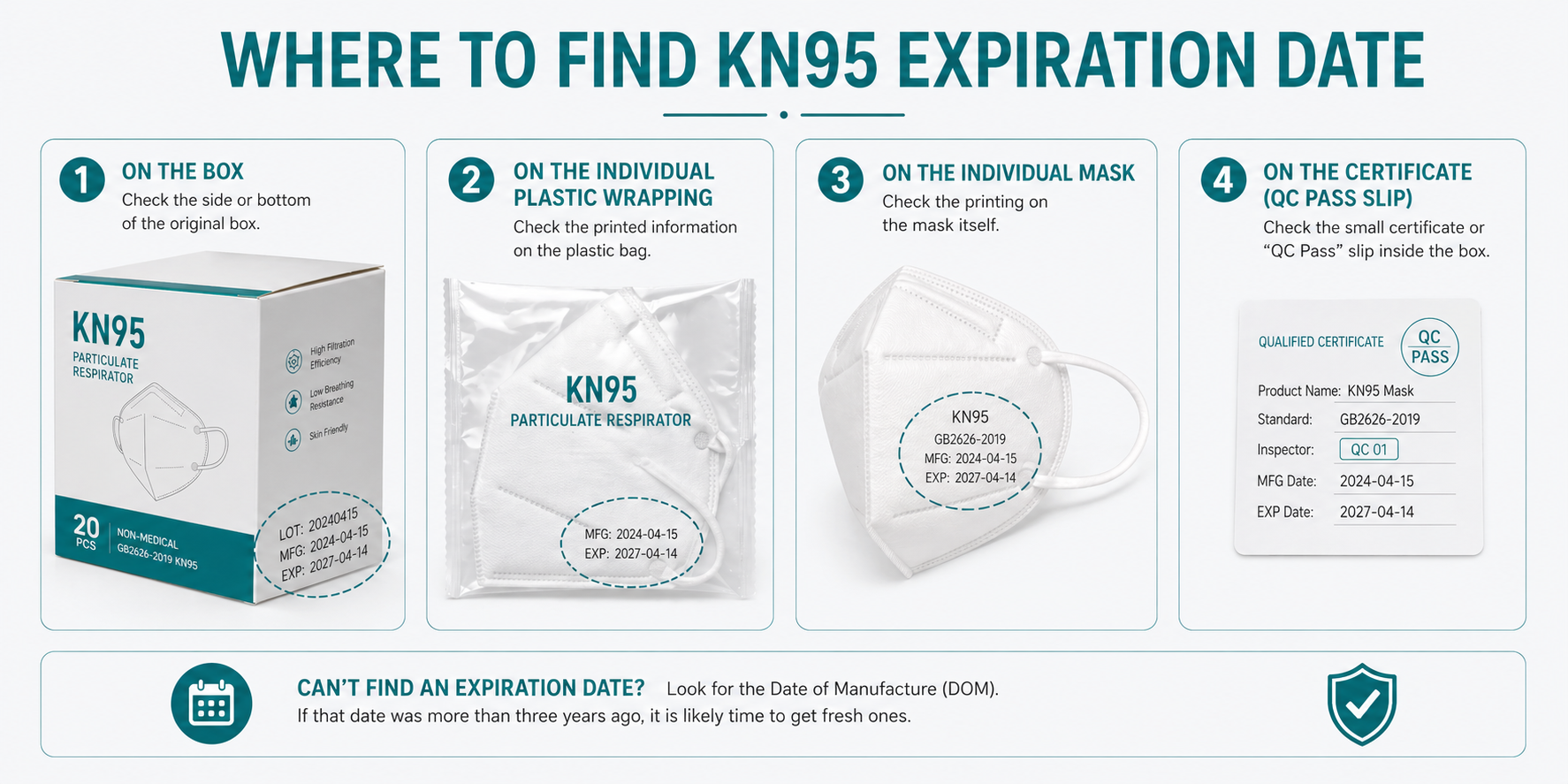
You can usually find the date on:
- The side or bottom of the original box.
- The individual plastic wrapping of the mask.
- The individual mask (printed directly on it).
- A small certificate or "QC Pass" slips inside the box.
If you cannot find a date, look for the Date of Manufacture (DOM). If that date was more than three years ago, it is likely time to get fresh ones.
How to Check if Your Mask is Expired
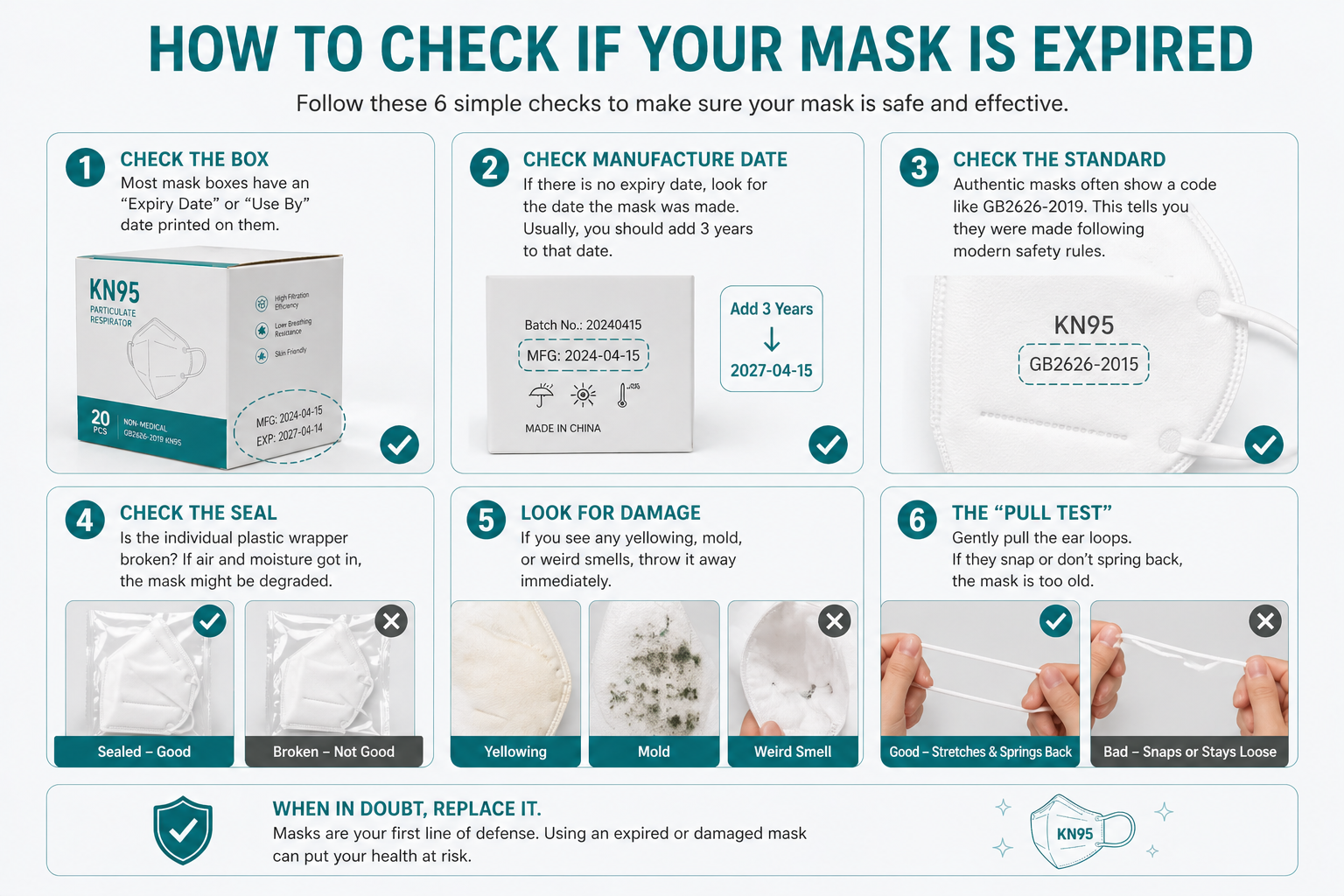
It is easy to check if your masks are still safe to use. Follow these simple steps:
- Check the Box: In Australia, the Therapeutic Goods Administration (TGA) requires companies to put a "use by" date or a manufacturing date on the packaging. This helps people know if the product is still meeting safety standards.
- Most mask boxes have an "Expiry Date" or "Use By" date printed on them.
- If there is no expiry date, look for the date the mask was made. Usually, you should add 3 years to that date.
- Check the Standard: Authentic masks often show a code like GB2626-2019. This tells you they were made following modern safety rules.
- Check the Seal: Is the individual plastic wrapper broken? If air and moisture got in, the mask might be degraded.
- Look for Damage: If you see any yellowing, mold, or weird smells, throw it away immediately.
- The "Pull Test": Gently pull the ear loops. If they snap or don't spring back, the mask is too old.
How to Make Your Masks Last Longer
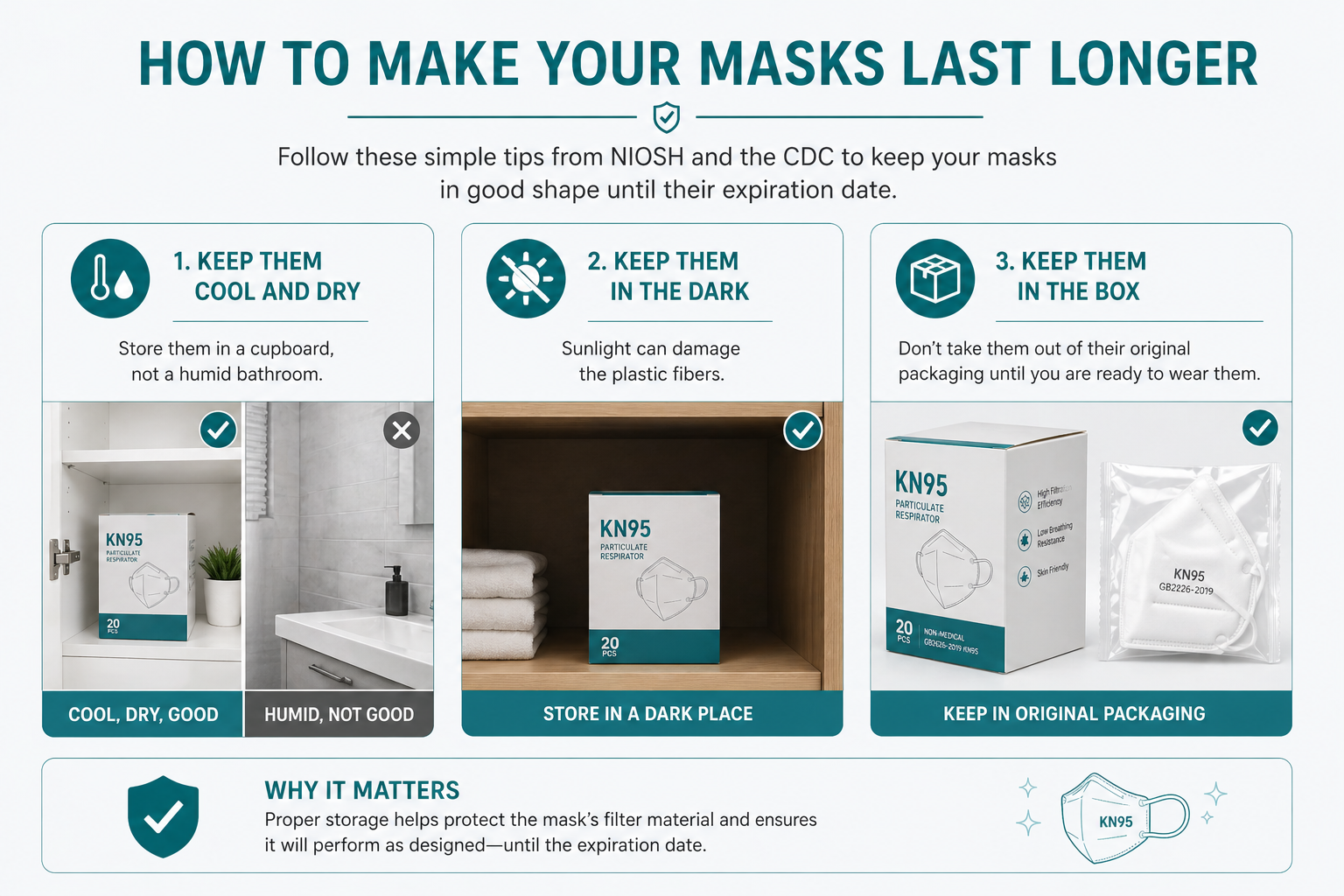
If you want your masks to stay in good shape until their expiration date, follow these simple tips from NIOSH and the CDC:
- Keep them cool and dry: Store them in a cupboard, not a humid bathroom.
- Keep them in the dark: Sunlight can damage the plastic fibers.
- Keep them in the box: Don't take them out of their original packaging until you are ready to wear them.
Why You Should Replenish Your Supply
If your masks are past their date, it is time to get new ones. Wearing an expired mask is better than no mask at all in some cases, but it does not meet the high safety standards required for the best protection.
Studies show that as masks age, their ability to filter out small droplets can drop significantly. To stay safe, it is best to have a fresh supply of KN95 masks ready for your family.
Where to Buy Fresh KN95 Masks
When you need to buy new masks, you should choose a reliable seller. This ensures you are getting genuine products that are not expired.
MedCart Australia is a leading marketplace for medical supplies. They offer a wide range of KN95 and P2 masks that meet Australian safety standards. Buying from a trusted Australian source like MedCart means you can check the product details and expiry dates clearly before you buy.
Summary
- KN95 masks usually expire in 2 to 5 years.
- The static charge that traps germs fades over time.
- Old straps can cause a poor fit, letting in unfiltered air.
- Always check the packaging for a "Use By" date.
- Store your masks in a cool, dry place to help them last.
Keeping your safety gear up to date is an easy way to look after your health. Check your masks today!
References and Sources
Centers for Disease Control and Prevention (CDC): Information on respirator shelf life and strap degradation.
National Institutes of Health (NIH) / PMC: Research on electrostatic charge and filtration efficiency in N95 and KN95 materials.
Detmold Medical (Australia): Official guidelines on the storage and expiration of face masks and respirators.
Texas MedClinic: Guide on identifying authentic KN95 respirators and checking manufacturing standards.
MedCart Australia: Product information and standards for KN95 respirator masks.