


How Long Do You Test Positive for COVID? (Rapid Antigen Test Guide)
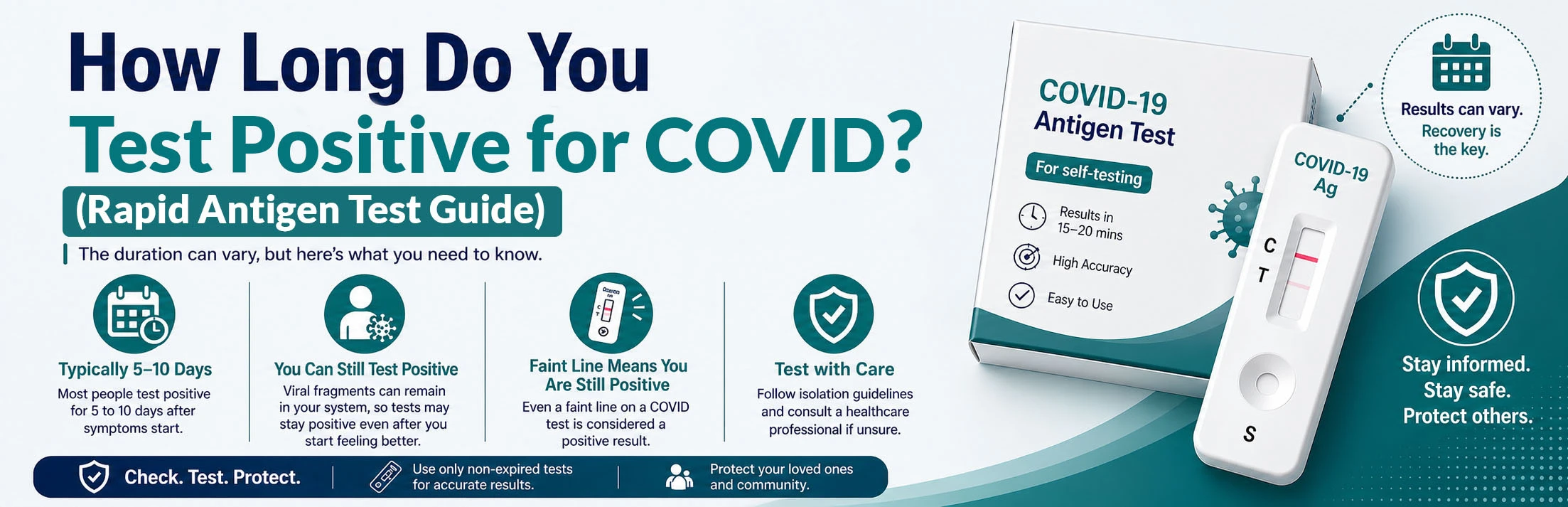
Most people test positive for COVID-19 for around 5 to 10 days after symptoms begin, although some individuals may test positive for longer depending on viral load, symptoms, and recovery.
This guide explains how long COVID test results can remain positive, why some people continue testing positive, and when you may test negative again.
How Long Do You Stay Positive on a COVID Test?
People commonly test positive on rapid antigen tests (RAT tests) for several days after infection. For many individuals, this period lasts:
- About 5 to 7 days for mild cases
- Up to 10 days or more in some cases
- Longer for people with ongoing symptoms or slower recovery
The exact duration varies depending on viral load, immune response, and the timing of testing.
COVID Testing Timeline
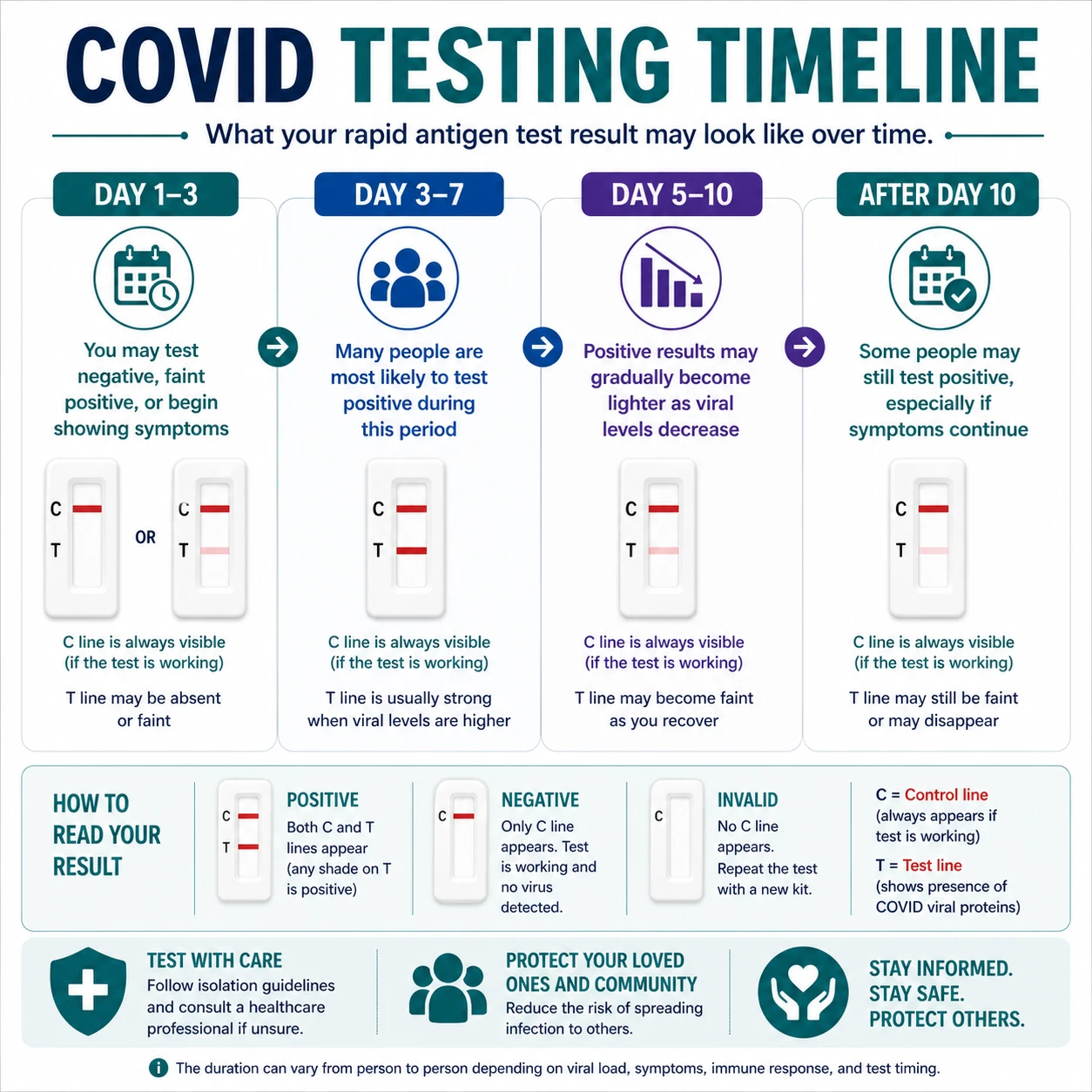
- Day 1–3: You may test negative, faint positive, or begin showing symptoms
- Day 3–7: Many people are most likely to test positive during this period
- Day 5–10: Positive results may gradually become lighter as viral levels decrease
- After Day 10: Some people may still test positive, especially if symptoms continue
Why Do You Keep Testing Positive?
COVID rapid antigen tests detect viral proteins. If these proteins are still present in your body, the test may continue to show a positive result.
You may continue to test positive because:
- Your body is still clearing the virus
- Your viral load remains detectable
- You are still in the active or recovery stage of infection
- Your symptoms are ongoing
Does a Faint Line Mean You Are Still Positive?
Yes, even a faint line on a COVID test is still considered a positive result. A faint line may appear later in the infection as viral levels begin to decrease.
If you are unsure how to read your result, see our guide on what a positive COVID test looks like.
Can You Still Be Contagious If You Test Positive?
Yes, if you continue to test positive, there is a possibility that you may still be contagious, particularly in the earlier days of infection.
The likelihood of being contagious generally decreases as symptoms improve and viral levels reduce, but this can vary from person to person.
When Will You Test Negative for COVID?
You may start to test negative once your body has reduced the amount of viral proteins to a level that is no longer detected by the test.
This often happens:
- After 5 to 10 days for many people
- Later for people with prolonged symptoms
- Earlier if the infection is mild and resolves quickly
When Should You Stop Testing for COVID?
Some people stop testing once symptoms improve or after several days have passed. Others continue testing until they receive a negative result, especially before returning to work, school, or shared spaces.
If unsure, follow local health guidance, workplace requirements, or advice from a healthcare professional.
Does Testing Method Affect How Long You Test Positive?
Different testing methods may detect COVID differently. Rapid antigen tests are commonly used to detect active infection and are often used for home testing.
Other test types, such as PCR tests, may detect viral material for longer, even after symptoms have improved.
What Affects How Long You Test Positive?
- Severity of infection
- Individual immune response
- Timing of the test
- Type of test used
- Whether symptoms are still present
Should You Keep Testing After a Positive Result?
Some people continue testing to monitor when they receive a negative result. This can be useful for reducing the risk of spreading infection to others.
Follow-up testing may be useful for:
- Returning to work or daily activities
- Reducing risk around vulnerable people
- Monitoring recovery progress
- Checking whether a faint line has disappeared
If you need test kits for follow-up testing, you can browse available COVID-19 self test kits for home or workplace use.
Frequently Asked Questions
How long do you test positive for COVID?
Most people test positive for around 5 to 10 days after symptoms begin, but this can vary depending on the individual.
Can you test positive after 10 days?
Yes, some people may continue to test positive beyond 10 days, especially if symptoms are ongoing or recovery is slower.
How many days after COVID will you test negative?
Many people test negative within 5 to 10 days, but some may take longer depending on viral load and recovery.
Why am I still testing positive?
You may still be testing positive because your body is still clearing viral proteins from the infection.
Are you still contagious if you test positive?
You may still be contagious if you test positive, especially in the earlier stages of infection.
Can you test positive without symptoms?
Yes, some people may test positive even if they have mild symptoms or no symptoms.
Does a faint line mean you are still positive?
Yes, even a faint line on a COVID test is considered a positive result.
When should you stop testing after COVID?
Some people stop testing once symptoms improve, while others continue until they receive a negative result or meet workplace or local health requirements.
Where can I find COVID test kits?
You can view available COVID test kits here for home, workplace, or healthcare use.
Learn More About COVID Testing
- What Does a Positive COVID Test Look Like?
- Do COVID Tests Expire?
- How Long Do You Test Positive for COVID?
This information reflects general guidance on COVID-19 rapid antigen testing timelines commonly followed in Australia.
Updated April 2026: Information reflects general timelines for COVID-19 test positivity, recovery, and follow-up rapid antigen testing.