


Bathrooms are often small, busy spaces. Water can make the floor slippery. A person may need to turn, step over a shower edge, reach for a towel or stand up from a low toilet. Each action can be harder for someone with reduced balance, strength or mobility.
Healthdirect Australia identifies slippery floors, poor lighting and loose mats as common home hazards. Small changes may lower the risk of falling, but there is no single product that makes a bathroom completely safe.
This guide shares seven practical bathroom safety tips for seniors, people recovering from illness and anyone who finds bathing difficult. It also explains when professional advice can help choose the right equipment.
Tips 1–2: Fix Wet Floors and Poor Lighting
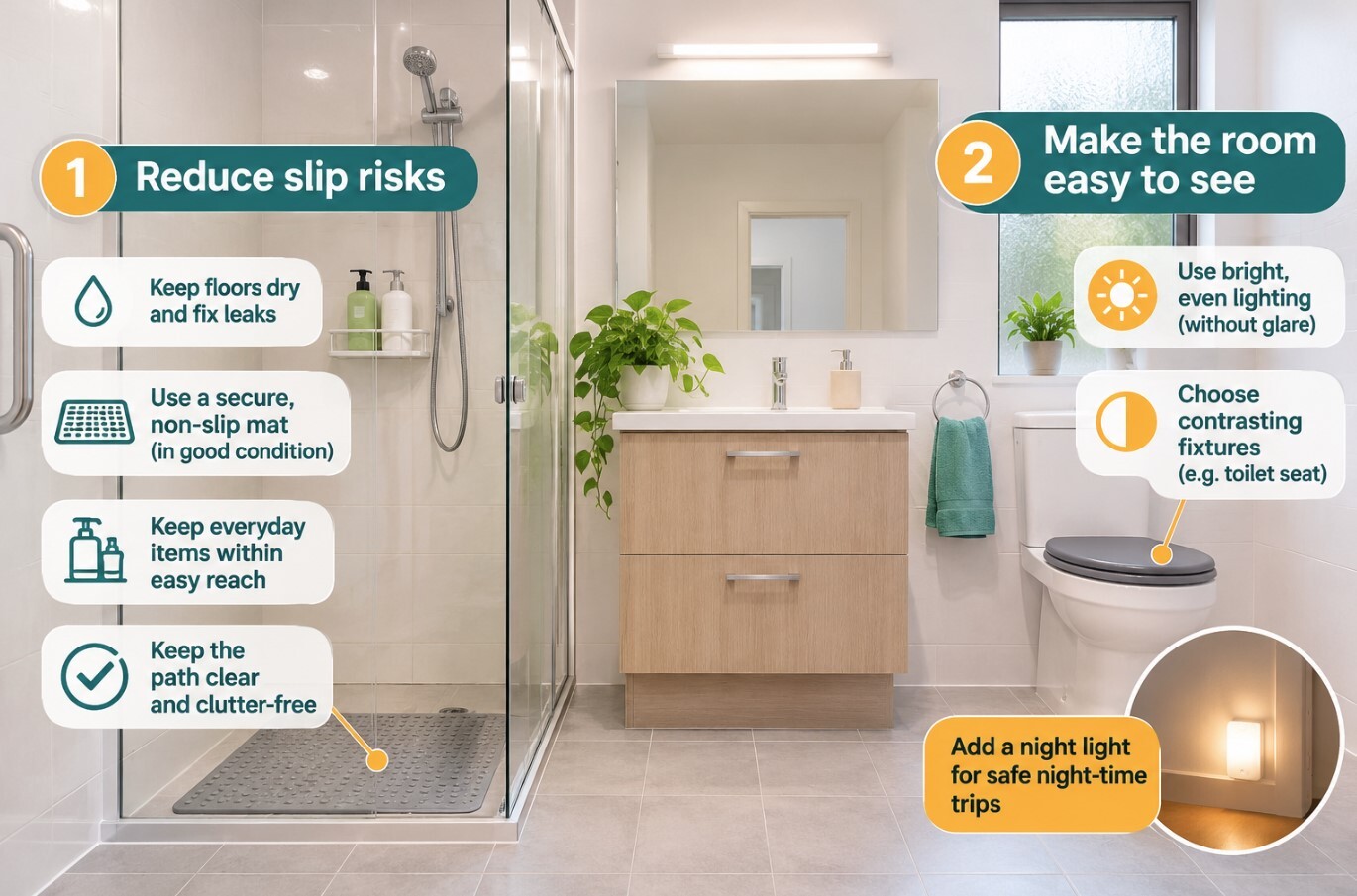
1. Reduce slip risks
Water, shampoo and soap can leave a slick surface. Check where people step when entering or leaving the shower, moving towards the toilet and reaching the sink. Dry up spills as soon as it is safe. Fix leaks that keep the floor damp.
Healthdirect recommends suitable non-slip mats in wet areas. Choose a product intended for bathroom use, follow the installation instructions and inspect it for loose edges. A worn mat that folds or slides can become another hazard. Long towels left on the floor are not a safe substitute for a properly fitted mat.
Keep shower gel, soap and towels within easy reach. People should not need to bend, twist or climb to get everyday items. Put clutter away so the path to the door stays clear.
2. Make the room easy to see
Bathroom lighting matters at night as well as during the day. Use bright, even light without harsh glare. A suitable night light can help people find the toilet without searching for the switch in the dark. Make sure the path from the bedroom to the bathroom is lit too.
Contrasting colours may make steps, seats and fixtures easier to see, especially for someone with reduced vision. Healthdirect's dementia home-care advice suggests choosing a toilet seat that stands out from the surrounding tiles.
Do a quick walk-through at the time the person usually bathes. The important question is not whether the room looks tidy, but whether it is easy to use without rushing.
Tips 3–4: Add Support Where It Is Needed
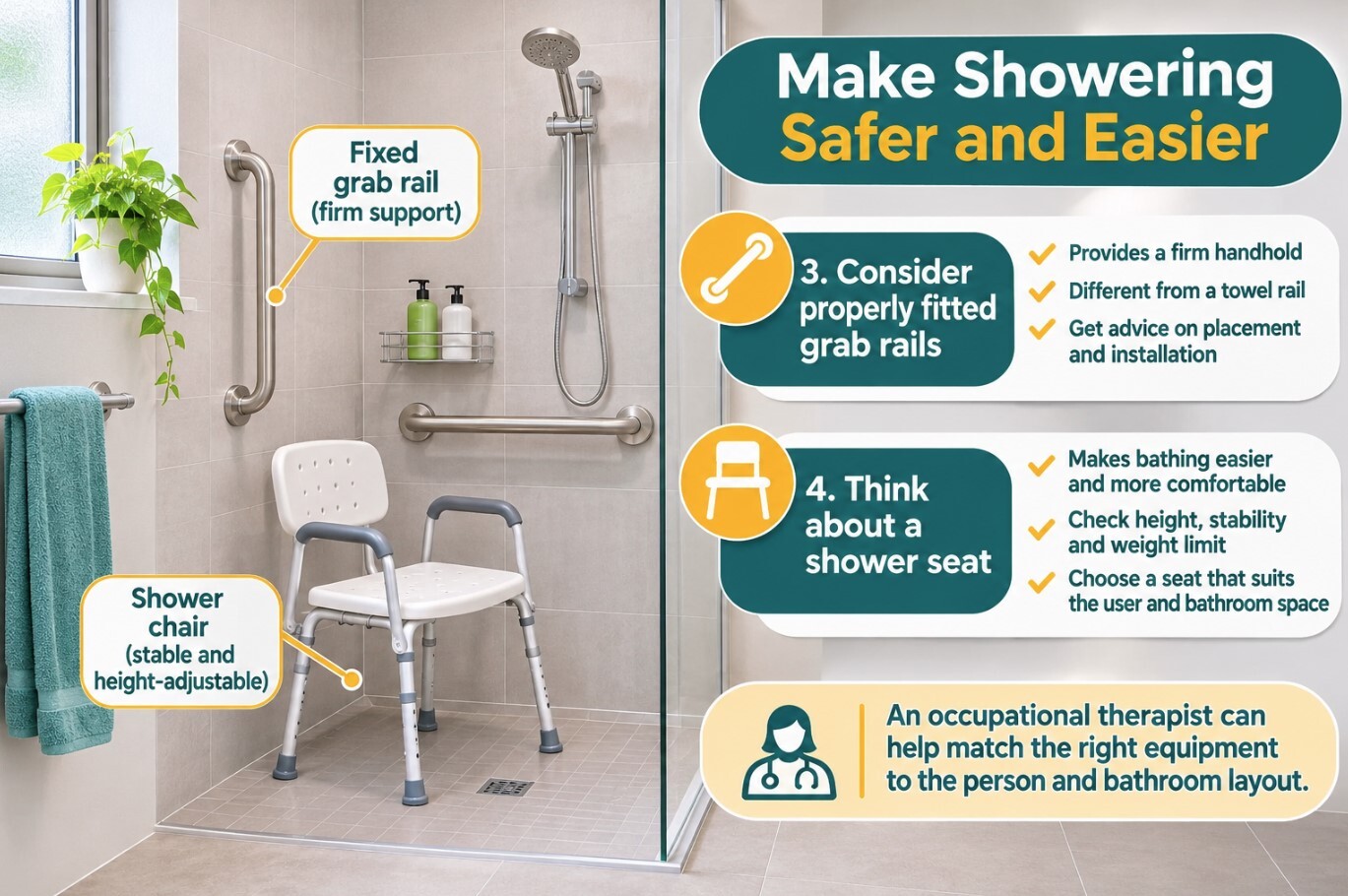
3. Consider properly fitted grab rails
A grab rail can offer a firm handhold beside a shower or toilet. It is different from a towel rail, which may not support body weight. Placement and installation matter: the right position depends on a person's reach, strength and movement.
The Australian Government's Don't fall for it guide suggests rails in bathrooms and toilets and recommends getting advice about home changes. Ask a qualified installer to check wall fixing and load suitability. Do not assume a suction accessory is an appropriate replacement for a fixed grab rail.
4. Think about a shower seat
Standing for a long shower can be tiring. A shower stool, chair or transfer bench may make bathing easier for someone who has trouble standing. However, height, stability and the way a person gets on and off the seat are important.
The National Disability Insurance Scheme (NDIS) lists shower stools and some shower chairs as examples of lower-risk assistive technology. More complex bathing equipment may need professional assessment. An occupational therapist can help match the equipment to the user and the bathroom layout.
Before using any seat, check its weight limit, feet, adjustment points and instructions. Place it on the intended level surface. Never use it as a step stool. A helper should not pull a person up by the arms unless trained to assist safely.
Useful product categories include bathroom and shower aids and patient assist and safety aids. Choose on fit and function, not only price.
Tips 5–6: Make Toileting and Washing Easier
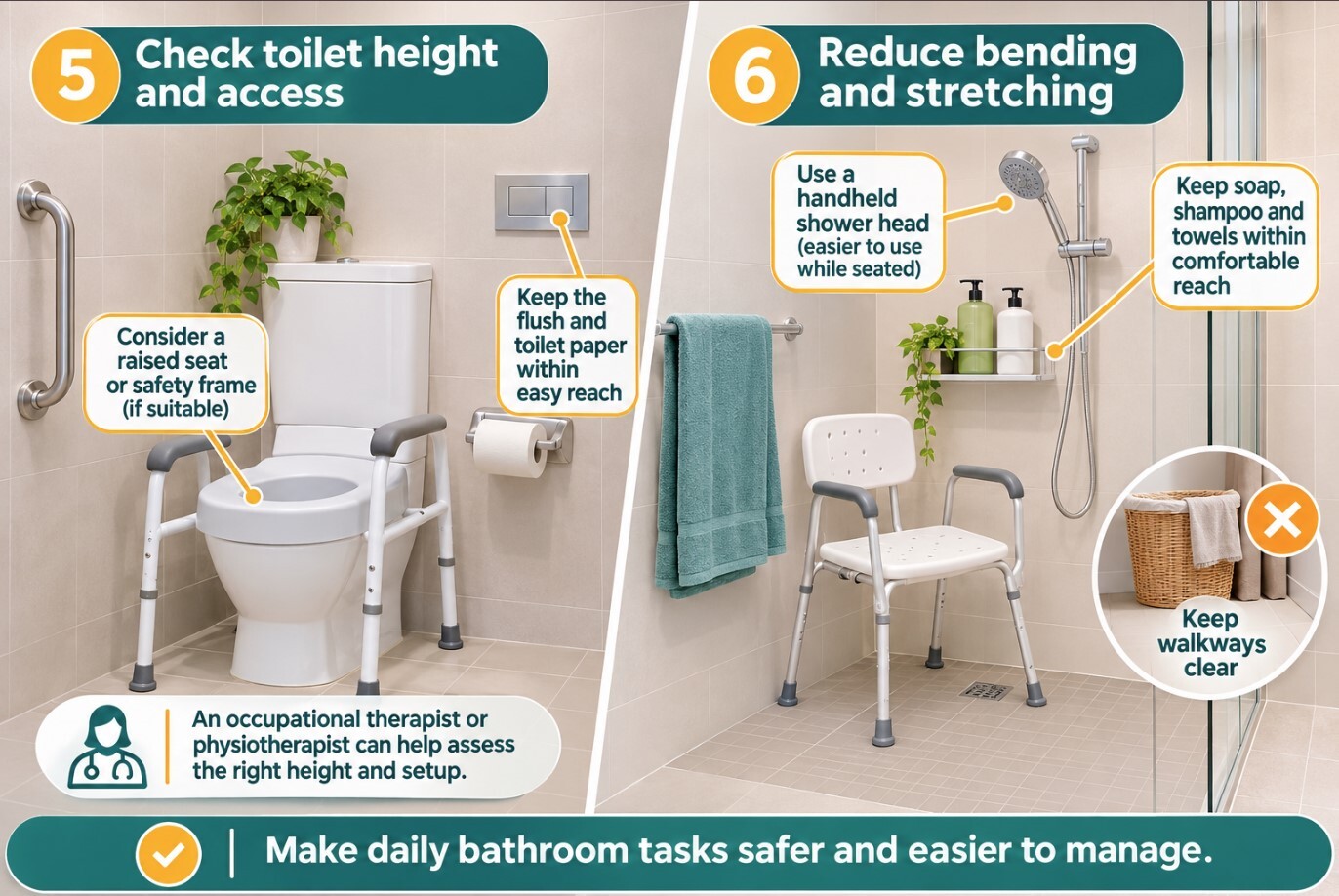
5. Check toilet height and access
A low toilet can make standing up more difficult for someone with knee pain, weak legs or poor balance. Raised seats and toilet safety frames may help some people, but they also change transfer height and movement. An unsuitable height may create a new risk.
An occupational therapist or physiotherapist can look at how the person sits down and gets up. They may suggest a product, changes in movement or a different setup. Ensure the person can still reach toilet paper and the flush without twisting awkwardly.
6. Reduce bending and stretching
Arrange soap, shampoo and towels between comfortable reach heights. A handheld shower head may let someone wash while seated. Keep a dry towel close enough to use before stepping onto the bathroom floor.
Healthdirect recommends keeping walkways free of trip hazards at home. Electrical cords, laundry baskets and spare cleaning products do not belong in the route used for bathing or toileting. Keep cleaning products safely stored and out of reach of children.
Consider the full routine, not just the shower. Can the person enter the room, lock or open the door, use the toilet, wash and leave without overreaching? If a carer assists, is there enough room for both people to move safely?
Bathrooms are not one-size-fits-all. What suits a taller person with strong arms may not suit a shorter person using a walking aid.
Tip 7: Review the Routine and Ask for Help
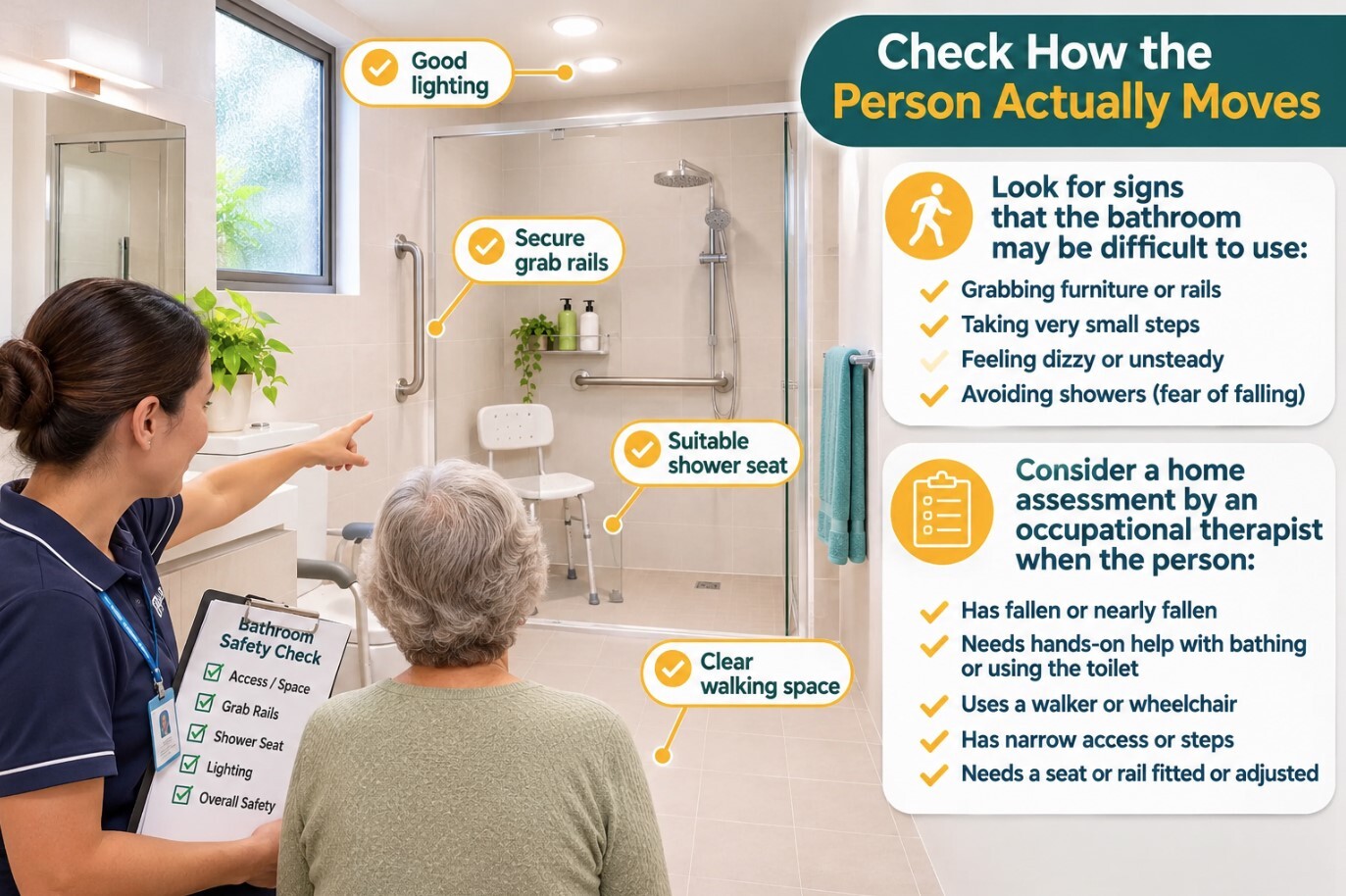
7. Check how the person actually moves
A bathroom may look safe but still be hard to use. Watch for warning signs such as grabbing furniture, leaning on a towel rail, taking very small steps, feeling dizzy or avoiding showers due to fear of falling. Ask the person what feels difficult rather than guessing.
Falls can have several causes, including medication effects, vision changes, strength and balance. Healthdirect advises older people to discuss falls risk and home safety with health professionals. Exercise suited to the person's ability may also support balance and strength, but any plan should reflect medical advice.
Consider asking an occupational therapist for a home assessment when:
- a person has already fallen or nearly fallen
- they need hands-on help to bathe or use the toilet
- they use a walker or wheelchair
- bathroom access is narrow or includes steps
- a seat or rail needs fitting or adjusting.
A home assessment can look at layout and movement together. Products should support a safe routine, not replace personal assistance when it is needed.
For a broader discussion of daily-living equipment, read MedCart's guide to medical products for ageing at home. This article focuses only on bathroom risks and practical changes.
FAQs
Is a shower chair suitable for everyone?
No. The correct seat depends on balance, size, mobility, bathroom space and transfer method. Ask a professional if a person needs hands-on help or complex equipment.
Can I use a towel rail for support?
Do not rely on a towel rail as a grab rail. Ask about a support rail that is properly designed, placed and installed for the intended use.
What if someone has already fallen?
Seek medical advice, especially after a head injury or if pain and difficulty moving continue. A falls assessment can help identify risks beyond the bathroom.
Summary
Bathroom safety starts with dry floors, good lighting, clear paths and easy access to daily items. Rails, shower seats and toilet aids can help when they fit the person and space. If bathing or transfers feel unsafe, involve an occupational therapist or another qualified professional.
Where to Buy
At MedCart Australia, compare bathroom and shower aids, including seating and support equipment, and explore patient assist and safety aids where additional support is needed. Review measurements, load ratings, fitting instructions and stock. Ask a health professional about the right equipment if unsure.
References
- Healthdirect Australia. Older people and falls – causes, treatments and prevention. https://www.healthdirect.gov.au/falls. Publication date not stated.
- Healthdirect Australia. How to care for someone with dementia at home. https://www.healthdirect.gov.au/how-to-care-for-someone-with-dementia-at-home. Publication date not stated.
- Australian Government Department of Health. Don't fall for it: Falls can be prevented (PDF). https://www.health.gov.au/sites/default/files/documents/2021/04/don-t-fall-for-it-falls-can-be-prevented.pdf. Published April 2021.
- National Disability Insurance Scheme. What is higher-risk assistive technology. https://www.ndis.gov.au/participants/assistive-technology/types-assistive-technology/what-higher-risk-assistive-technology. Updated 16 July 2026.
- National Disability Insurance Scheme. What is assistive technology. https://ndis.gov.au/participants/assistive-technology/assistive-technology-and-advisors/what-assistive-technology. Updated 24 July 2026.