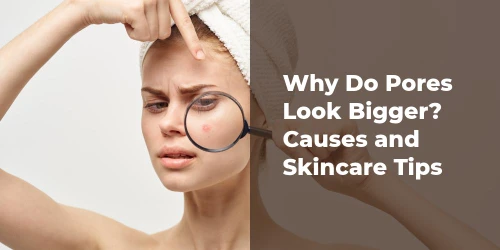


Pores are small openings in your skin. They let oil reach the surface and help keep skin comfortable. Everyone has them. Yet pores on the nose, forehead and cheeks can look more obvious than they used to. Does this mean your skin is dirty? Can you close pores for good?
The short answer is no. Pores cannot simply be opened and closed like doors. Their natural size is linked to your skin and genes. But oil, clogged pores, sun damage and skin changes can make them easier to see. Understanding the cause is more useful than chasing a quick fix.
This guide explains why pores look bigger and what everyday skincare may help. It is general information, not a treatment plan for a skin condition.
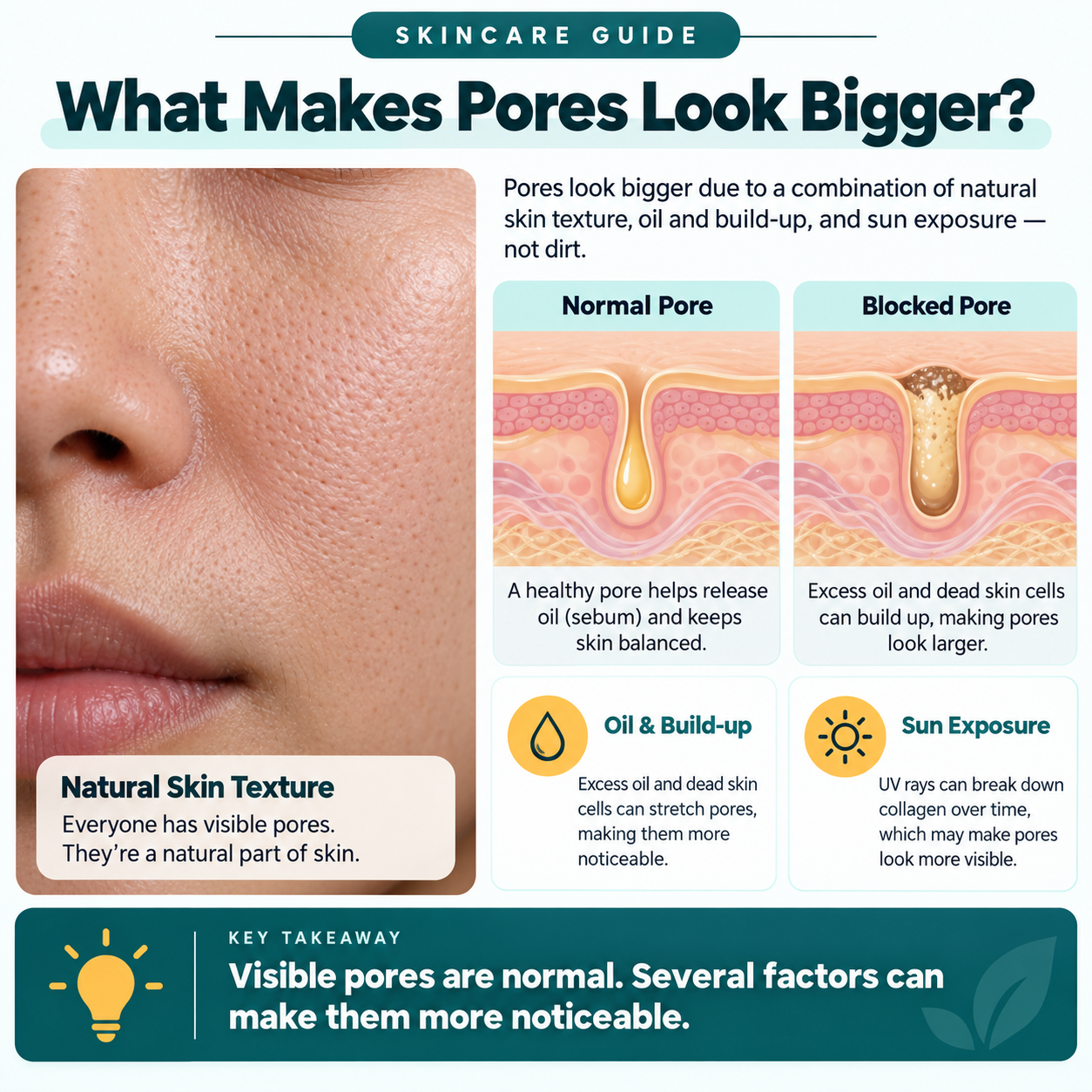
What Makes Pores Look Bigger?
A pore is the opening of a hair follicle. Oil made by a sebaceous gland travels through it onto the skin. Some pores look larger because the follicle and oil gland are naturally larger. DermNet, a dermatologist-led educational resource, lists oil production, follicle size, age-related changes and sun damage as factors linked with enlarged pores.
Oil and build-up
When skin makes more oil, the opening may look wider or shinier. Dead skin cells and oil can also build up inside a follicle. A blocked follicle may become a blackhead or whitehead. This is different from ordinary, healthy pores. Blackheads are not dirt trapped under the skin, so strong scrubbing is not the answer.
Age and sunlight
Skin changes as we age. When it loses some firmness, pores may look more noticeable. Sun exposure also affects the skin's support structure over time. That is one reason daily sun protection matters even if your main goal is smoother-looking skin.
Your natural skin pattern
People often see a cluster of visible pores beside the nose or on the inner cheeks. This pattern can be normal. Light, makeup and close-up phone cameras may also make texture stand out. Compare your skin in ordinary daylight, not only in a magnifying mirror.
The key point: visible pores are not proof of poor hygiene. You are usually managing their appearance, not changing their basic structure.
Which Skincare Habits Can Help?
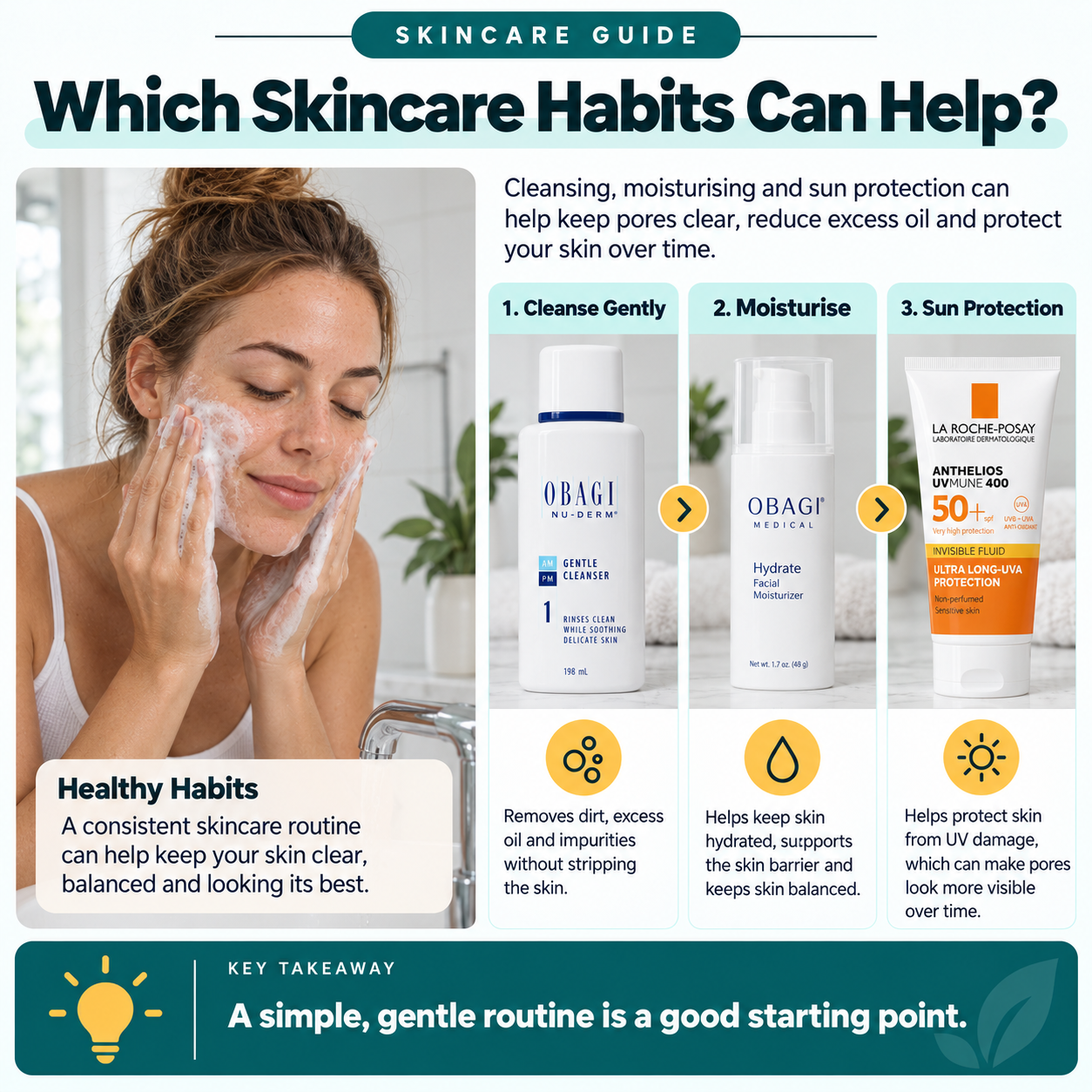
The American Academy of Dermatology (AAD) recommends a simple approach to make pores less noticeable: gentle cleansing, non-comedogenic products, sun protection and suitable acne care. The aim is to reduce avoidable build-up and irritation. It is not to strip every trace of oil away.
Wash without scrubbing
Use a gentle cleanser and lukewarm water. Many people find washing in the morning and evening enough. If your skin is dry or sensitive, ask a pharmacist or dermatologist about a routine that suits it. Rough washcloths and harsh scrubs can leave skin red. That can make texture seem more obvious, not less.
Moisturise and choose makeup carefully
Even oily skin needs moisture. A light, comfortable moisturiser may help prevent a tight or flaky feeling. Look for the words non-comedogenic or won't clog pores when choosing suitable skincare and makeup. These labels guide your choice but do not guarantee that every person will tolerate a formula.
Make sunscreen routine, not optional
Use broad-spectrum sunscreen and other sun protection whenever needed. In Australia, Cancer Council advice is especially important when UV is 3 or above. Seek shade, wear protective clothing and reapply sunscreen according to its label. Makeup with SPF should not be treated as a reliable replacement for a full sunscreen application.
If you already have a long routine, simplify it before adding products. A clean face, moisturiser and sunscreen are a better starting point than several strong acids layered together.
Can Salicylic Acid or Retinoids Help?
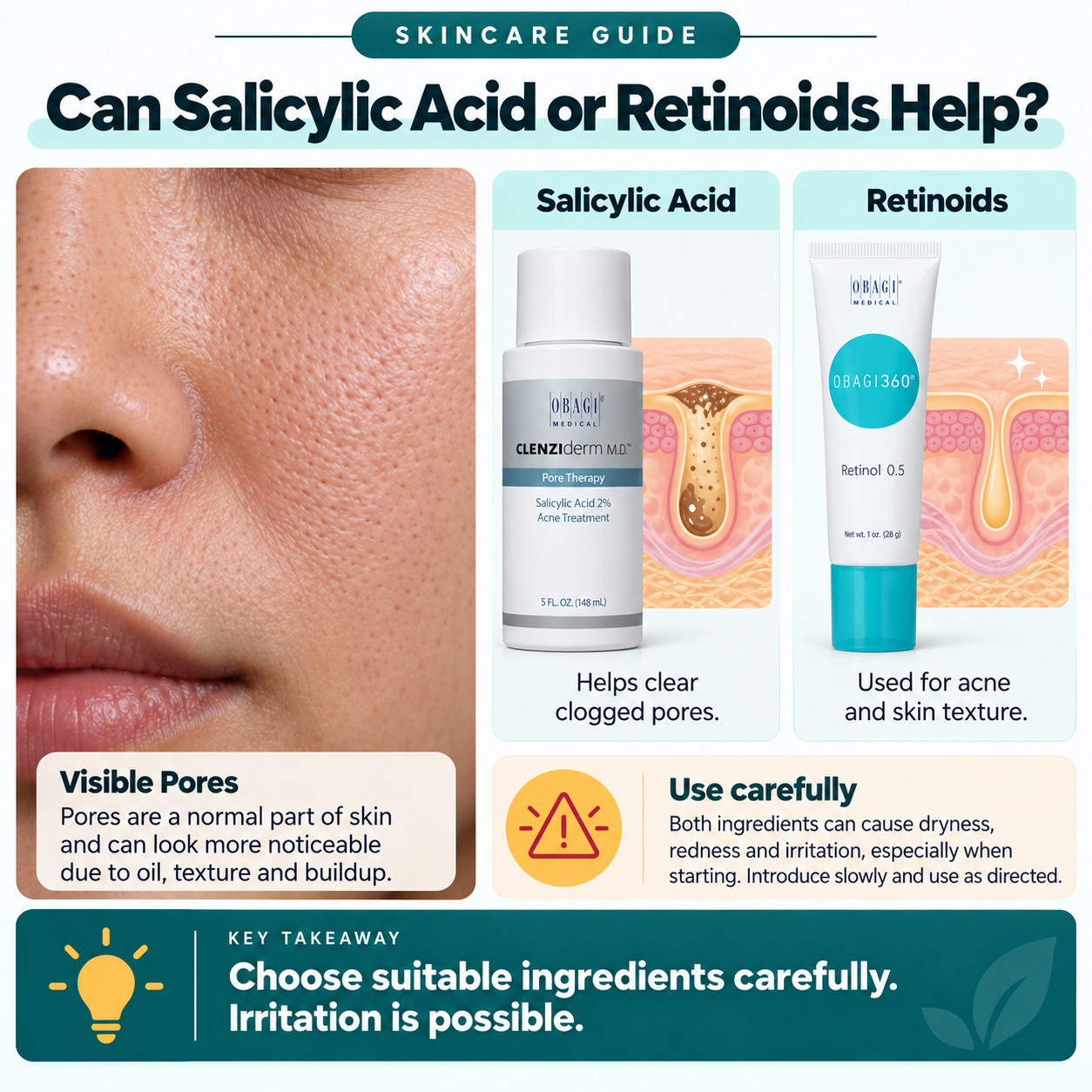
Some skincare ingredients can help when visible pores are linked with oily or acne-prone skin. But the right choice depends on tolerance, skin condition and other treatments you use.
Salicylic acid
Salicylic acid is often used in products for blackheads and whiteheads. The AAD says it helps clear pores and exfoliate. This may make blocked areas appear smoother over time. It can also cause dryness or stinging, especially when combined with other strong products. Start only as directed on the label; more is not automatically better.
To compare skincare options, explore the Obagi skincare range at MedCart, including cleansers and pore-care formulas. Some products in this type of range contain ingredients such as salicylic acid. Check each formula, its directions and current availability before choosing one.
Retinoids
Some retinoids are used for acne and skin texture. However, they can cause dryness and irritation, and some are not suitable during pregnancy. Ask a pharmacist or clinician before combining them with other active skincare. Never assume an expensive or stronger formula will suit your skin.
When to stop experimenting
If skin burns, peels heavily, feels sore or stays red, pause new products and seek advice. Persistent acne, painful lumps, sudden changes or scarring may need a GP or dermatologist. Products can support a routine, but they cannot replace a diagnosis.
For background on different ingredient types, see MedCart's chemical versus physical exfoliation guide.
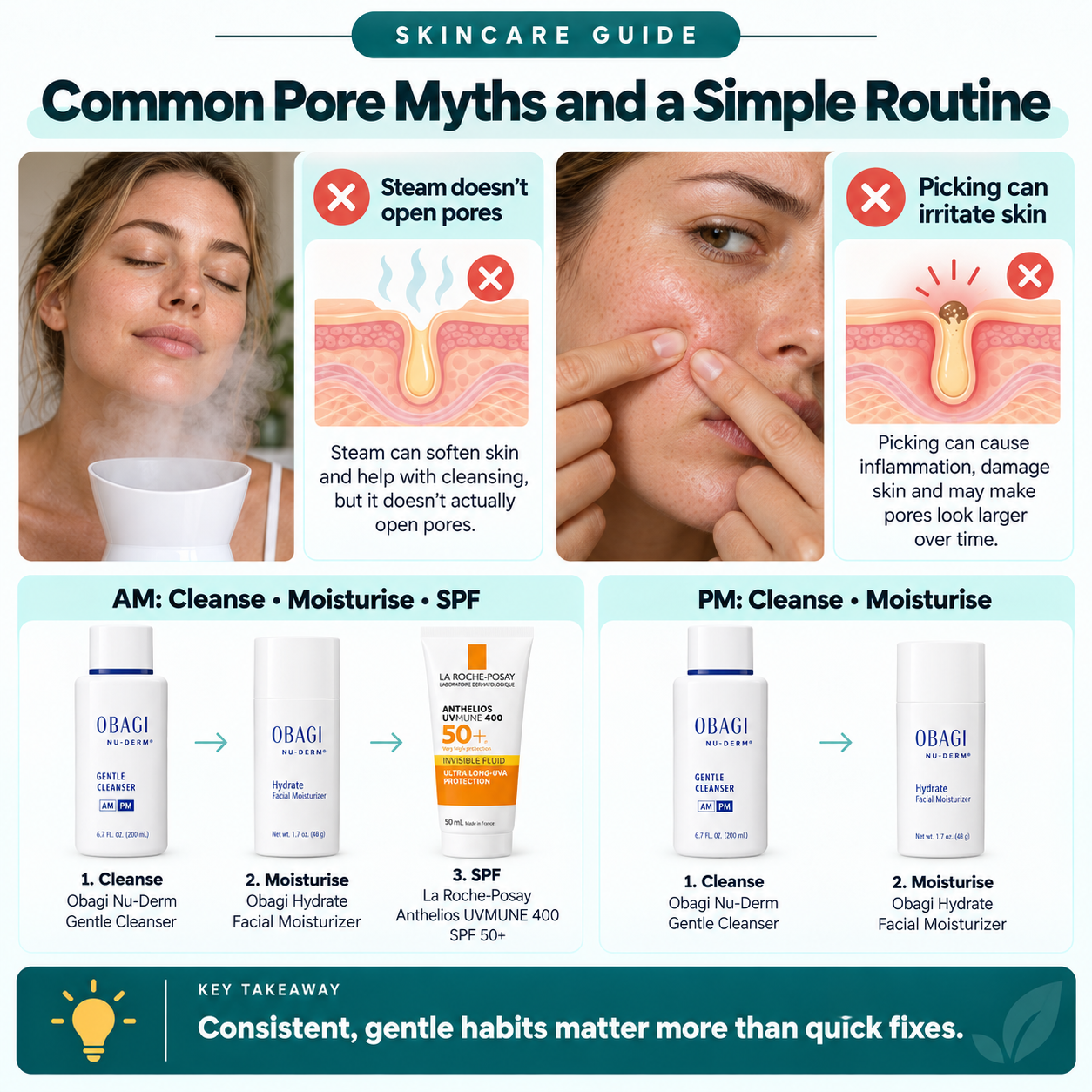
Myth: Steam opens pores. Warm steam may soften surface oil, but pores do not have muscles that open and shut. Very hot steam can irritate skin or cause burns. There is no need to steam your face before every cleanse.
Myth: Squeezing makes pores smaller. Picking can irritate skin and may cause marks or scarring. If a blackhead keeps returning, a dermatologist can recommend safer care.
Myth: You must exfoliate every day. Frequency depends on the product and your skin. Too much exfoliation may cause irritation. MedCart's guide to knowing your skin type explains why a routine should fit the person using it.
Try this basic plan:
- Morning: gentle cleanse if needed, moisturiser and suitable sun protection.
- Evening: gently remove makeup and sunscreen, cleanse and moisturise.
- Optional treatment: add one suitable product for clogged pores only after checking the directions and your skin's response.
- Weekly check: notice whether your skin feels comfortable. Do not judge progress from one close-up photograph.
A routine does not have to be complicated or expensive. Give gentle changes time, and avoid frequent switching. If an ingredient makes your skin worse, that is useful feedback, not a reason to use more of it.
FAQs
Can pores be permanently shrunk?
No skincare product can guarantee that. Some products and dermatology procedures may reduce how noticeable pores look, but results vary.
Do large pores mean I have acne?
No. Many people have visible pores without acne. A pore can be normal, oily or blocked; these are not the same thing.
Should I use several active ingredients together?
Not without considering irritation and your current routine. If unsure, ask a pharmacist or dermatologist.
Summary
Pores are a normal part of skin. Oil, blocked follicles, sunlight and age-related changes may make them more visible. Choose gentle cleaning, comfortable moisturising and sun protection first. If blackheads are a concern, a suitable acne product may help, but stronger is not always better.
Where to Buy
At MedCart Australia, browse the Obagi skincare collection to compare cleansers, exfoliating formulas and other skin care options. Read each ingredient list and the directions before choosing a product. Availability may change. For ongoing acne or irritation, seek professional advice before using a stronger treatment.
References
- DermNet. Enlarged pores. https://dermnetnz.org/topics/enlarged-pores. Published 2017.
- American Academy of Dermatology Association. What can treat large facial pores? https://www.aad.org/public/everyday-care/skin-care-secrets/face/treat-large-pores. Publication date not stated.
- American Academy of Dermatology Association. Adult acne treatment: Dermatologists recommend. https://www.aad.org/public/diseases/acne/diy/adult-acne-treatment. Publication date not stated.
- American Academy of Dermatology Association. Skin care on a budget. https://www.aad.org/public/everyday-care/skin-care-basics/care/skin-care-budget. Publication date not stated.
- Cancer Council Australia. UV Index. https://www.cancer.org.au/cancer-information/causes-and-prevention/sun-safety/uv-index. Publication date not stated.