



Introduction
Exfoliation removes dead skin cells from the outer surface of your skin. Two common methods are chemical exfoliation and physical exfoliation.
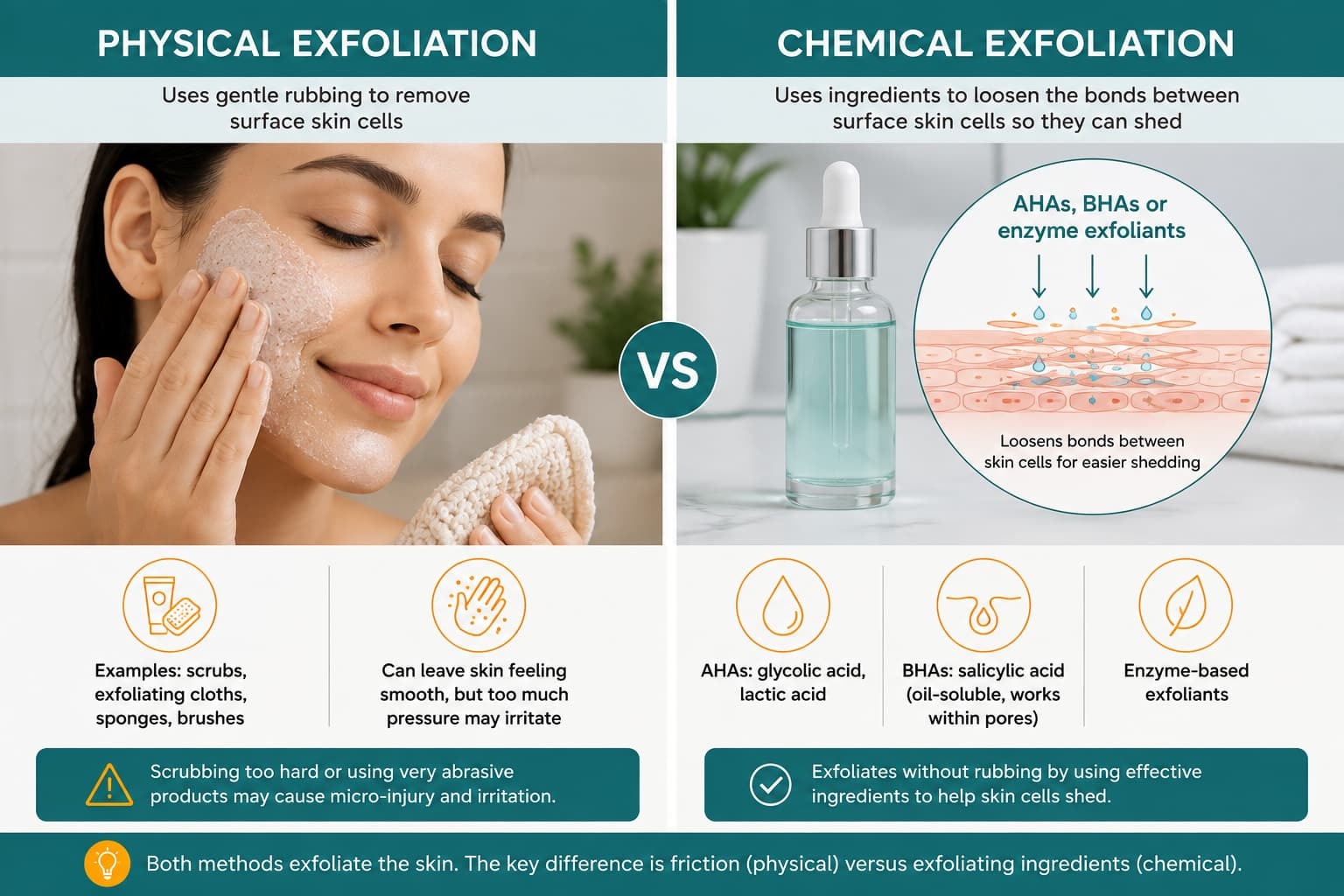
Physical exfoliation uses friction. This may come from a scrub, cloth, sponge or brush. Chemical exfoliation uses ingredients such as alpha hydroxy acids (AHAs) and beta hydroxy acids (BHAs) to help loosen and remove surface skin cells.
Neither method is automatically better for everyone. Your skin type, the area you want to exfoliate and the products already in your routine all matter.
The American Academy of Dermatology (AAD) says exfoliation is not suitable for every person and that choosing the wrong method or exfoliating too strongly can cause redness and irritation. (American Academy of Dermatology)
This guide compares chemical vs physical exfoliation so you can understand the main differences before choosing a product.
How Do Chemical and Physical Exfoliation Work?
Physical exfoliation removes surface skin cells through gentle rubbing. Common examples include scrubs, exfoliating cloths, sponges and brushes. The AAD describes this as mechanical exfoliation. (American Academy of Dermatology)
Physical exfoliation can make the skin feel smoother straight after use. However, the amount of pressure you apply matters. Scrubbing too hard or using a very abrasive product may irritate the skin. A 2026 review in the Journal of Cosmetic Dermatology notes that abrasive particles can cause small surface injuries and may worsen inflammation, particularly where acne is already present. (PubMed Central (PMC))
Chemical exfoliation does not rely on rubbing. It uses ingredients that help loosen the bonds between surface skin cells so they can shed more easily.
Common types include:
- AHAs, such as glycolic acid and lactic acid
- BHAs, most commonly salicylic acid
- some enzyme-based exfoliants
DermNet explains that AHAs such as glycolic and lactic acid encourage shedding of surface skin cells. The 2026 dermatology review also notes that salicylic acid is oil-soluble and can help loosen material within pores. (DermNet®)
Both methods can therefore exfoliate the skin. The key difference is friction versus exfoliating ingredients.
Which Type of Exfoliation May Suit Your Skin?
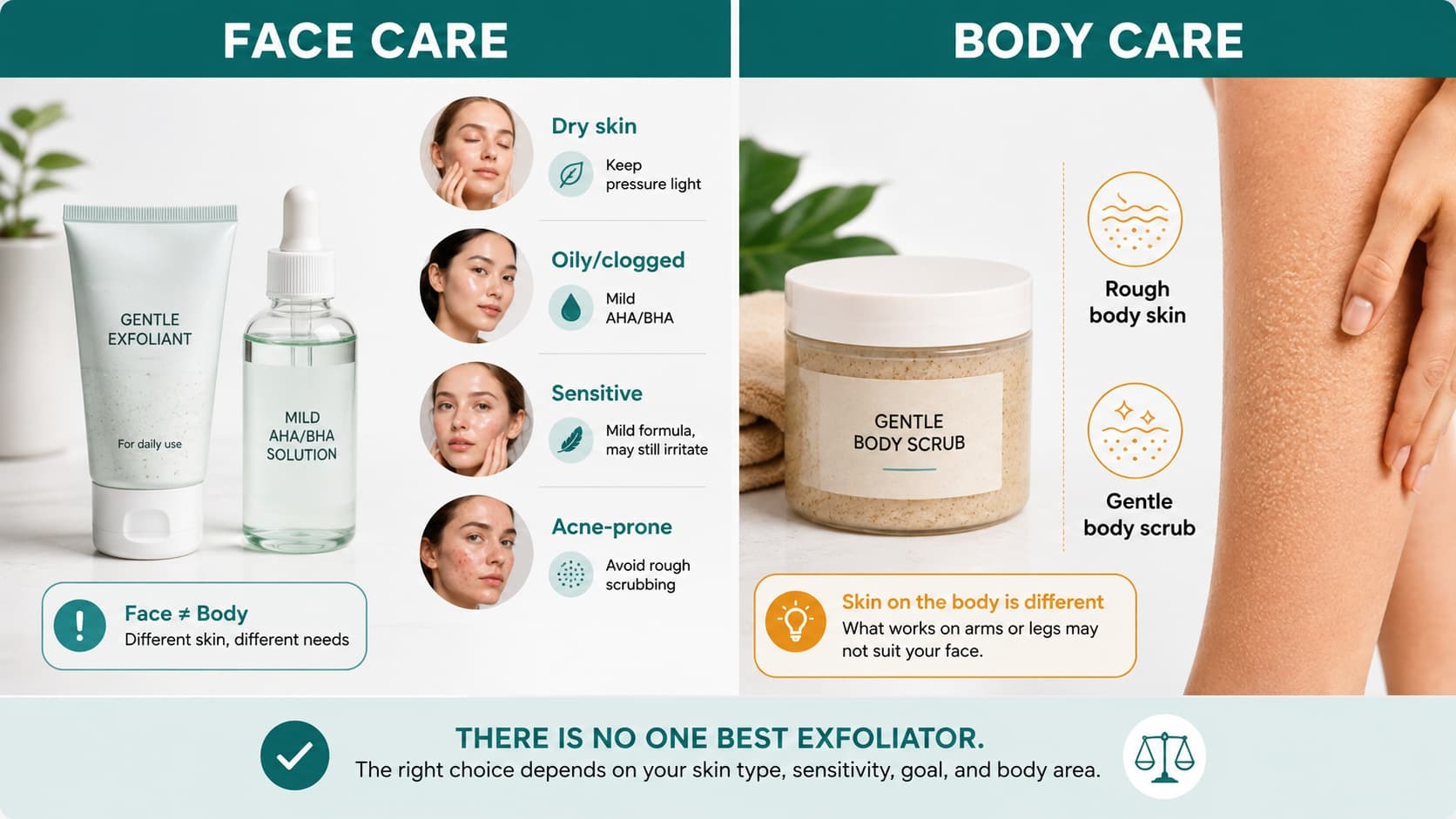
There is no universal best exfoliator. The AAD recommends choosing a method based on skin type and sensitivity. (American Academy of Dermatology)
| Skin or goal | Physical exfoliation | Chemical exfoliation |
|---|---|---|
| Normal or less-sensitive skin | A gentle scrub or cloth may be suitable | Mild AHAs or BHAs may also be suitable |
| Dry skin | Avoid heavy scrubbing; keep pressure light | A mild AHA may be an option if tolerated |
| Oily or clogged-prone skin | May help remove surface build-up | Salicylic acid may be useful because it is oil-soluble |
| Sensitive skin | Friction may be too irritating | A mild formula may be easier to tolerate, but irritation is still possible |
| Active or inflamed acne | Rough scrubbing may make irritation worse | Some acid-based products may be used, but choose carefully |
| Rough body skin | Gentle body scrubs can be practical | Products containing acids may also help loosen rough surface skin |
Healthdirect Australia advises against harsh exfoliants for acne because they may make breakouts worse. It lists salicylic and glycolic acid among topical ingredients used in some acne treatments. (Healthdirect)
For rough bumps such as keratosis pilaris, Healthdirect says a soft cloth or gentle scrub may help remove dead skin, but it warns not to scrub too hard. It also suggests asking a pharmacist about a mild cleanser containing salicylic acid. (Healthdirect)
The area of the body also matters. Research shows that skin on areas such as the trunk differs from facial skin, including having a thicker outer layer. This is one reason a product that feels comfortable on your arms or legs may not be suitable for your face. (PubMed)
For the body, you can explore MedCart's body scrubs. For facial care, browse face exfoliators & scrubs.
How to Exfoliate Without Overdoing It
More exfoliation does not always mean better results.
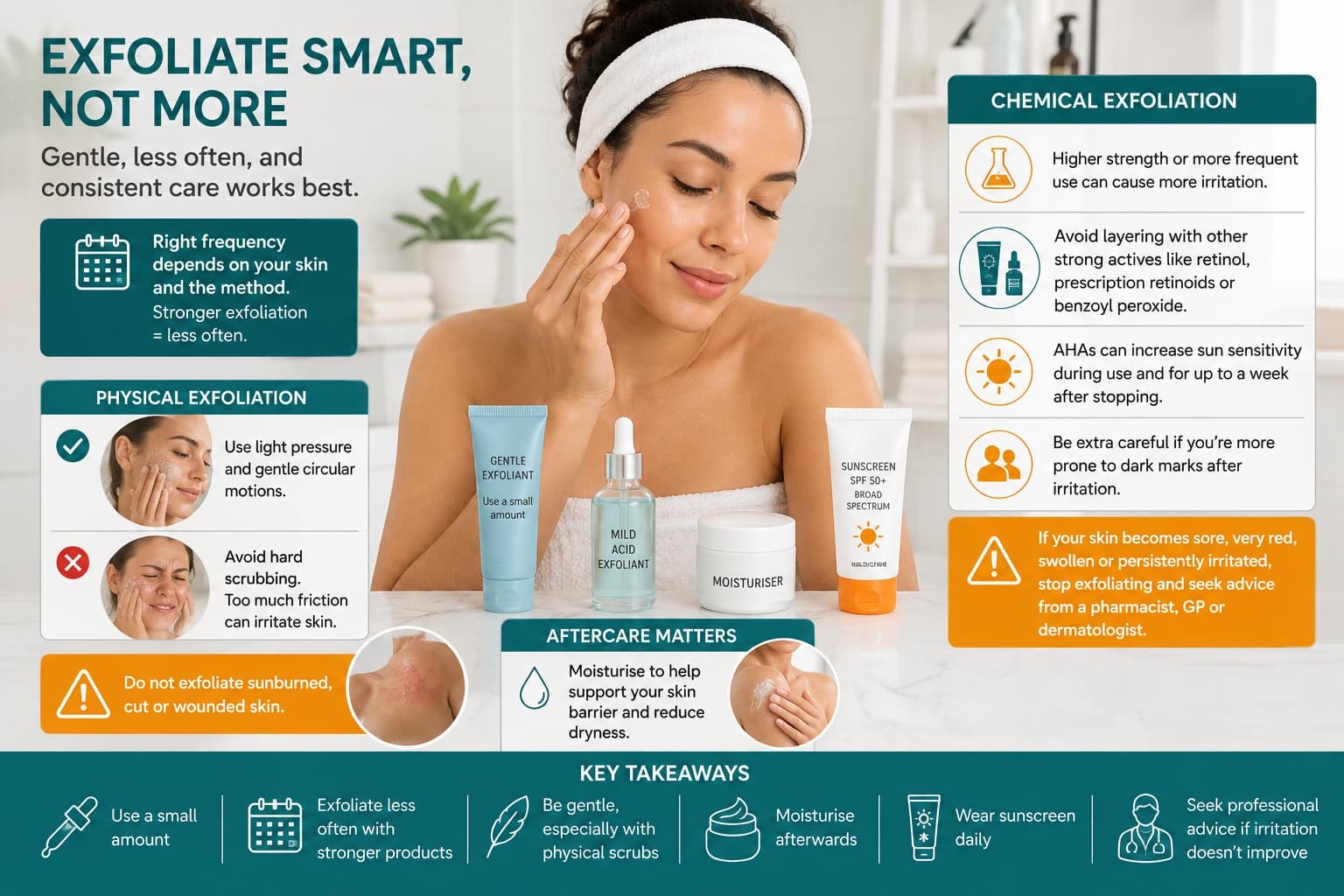
The AAD says the right frequency depends on your skin and the exfoliation method. In general, stronger exfoliation should be used less often. Over-exfoliation can leave skin red and irritated. (American Academy of Dermatology)
If you use a physical scrub, use light pressure. The AAD recommends gentle circular motions and warns against exfoliating skin that is sunburned, cut or wounded. Moisturiser can also be applied afterwards to help with dryness. (American Academy of Dermatology)
Chemical exfoliation also needs care. Higher concentrations or stronger formulas may cause more irritation. If your routine already contains ingredients that can make skin dry or sensitive, such as retinol, prescription retinoids or benzoyl peroxide, adding another exfoliant may increase irritation. (American Academy of Dermatology)
Sun protection is also important when using some chemical exfoliants. The US Food and Drug Administration says AHAs may increase the skin's sensitivity to sunlight while they are being used and for up to a week after stopping them. (U.S. Food and Drug Administration)
Be extra careful if your skin often develops dark marks after irritation. The AAD notes that aggressive exfoliation may increase pigmentation in some people, particularly those with darker skin tones. (American Academy of Dermatology)
If your skin becomes sore, very red, swollen or persistently irritated, stop exfoliating and seek advice from a pharmacist, GP or dermatologist.
Chemical vs Physical Exfoliation: Quick Decision Guide
Choose based on your skin rather than which method sounds stronger.
Consider a physical exfoliant if:
- you want simple surface buffing
- your skin is not easily irritated
- you prefer a rinse-off scrub or exfoliating cloth
- you are exfoliating rough body areas and can use light pressure
Consider a chemical exfoliant if:
- you want to avoid rubbing the skin
- you are looking for ingredients such as glycolic, lactic or salicylic acid
- your skin is oily or prone to clogged pores and a suitable BHA product is recommended
- you find gentle chemical formulas easier to tolerate than scrubs
Consider avoiding exfoliation for now if:
- your skin is sunburned, cut or very irritated
- you have a damaged or painful skin barrier
- you are experiencing a flare of a skin condition
- other products in your routine are already making your skin peel or sting
There is also no need to choose only one method forever. Some people use different products on the face and body. What matters is keeping the routine gentle and watching how your skin responds.
FAQs
Is chemical exfoliation better than physical exfoliation?
Not for everyone. Chemical exfoliation avoids the friction used by scrubs, which may make it easier for some sensitive or acne-prone skin to tolerate. However, acids can also cause irritation. A mild physical exfoliant may work well for other people.
Can I use a body scrub on my face?
It is generally better to choose products made for the area where you plan to use them. Body scrubs may have a stronger texture than facial products. Facial skin may be less tolerant of heavy rubbing.
How often should I exfoliate?
There is no single schedule that suits everyone. The AAD says frequency should depend on your skin type and the strength of your exfoliation method. More aggressive exfoliation usually needs to be done less often. (American Academy of Dermatology) Follow the product directions and reduce use if your skin becomes dry, sore or irritated.
Can chemical and physical exfoliants be used together?
Some products contain both types. However, combining several exfoliating products can increase the chance of irritation. Consider the full routine rather than each product on its own.
Summary
Chemical and physical exfoliation both remove surface skin cells, but they work in different ways.
Physical exfoliation uses friction from scrubs or tools. Chemical exfoliation uses ingredients such as AHAs and BHAs.
Neither is automatically the best option. Your skin type, sensitivity, existing routine and the area being exfoliated should guide your choice. Use products gently, avoid over-exfoliating and pay attention to dryness, redness or stinging.
Where to Buy Exfoliators in Australia
MedCart Australia offers skincare and body-care products for different routines and preferences.
Browse face exfoliators & scrubs for facial care, or explore body scrubs for body exfoliation.
You can also visit MedCart Australia to explore the wider beauty and wellness range.
Always read the product label and directions before use. If you have a skin condition or persistent irritation, ask a pharmacist, GP or dermatologist for advice.
References
- American Academy of Dermatology Association. How to safely exfoliate at home. Last updated 6 February 2026. https://www.aad.org/public/everyday-care/skin-care-secrets/routine/safely-exfoliate-at-home
- Healthdirect Australia. Keratosis pilaris — treatment, causes and symptoms. Last reviewed September 2025. https://www.healthdirect.gov.au/keratosis-pilaris
- Healthdirect Australia. Acne treatments. Last reviewed August 2025. https://www.healthdirect.gov.au/acne-treatments
- Feng X, Chen Y, Liu Y — Journal of Cosmetic Dermatology, Wiley. Truncal Acne: Pathophysiology, Clinical Features, and Management Strategies. Published 13 February 2026. https://onlinelibrary.wiley.com/doi/10.1111/jocd.70715
- DermNet. Alpha hydroxy acid facial treatments. Updated April 2017. https://dermnetnz.org/topics/alpha-hydroxy-acid-facial-treatments
- US Food and Drug Administration. Guidance for Industry: Labeling for Cosmetics Containing Alpha Hydroxy Acids. January 2005. https://www.fda.gov/regulatory-information/search-fda-guidance-documents/guidance-industry-labeling-cosmetics-containing-alpha-hydroxy-acids