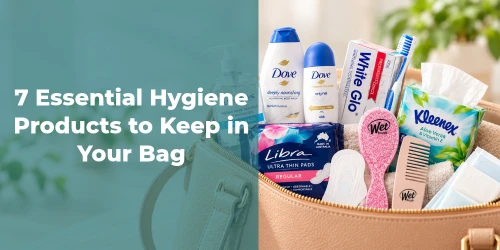


Personal hygiene does not need to be complicated. A few small products in your everyday bag can help you stay clean, comfortable and prepared while away from home.
This can be useful during work, school, travel, exercise, public transport or long days out.
Healthdirect Australia describes personal hygiene as the daily habits used to keep your body clean and look after your health. This includes hand washing, body care, oral care and period hygiene.
So, what should go into a simple essential hygiene kit? Here are seven useful products to consider, along with what to check before buying and how to use them safely.
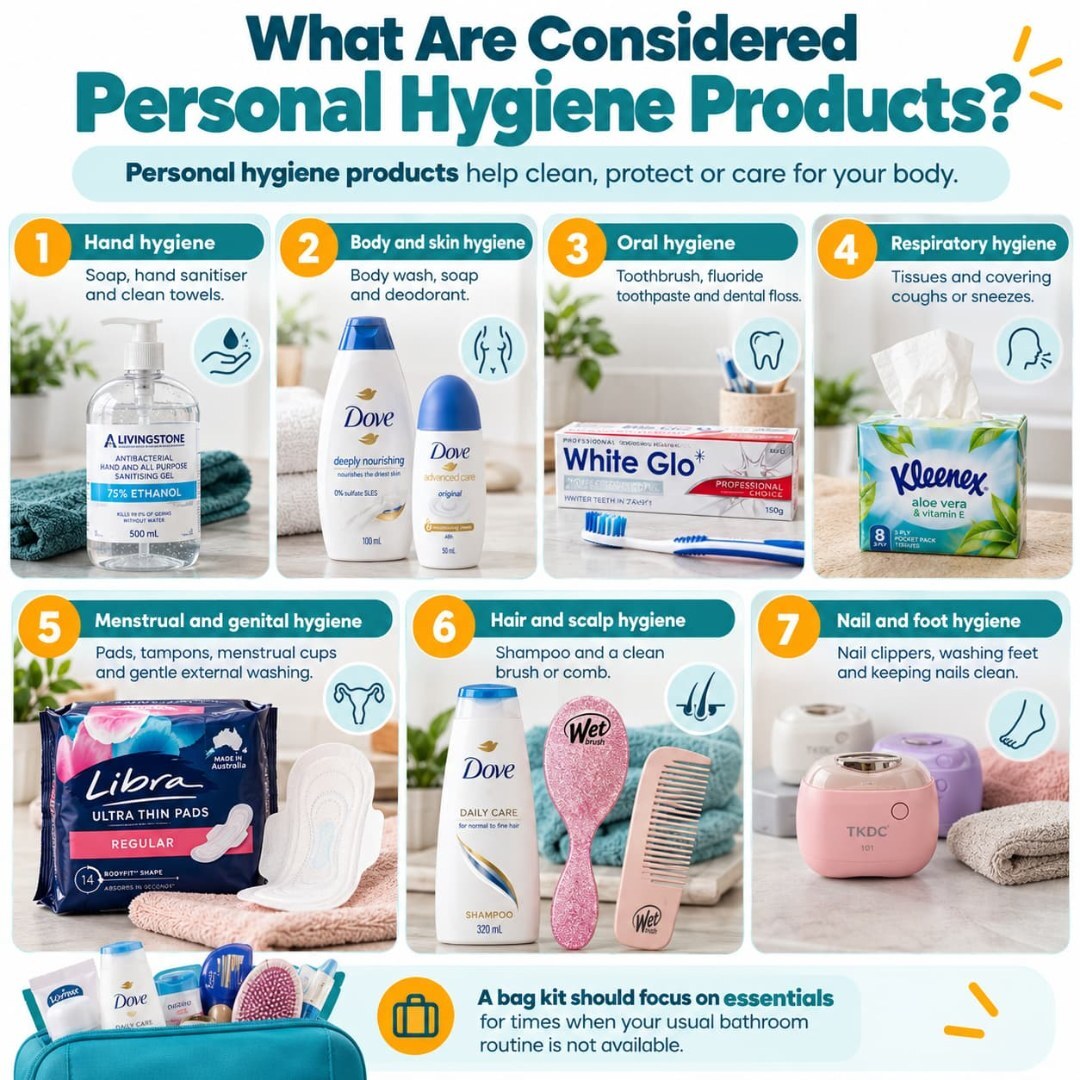
What Are Considered Personal Hygiene Products?
Personal hygiene products are items used to clean, protect or care for your body. Examples include soap, hand sanitiser, toothbrushes, toothpaste, deodorant, period products, tissues, shampoo and body wash.
Personal hygiene covers several parts of everyday care. Seven useful types of hygiene include:
Healthdirect Australia says good personal hygiene includes washing your body, cleaning your hands, brushing and flossing your teeth, keeping nails clean and covering your nose and mouth when coughing or sneezing.
Not every hygiene product needs to travel with you. A bag kit should focus on items that can help when your normal bathroom routine is not available.
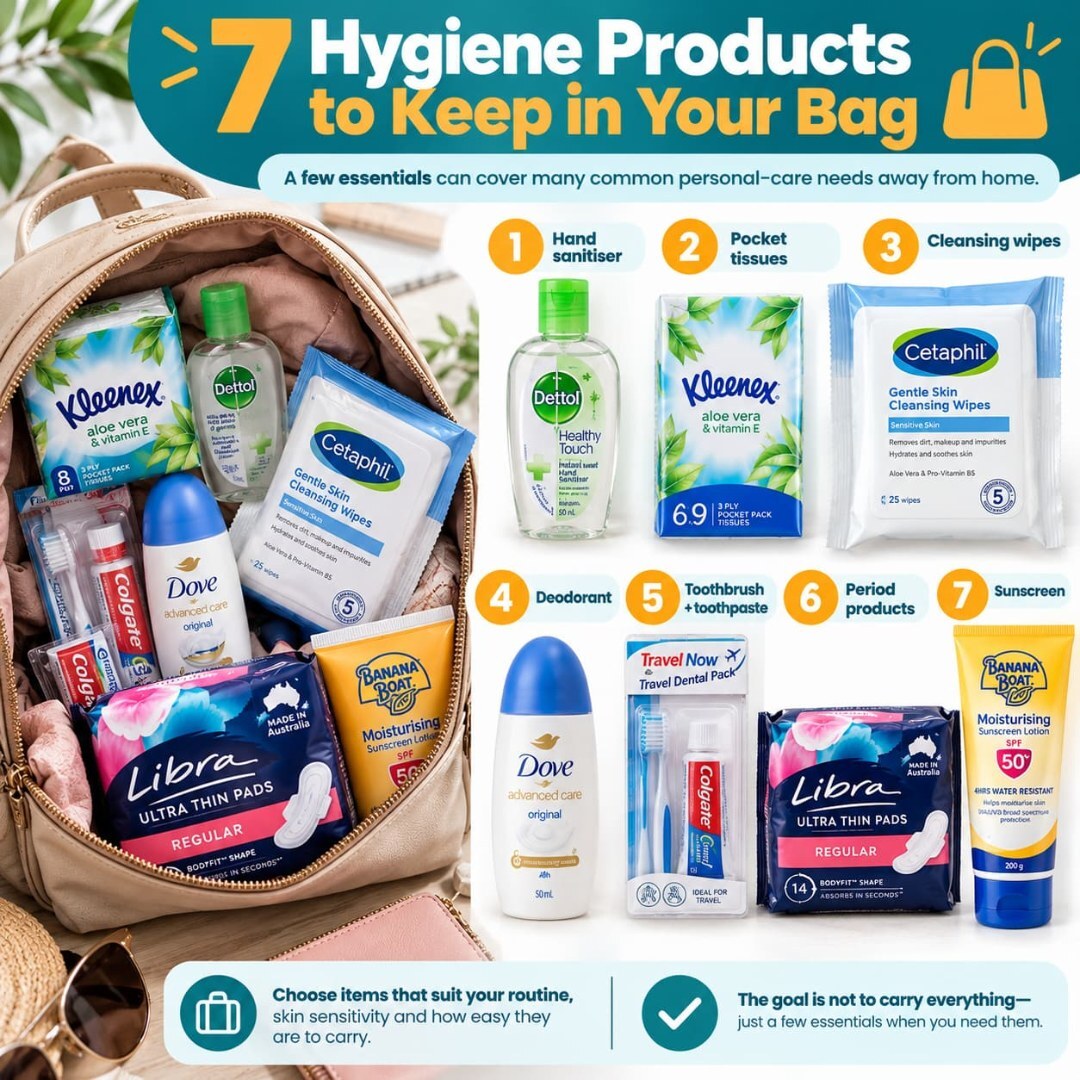
7 Essential Hygiene Products to Keep in Your Bag
You do not need to carry your whole bathroom cabinet. These seven hygiene products cover many common personal care needs while you are away from home.
Your bag can be adjusted to suit your routine. For example, someone who does not need period products could use that space for dental floss, spare contact-lens supplies or another personal care item they regularly use.
The goal is not to carry everything. It is to have a few essential hygiene products available when you need them.
What Should You Check Before Buying Hygiene Products?
Travel-size products should be useful, safe and easy to carry. Size matters, but it should not be the only thing you consider.
First, read the label. Check the ingredients, directions, warnings and expiry date where relevant. If you have sensitive skin, fragrance-free or simpler formulas may be worth considering.
Next, think about how you will use the product. There is little value in carrying something you dislike using. For example, choose a sunscreen texture you can comfortably reapply or a deodorant format that works well for your routine.
Consider these five buying checks:
- Purpose: Is the product made for the job you need it to do?
- Ingredients: Does it contain anything you know irritates your skin?
- Directions: Can you use and store it correctly while away from home?
- Packaging: Will the lid stay closed without leaking in your bag?
- Expiry: Is the product still within its use-by or expiry date where one applies?
For wipes in particular, check what they are designed to clean. A wipe made for a bench or medical equipment should not automatically be used on skin.
Products with specific safety directions, such as hand sanitiser, sunscreen and tampons, should always be used according to the label.
It is also best not to share highly personal hygiene items such as toothbrushes or razors.
Why Is Personal Hygiene Important?
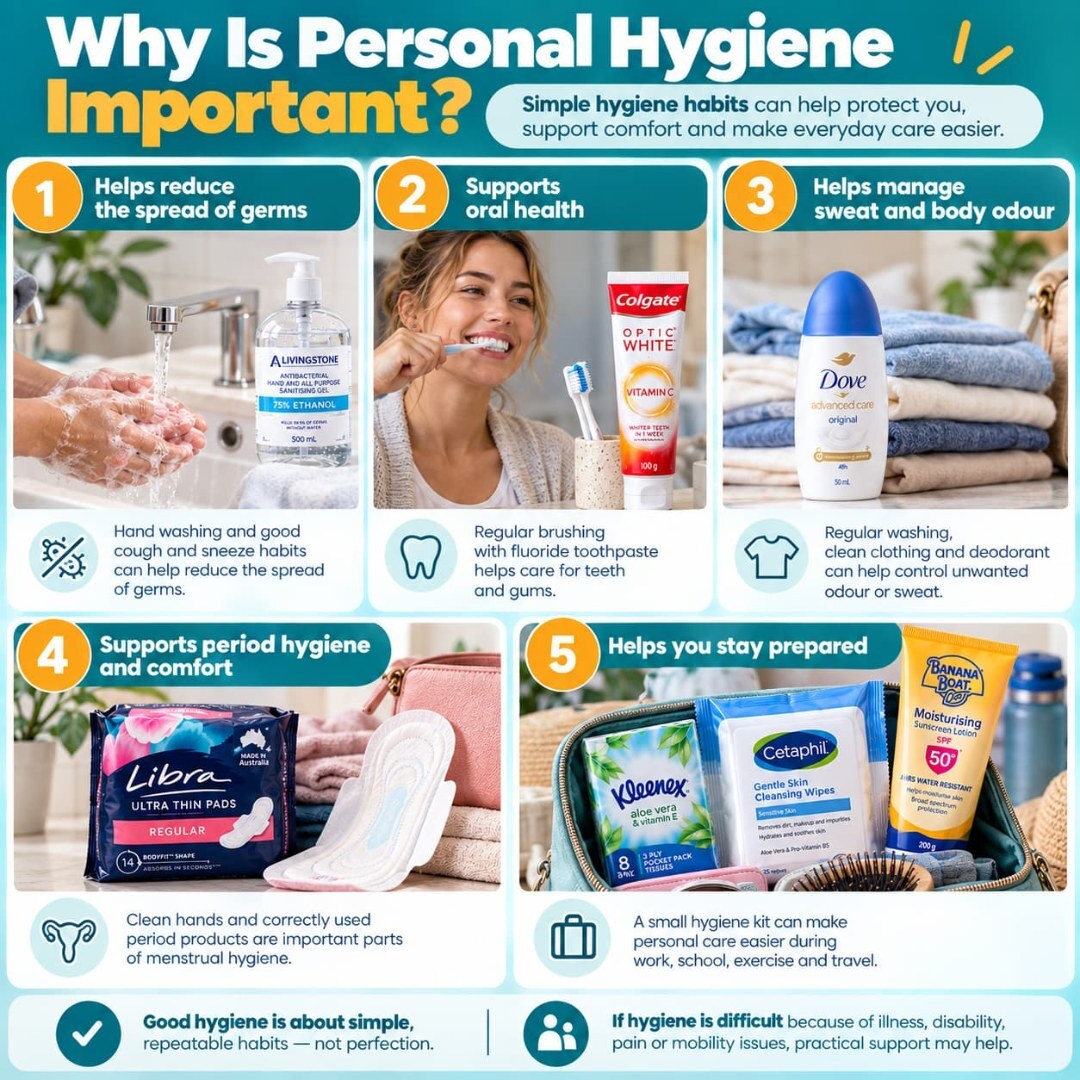
Good personal hygiene is about more than feeling fresh. Healthdirect Australia says it can help protect you and other people by reducing the spread of germs.
Five important benefits of personal hygiene are:
- Helps reduce the spread of germs. Hand washing and good cough and sneeze habits can reduce opportunities for germs to spread.
- Supports oral health. Regular brushing with fluoride toothpaste helps care for teeth and gums.
- Helps manage sweat and body odour. Regular washing, clean clothing and deodorant can help control unwanted odour.
- Supports period hygiene and comfort. Clean hands and correctly used period products are important parts of menstrual hygiene.
- Helps you stay prepared. A simple routine and small hygiene kit can make personal care easier during work, school, exercise and travel.
What Are Examples of Poor Hygiene?
Poor hygiene can include regularly skipping hand washing after using the toilet, not cleaning your teeth, leaving used tissues around, wearing heavily soiled clothing for long periods or not changing period products as directed.
However, difficulty with hygiene is not always a choice. Illness, disability, pain, mental or physical limitations, or poor access to suitable washing facilities can make personal care harder.
How to Help Personal Hygiene
Good hygiene often starts with simple habits that are easy to repeat.
Wash and dry your hands properly. Brush your teeth morning and night. Bathe or shower regularly. Wear clean clothing. Keep commonly used products where you can easily reach them.
For your everyday bag, use a small hygiene pouch. Check it regularly and replace products that are empty, damaged or expired.
If you or someone you care for finds personal hygiene difficult because of a health, disability or mobility issue, a doctor, pharmacist, occupational therapist, carer or other health professional may be able to suggest practical support.
FAQs
What are examples of hygiene or personal care products?
Examples include soap, hand sanitiser, tissues, cleansing wipes, deodorant, antiperspirant, toothbrushes, fluoride toothpaste, dental floss, period products, shampoo, body wash, sunscreen and nail-care products.
Some are used every day at home. Others are useful to carry when travelling or spending long periods away from home.
Do cleansing wipes replace hand washing?
Not usually. Healthdirect Australia says warm, soapy water is the best option when hands are visibly dirty.
Alcohol-based hand sanitiser can be useful when soap and water are not available and there is no visible dirt on your hands. Cleansing wipes may help with simple clean-ups but should not replace normal hand hygiene.
Is deodorant the same as antiperspirant?
No. Healthdirect explains that deodorants help reduce smell. Antiperspirants help reduce sweating by blocking sweat glands.
Some products combine both functions.
Do I need all seven hygiene products every day?
No. Build your bag around your needs.
Someone who spends a lot of time outdoors may place more importance on sunscreen. Someone who menstruates may want an emergency period kit. A traveller may prioritise oral-care and hand-hygiene products.
How often should I check my hygiene bag?
A quick check once a week can help. Replace empty products, check expiry dates where relevant and make sure packaging has not leaked or become damaged.
Summary
A useful hygiene bag does not need to be large.
Consider carrying hand sanitiser, tissues, cleansing wipes, deodorant or antiperspirant, oral-care products, period products where relevant, and sunscreen.
Choose products based on their intended use, ingredients, directions, packaging and how well they suit your daily routine.
Portable hygiene products can make personal care easier when you are away from home, but they do not replace regular hand washing, bathing, clean clothing and oral care.
Where to Buy Personal Hygiene Products
You can explore personal hygiene, oral care, feminine care, sunscreen and other personal care products at MedCart Australia.
MedCart Marketplace brings together health, medical, beauty and wellness products from marketplace sellers across Australia.
When shopping for hygiene products, compare the product information, size, ingredients and directions to find options that suit your needs. Always read the label and follow the directions for use.
References
- Healthdirect Australia. Personal hygiene. Last reviewed August 2025. Full URL: https://www.healthdirect.gov.au/personal-hygiene
- Healthdirect Australia. Hand washing. Last reviewed December 2023. Full URL: https://www.healthdirect.gov.au/hand-washing
- Therapeutic Goods Administration (TGA), Australian Government. Hand sanitiser information for consumers. Last updated 6 April 2025. Full URL: https://www.tga.gov.au/hand-sanitisers-information-consumers
- Australian Dental Association. Brushing Teeth. Publication date not stated. Current page accessed September 2026. Full URL: https://teeth.org.au/brushing-teeth
- Healthdirect Australia. Menstruation (periods). Last reviewed October 2024. Full URL: https://www.healthdirect.gov.au/menstruation
- Healthdirect Australia. Sunscreen. Last reviewed February 2025. Full URL: https://www.healthdirect.gov.au/sunscreen
- Cancer Council Australia. Advice on how to choose, apply and store sunscreen. Publication date not stated. Current page accessed September 2026. Full URL: https://www.cancer.org.au/cancer-information/causes-and-prevention/sun-safety/sunscreen/advice