

What if you had a sexually transmitted infection (STI) right now and didn't know it?
No pain. No unusual discharge. No itching. Nothing that would make you think something was wrong.
It might sound unlikely, but many sexually transmitted infections can develop without noticeable symptoms. You could feel completely healthy while carrying an infection and potentially passing it on to someone else.
In Australia, this is particularly relevant to chlamydia, one of the most commonly diagnosed STIs. According to the Kirby Institute's September 2026 surveillance report, Australia recorded 94,184 chlamydia diagnoses in 2025.
The concerning part? Many people with chlamydia do not experience symptoms at all.
If you've recently had unprotected sex, started seeing someone new, experienced a condom breaking or been told a partner has an STI, waiting for symptoms may not be the safest approach.
So, can you have an STI without symptoms, how soon after exposure can you get tested, and are at-home STI test kits reliable?
Here's what Australians should know.
Can You Really Have an STI Without Symptoms?
Yes. An STI without symptoms is often described as an asymptomatic STI.
This means an infection is present, but the person does not experience noticeable signs such as pain, discharge, irritation or sores.
Some people never develop symptoms. Others may experience mild symptoms that are mistaken for something else or disappear without the infection being treated.
For example, chlamydia can affect the cervix, urethra, rectum or throat without causing obvious discomfort.
Other infections, including gonorrhoea, syphilis and HIV, may also have periods without noticeable symptoms.
Feeling healthy does not necessarily mean you are free from an STI.
Importantly, someone with an asymptomatic infection may still transmit it to a sexual partner.
This is why Australian sexual health guidelines recommend regular STI testing based on individual risk factors.
Australia's Chlamydia Numbers: Why Testing Matters
Chlamydia remains Australia's most commonly notified STI.
The Kirby Institute's 2026 surveillance findings reported the following diagnoses in Australia during 2025:
These figures represent recorded diagnoses, not every infection occurring in Australia.
Chlamydia is especially relevant because it frequently develops without symptoms.
Australian sexual health information indicates that a substantial proportion of people with chlamydia experience no noticeable symptoms.
This means relying on physical changes alone is not an effective way to determine whether you have been infected.
The good news is that chlamydia is treatable with antibiotics. Testing allows infections to be identified and treated before they cause further complications.
What Happens If You Have Chlamydia and Don't Know It?
An untreated chlamydia infection can remain unnoticed for an extended period.
Not everyone develops complications, but untreated infections can sometimes cause serious health problems.
1. You Could Pass the Infection to Someone Else
Chlamydia can spread through vaginal, anal or oral sexual contact.
Someone can transmit the infection without knowing they have it.
This means a partner who appears healthy or has no symptoms may still have an STI.
2. It Can Affect Reproductive Health
In some people, untreated chlamydia can spread to the upper reproductive tract and cause pelvic inflammatory disease (PID).
PID can increase the risk of chronic pelvic pain, ectopic pregnancy and infertility.
Chlamydia can also cause complications such as epididymitis in people with testicles.
These complications are not inevitable, but they are important reasons to detect and treat infections early.
3. You Might Mistake Mild Symptoms for Something Else
Some STI symptoms can resemble other common health problems.
For example, burning during urination might be mistaken for a urinary tract infection, while unusual discharge or irritation may be attributed to another condition.
Because symptoms overlap, testing is often necessary to identify the cause.
How Do You Know If You Have an STI Without Symptoms?
You cannot reliably tell whether you have an STI simply by looking for symptoms.
Testing is the most reliable way to determine whether an infection is present.
Depending on the infection and your sexual history, testing may involve:
- A urine sample for certain bacterial STIs.
- A vaginal, throat or rectal swab.
- A blood test for infections such as HIV or syphilis.
- Other tests recommended by a healthcare professional.
A sexual health check may include several tests because one test does not detect every STI.
For chlamydia and gonorrhoea, Australian clinical guidelines recommend laboratory nucleic acid amplification tests (NAATs), which detect genetic material from the bacteria.
You can also collect certain samples yourself, including vaginal swabs, for laboratory testing.
How Soon After Exposure Can I Test for an STI?
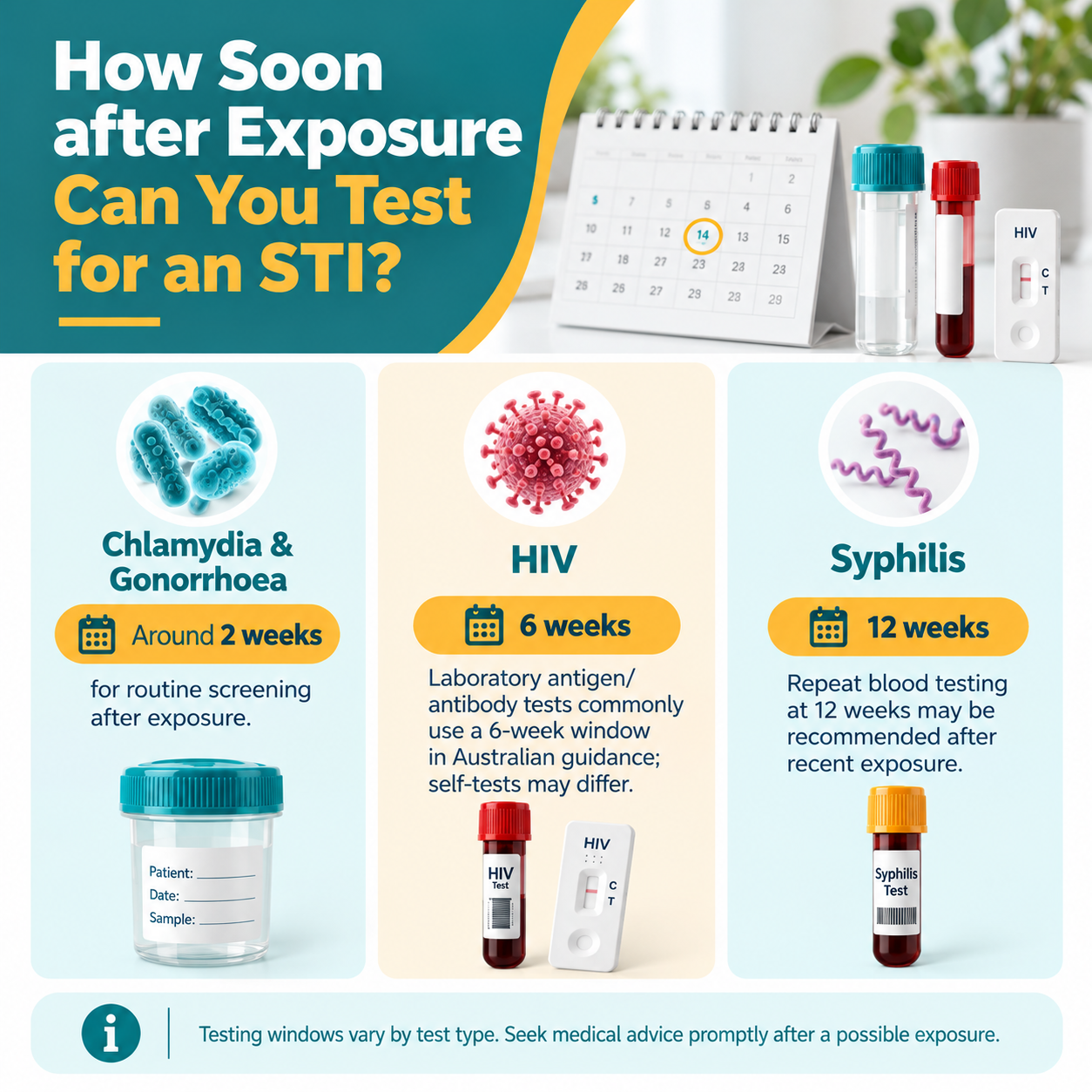
If you've recently had unprotected sex or another possible STI exposure, you may be wondering whether you should get tested immediately.
The answer depends on the infection and the type of test.
Every STI has a window period. This is the time between exposure and when a particular test can reliably detect an infection.
Testing too early may produce a negative result even when an infection is present.
STI Testing Window Periods: A General Guide
Important: These are general guidelines, not universal detection times. Testing schedules vary by test technology, exposure, symptoms and individual circumstances.
If a partner has tested positive or you develop symptoms, seek medical advice promptly rather than waiting for a window period to end.
If you may have been exposed to HIV within the past 72 hours, seek urgent medical advice about post-exposure prophylaxis (PEP). Do not wait for a home test.
What If You Test Negative Too Early?
A negative result during the window period may not reliably exclude an infection.
Your healthcare professional may recommend repeat testing after the appropriate interval.
If you have ongoing symptoms, a known exposure or a positive partner, further assessment may be necessary even after a negative test.
A negative test is only reassuring when the correct infection, sample type and testing window have been considered.
When Should You Get Tested for an STI?
You do not need to wait until something feels wrong.
Consider arranging an STI test if:
- You've had unprotected sex. Condoms reduce the risk of many STIs, but do not eliminate every risk.
- A condom broke or slipped off. This may create an exposure risk depending on the circumstances.
- You've started seeing a new sexual partner. Testing can help both partners understand their sexual health status.
- A partner has been diagnosed with an STI. You may need testing and, in some cases, treatment even without symptoms.
- You haven't been tested for a while. Regular screening is recommended based on sexual activity and personal risk.
- You're pregnant or planning pregnancy. STI screening can be important for maternal and infant health.
Healthdirect Australia recommends regular STI testing based on individual circumstances and risk factors. Some people may need more frequent screening.
Can You Test for an STI at Home?
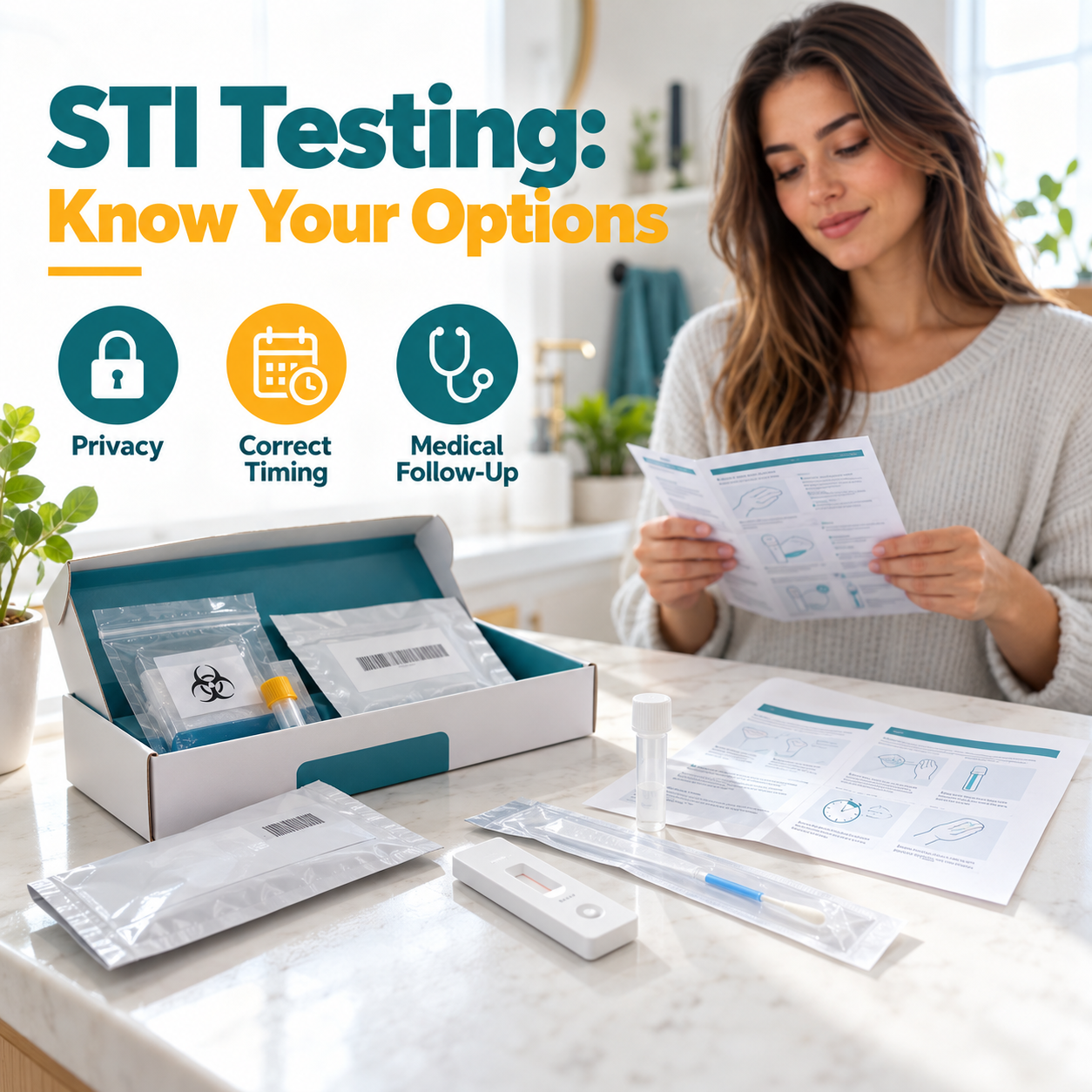
At-home testing may provide a more private and convenient way to begin checking your sexual health.
However, there are important differences between available testing methods.
At-Home Rapid STI Tests
Some rapid tests are designed to produce a result at home using a specified sample.
They may be convenient, but accuracy varies between products and testing methods.
Only use products approved for self-testing in Australia and follow their instructions carefully.
Home Sample Collection Kits
Some services allow you to collect a urine, vaginal or other sample at home and send it to a laboratory for analysis.
These differ from rapid self-tests because the laboratory performs the actual testing.
Testing at a GP or Sexual Health Clinic
A healthcare professional can recommend tests based on your exposure history, symptoms and the parts of your body that may have been exposed.
This is particularly important when you need testing for several STIs, have symptoms or require treatment.
Are All Home STI Test Kits Reliable?
Not necessarily.
In 2026, Australia's Therapeutic Goods Administration (TGA) raised performance concerns about a specific TouchBio chlamydia and gonorrhoea self-test for females and suspended the product from the Australian Register of Therapeutic Goods.
The concern involved the possibility of false-negative results.
This does not mean all home STI tests are unreliable. It does highlight why consumers should check the regulatory status, intended use and accuracy information for individual products.
Before purchasing an STI test kit, confirm that it is suitable for self-testing and is currently authorised for supply in Australia.
How to Choose the Right STI Test Kit
Before buying an at-home STI test, consider these questions:
The right test depends on the infection you need to check for, your exposure history and the instructions for the particular product.
Where to Buy STI Test Kits in Australia
If you're considering private sexual health screening, you can explore MedCart Australia's STI Test Kits range.
You can also browse the wider Monitoring & Testing category for other health testing products.
MedCart is an Australian medical marketplace offering products from multiple sellers. Product availability, suitability and regulatory status should be checked before purchasing.
Remember that a home test may not replace a complete sexual health assessment. If you have a known STI exposure, symptoms or concerns about a result, contact a GP or sexual health clinic.
Frequently Asked Questions About STIs Without Symptoms
Can you have chlamydia for months without knowing?
Yes. Chlamydia frequently causes no noticeable symptoms and can remain undiagnosed for months or longer. Testing is the only reliable way to identify an asymptomatic infection.
Can you have an STI if neither partner has symptoms?
Yes. Both partners can feel healthy while one or both have an asymptomatic infection. The absence of symptoms does not confirm that either person is free from STIs.
Can you get an STI from having sex only once?
Yes. An STI can be transmitted during a single sexual encounter if exposure occurs. The likelihood depends on the infection, type of contact and other factors.
How soon after unprotected sex should I get tested?
Contact a healthcare professional promptly for advice. Chlamydia and gonorrhoea screening is often performed around two weeks after exposure, but different infections have different testing windows. Some exposures require immediate assessment.
Can an STI test be negative even if I have an infection?
Yes. A false-negative result can occur if testing is performed too early, the wrong sample is collected, the infection is not covered by the test or the test does not perform as expected.
Do I need an STI test if I feel completely healthy?
Regular testing is recommended for sexually active people based on their individual risk. Feeling healthy does not rule out an STI.
Can STIs go away on their own?
Do not assume an STI will clear without treatment. Some infections can persist and cause complications. A healthcare professional can determine whether treatment or follow-up is needed.
Summary: No Symptoms Doesn't Mean No STI
An STI does not always announce itself with pain, discharge or other obvious symptoms.
Chlamydia is a particularly important example because it is common in Australia, frequently asymptomatic and can lead to complications when left untreated.
The important message is simple: don't rely on symptoms alone to decide whether you need an STI test.
If you've had a possible exposure, started seeing a new partner or haven't been tested recently, consider arranging a sexual health check.
You can explore suitable STI testing products at MedCart Australia, while remembering that test selection, timing and appropriate medical follow-up are essential.
You don't have to feel sick to take your sexual health seriously.
References
- Kirby Institute, UNSW Sydney. STI rates remain high in Australia's latest sexual health data. Published 15 September 2026. Kirby Institute – STI surveillance report.
- Kirby Institute. Chlamydia surveillance data. Kirby Institute – Chlamydia data.
- Healthdirect Australia. Chlamydia – treatment, symptoms and statistics. Healthdirect – Chlamydia.
- Australian Government Department of Health, Disability and Ageing. Testing for sexually transmissible infections. Australian Government – STI testing.
- Australian STI Management Guidelines. Standard Asymptomatic Checkup. Australian STI Guidelines – Asymptomatic Checkup.
- Australian STI Management Guidelines. Chlamydia. Australian STI Guidelines – Chlamydia.
- NSW Sexual Health Infolink. STI Testing. NSW Sexual Health Infolink – STI Testing.
- Therapeutic Goods Administration (TGA). Performance concerns identified with TouchBio Chlamydia and Gonorrhoea self-test. 2026. TGA – Safety alert.
- Australian STI Management Guidelines. HIV. Australian STI Guidelines – HIV.
- Australian Government Department of Health, Disability and Ageing. Sexually transmissible infections – Beforeplay – Frequently asked questions. Australian Government – STI FAQs.