


Foot pain can make daily life uncomfortable. Simple activities like walking, standing, exercising, or working may become harder when your feet do not feel supported. According to the Australian Commission on Safety and Quality in Health Care and health resources from hospitals and podiatry clinics, proper footwear and foot support may help improve comfort and reduce pressure on certain parts of the feet.
This is where orthotics may help.
Orthotics are specially designed shoe inserts that fit inside footwear. They are commonly used to provide support, cushioning, alignment, and comfort. Some orthotics are soft and cushioned, while others are firm and structured.
Today, there are many different types of orthotics available. Choosing the right one may depend on your foot type, daily activities, footwear, and comfort needs.
In this guide, we explain the different types of orthotics in a simple and easy-to-understand way.
What Are Orthotics?
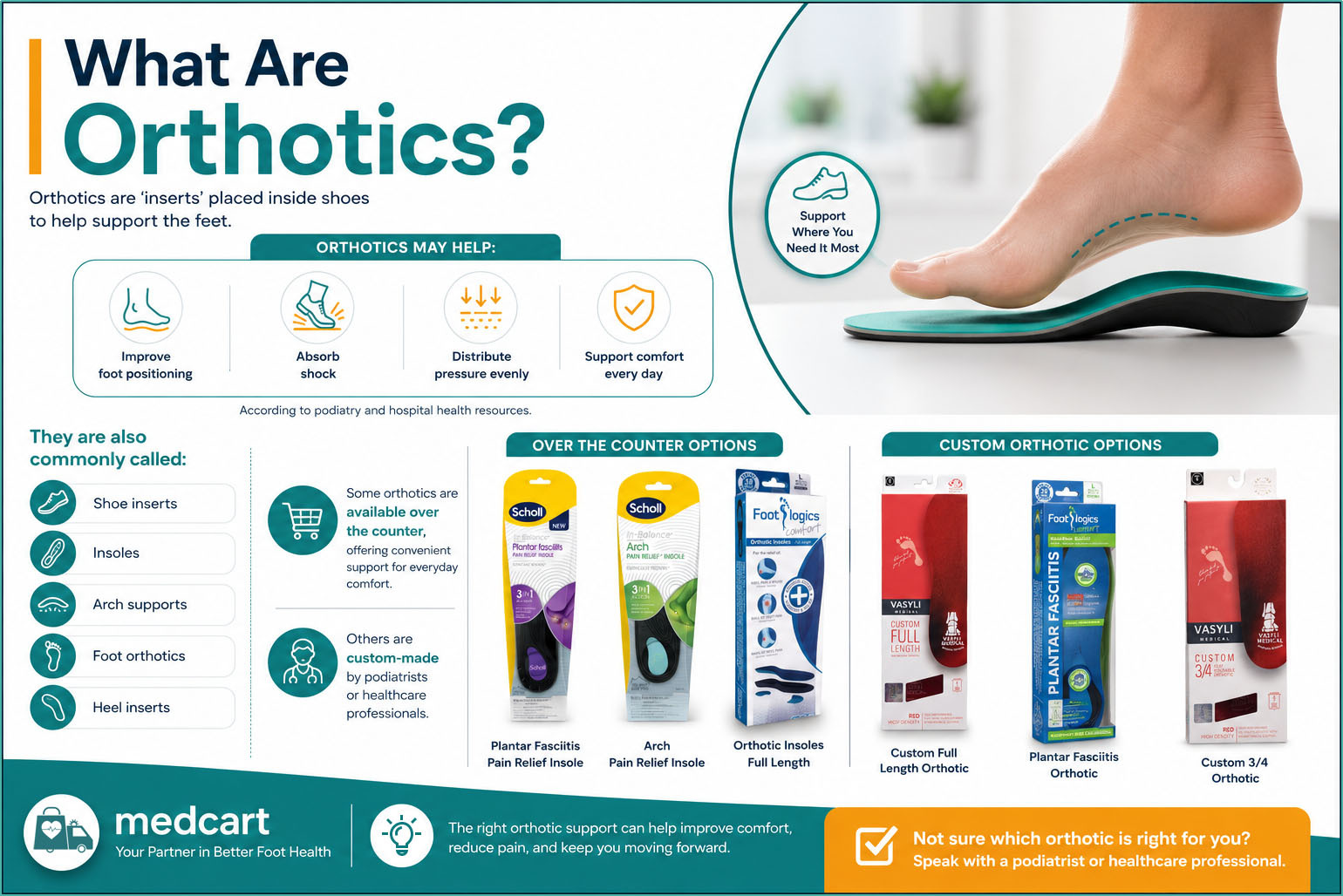
Orthotics are ‘inserts’ placed inside shoes to help support the feet. They are also commonly called:
- Shoe inserts
- Insoles
- Arch supports
- Foot orthotics
- Heel inserts
According to podiatry and hospital health resources, orthotics may help improve foot positioning, absorb shock, and distribute pressure evenly while walking.
Some orthotics are available over the counter, while others are custom-made by podiatrists or healthcare professionals.
Why Do People Use Orthotics?
People use orthotics for many different reasons.
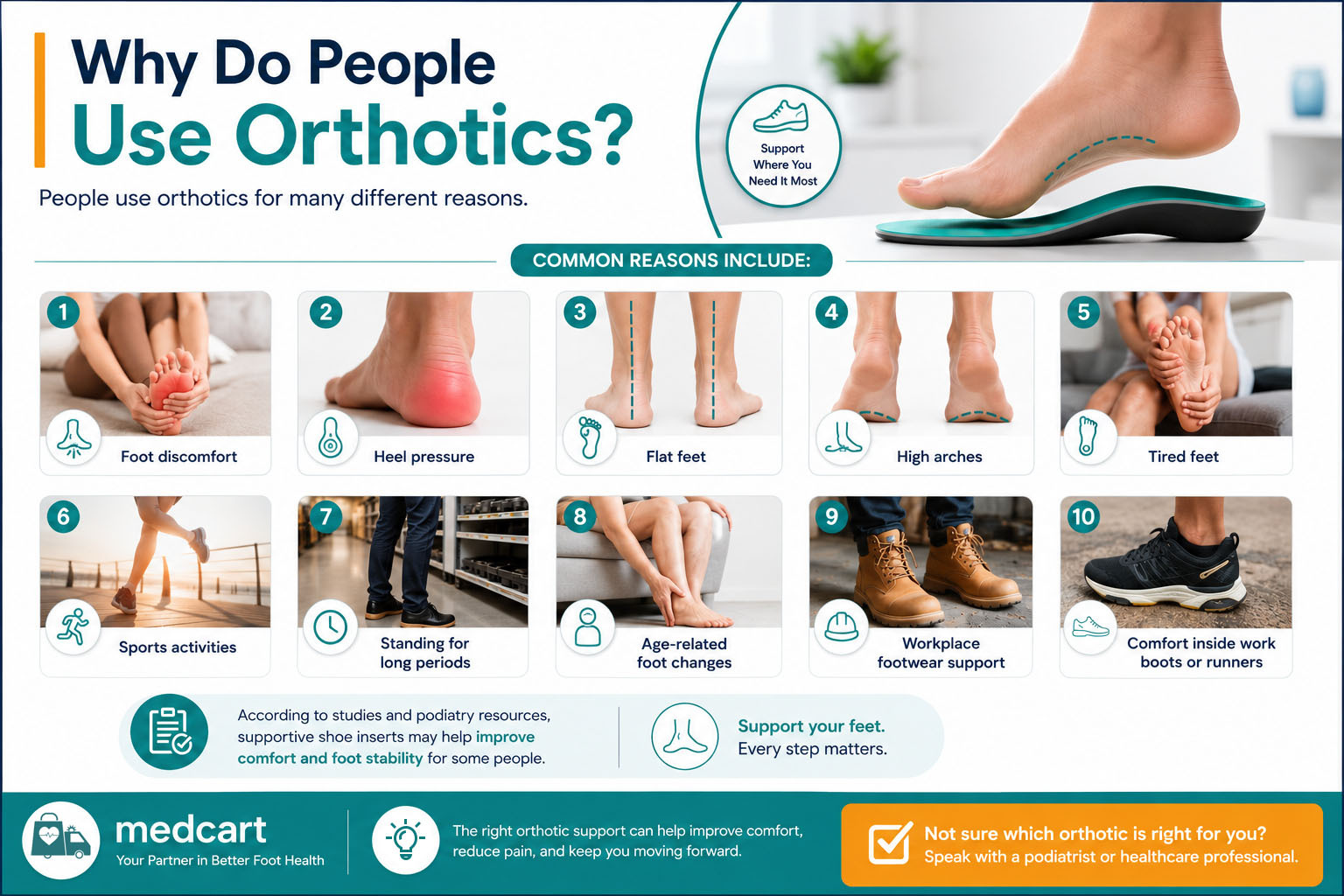
Common reasons include:
- Foot discomfort
- Heel pressure
- Flat feet
- High arches
- Tired feet
- Sports activities
- Standing for long periods
- Age-related foot changes
- Workplace footwear support
- Comfort inside work boots or runners
According to studies and podiatry resources, supportive shoe inserts may help improve comfort and foot stability for some people.
Main Types of Orthotics
There are several types of orthotics available today. Each type is designed for different needs.
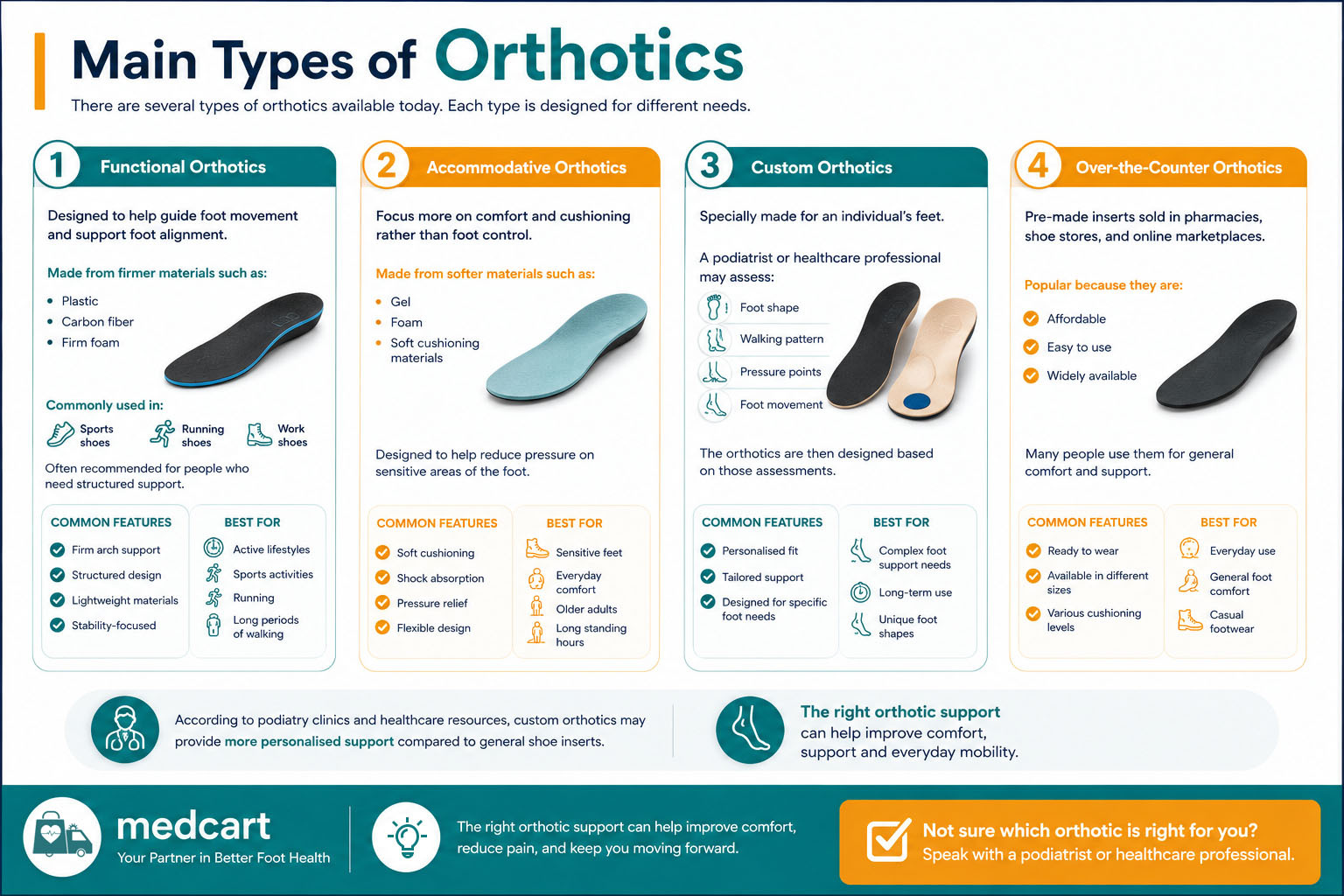
1. Functional Orthotics
Functional orthotics are designed to help guide foot movement and support foot alignment.
These orthotics are usually made from firmer materials such as:
- Plastic
- Carbon fiber
- Firm foam
They are commonly used in:
- Sports shoes
- Running shoes
- Work shoes
Functional orthotics are often recommended for people who need structured support.
2. Accommodative Orthotics
Accommodative orthotics focus more on comfort and cushioning rather than foot control.
They are usually softer and designed to help reduce pressure on sensitive areas of the foot.
Materials may include:
- Gel
- Foam
- Soft cushioning materials
3. Custom Orthotics
Custom orthotics are specially made for an individual's feet.
A podiatrist or healthcare professional may assess:
- Foot shape
- Walking pattern
- Pressure points
- Foot movement
The orthotics are then designed based on those assessments.
According to podiatry clinics and healthcare resources, custom orthotics may provide more personalised support compared to general shoe inserts.
4. Over-the-Counter Orthotics
Over-the-counter orthotics are pre-made inserts sold in pharmacies, shoe stores, and online marketplaces.
These are popular because they are:
- Affordable
- Easy to use
- Widely available
Many people use them for general comfort and support.
Types of Orthotics Based on Foot Support
Orthotics may also be grouped based on the type of support they provide.
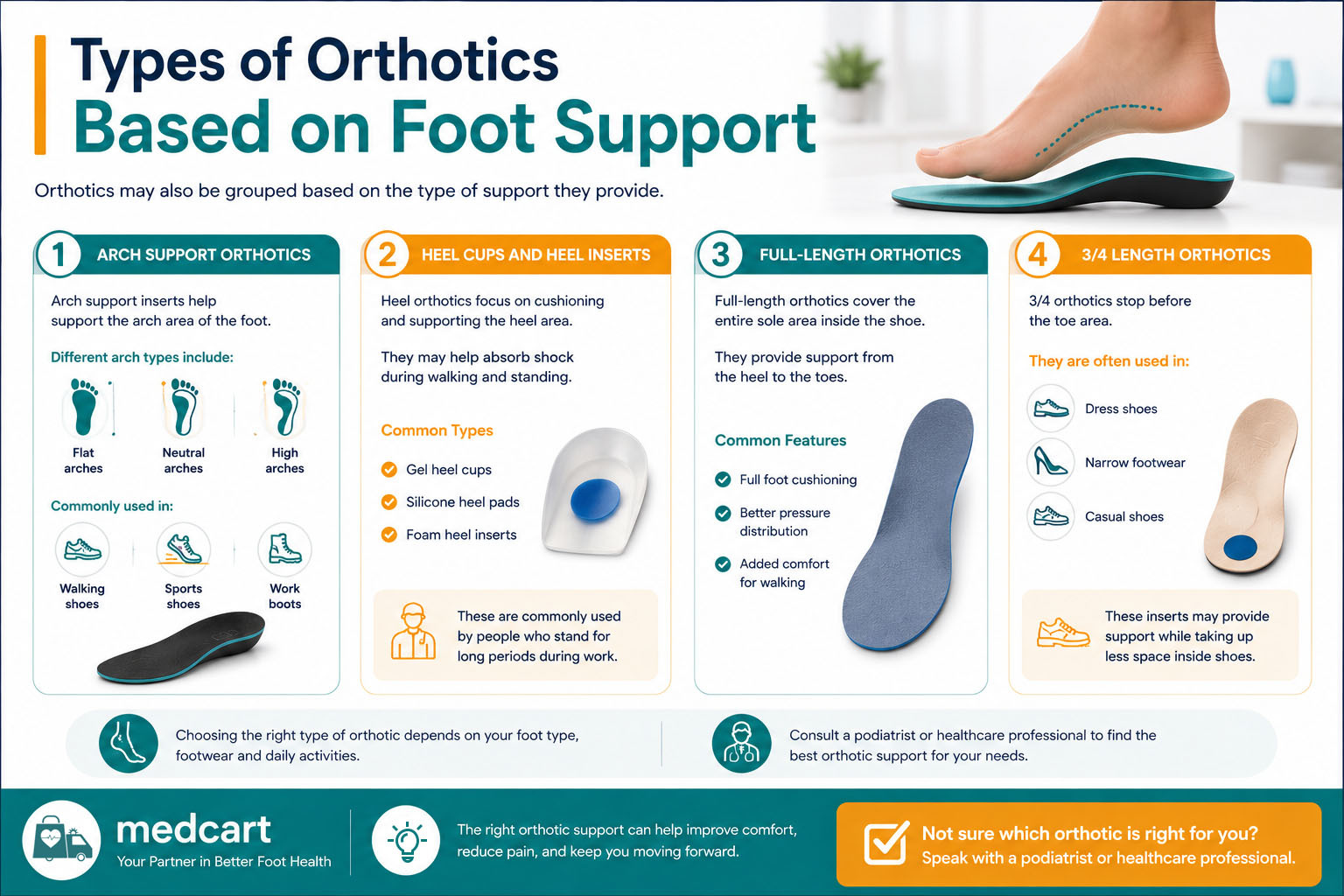
Arch Support Orthotics
Arch support inserts help support the arch area of the foot.
Different arch types include:
- Flat arches
- Neutral arches
- High arches
Arch support orthotics are commonly used in:
- Walking shoes
- Sports shoes
- Work boots
Heel Cups and Heel Inserts
Heel orthotics focus on cushioning and supporting the heel area.
They may help absorb shock during walking and standing.
Common Types
- Gel heel cups
- Silicone heel pads
- Foam heel inserts
These are commonly used by people who stand for long periods during work.
Full-Length Orthotics
Full-length orthotics cover the entire sole area inside the shoe.
They provide support from the heel to the toes.
Common Features
- Full foot cushioning
- Better pressure distribution
- Added comfort for walking
3/4 Length Orthotics
3/4 orthotics stop before the toe area.
They are often used in:
- Dress shoes
- Narrow footwear
- Casual shoes
These inserts may provide support while taking up less space inside shoes.
Common Orthotic Materials
Orthotics are made from different materials depending on their purpose.
How to Choose the Right Orthotics
Choosing the right orthotics depends on several factors.
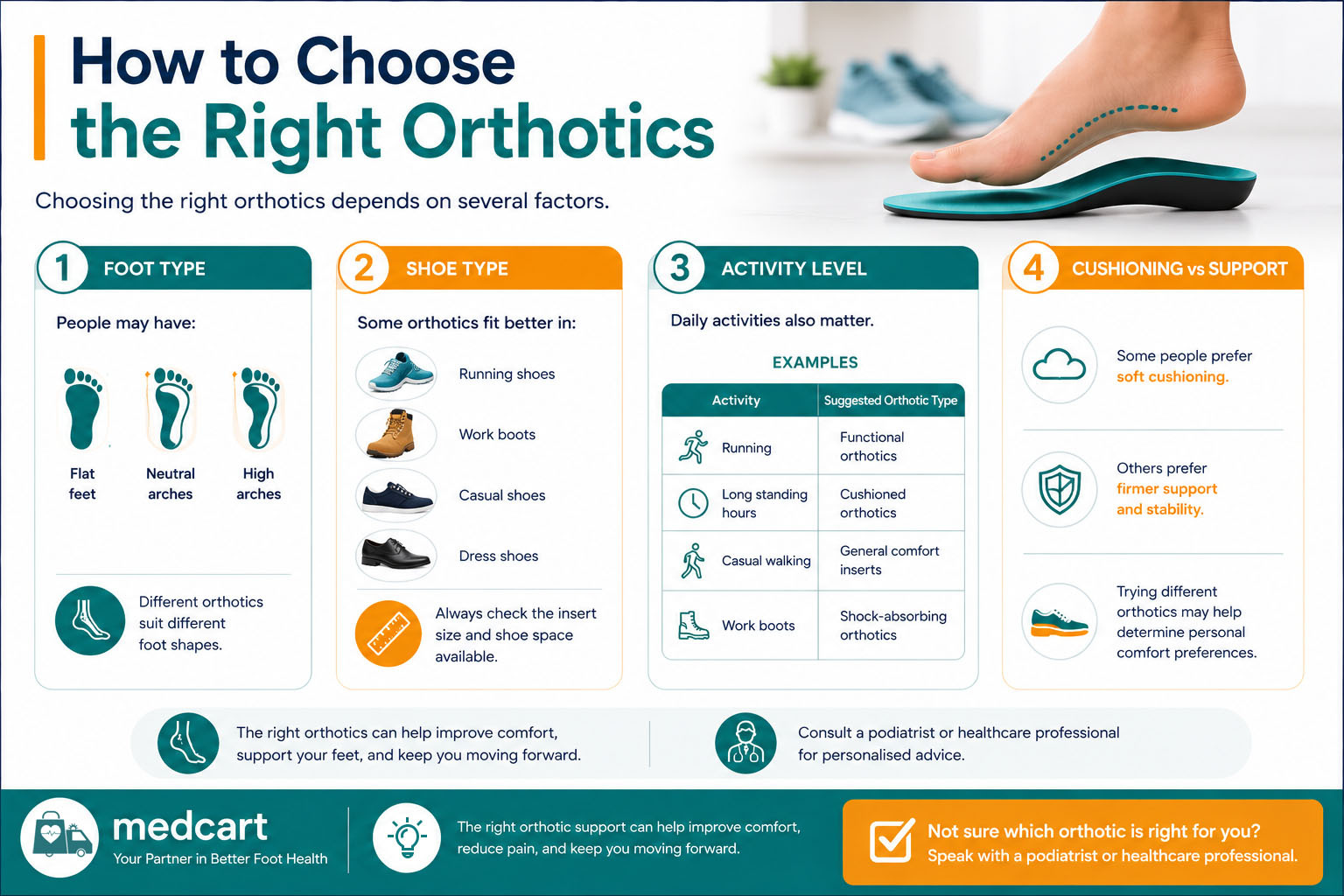
1. Foot Type
People may have:
- Flat feet
- Neutral arches
- High arches
Different orthotics suit different foot shapes.
2. Shoe Type
Some orthotics fit better in:
- Running shoes
- Work boots
- Casual shoes
- Dress shoes
Always check the insert size and shoe space available.
3. Activity Level
Daily activities also matter.
4. Cushioning vs Support
Some people prefer soft cushioning.
Others prefer firmer support and stability.
Trying different orthotics may help determine personal comfort preferences.
Signs You May Need Orthotics
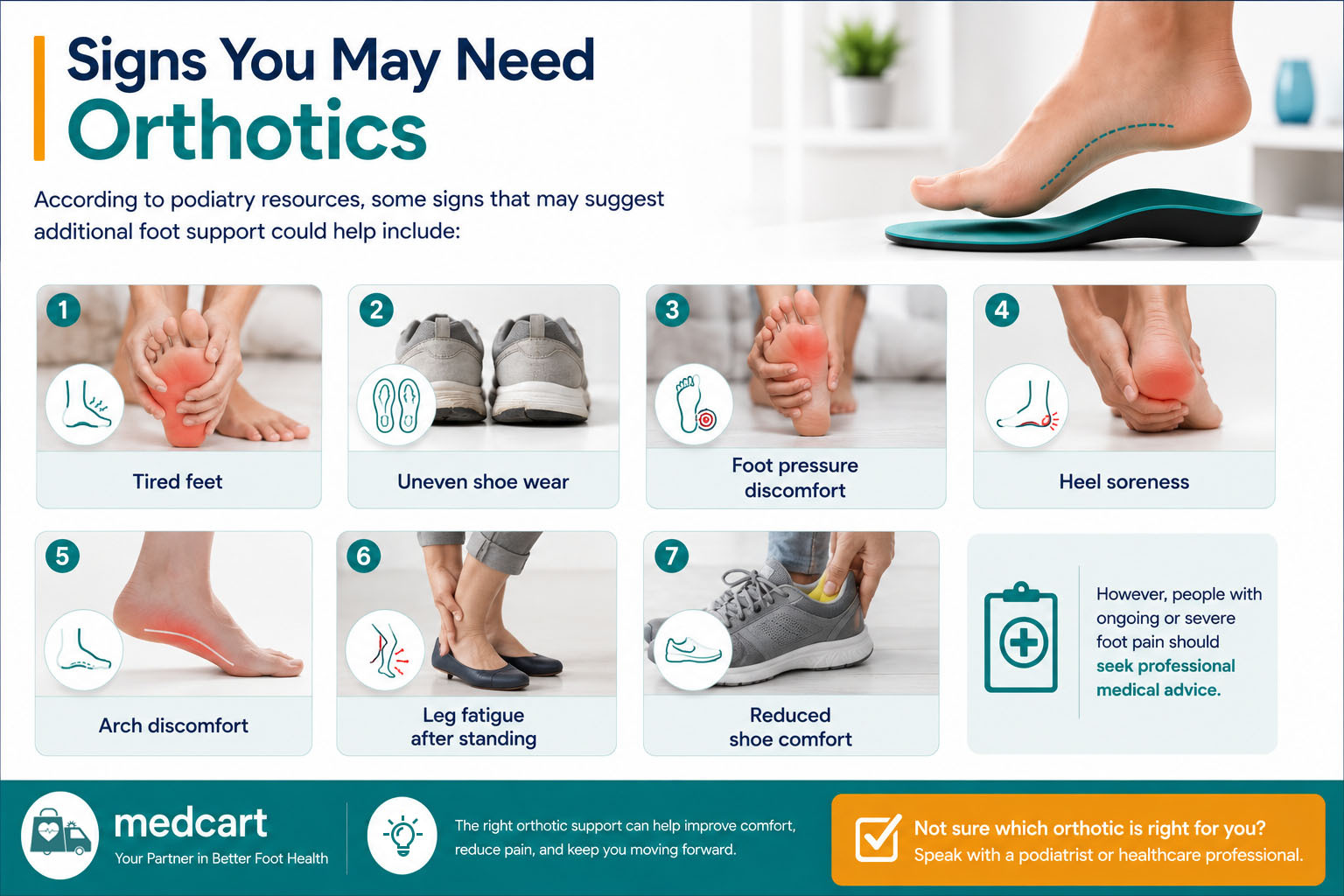
According to podiatry resources, some signs that may suggest additional foot support could help include:
- Tired feet
- Uneven shoe wear
- Foot pressure discomfort
- Heel soreness
- Arch discomfort
- Leg fatigue after standing
- Reduced shoe comfort
However, people with ongoing or severe foot pain should seek professional medical advice.
Tips for Using Orthotics
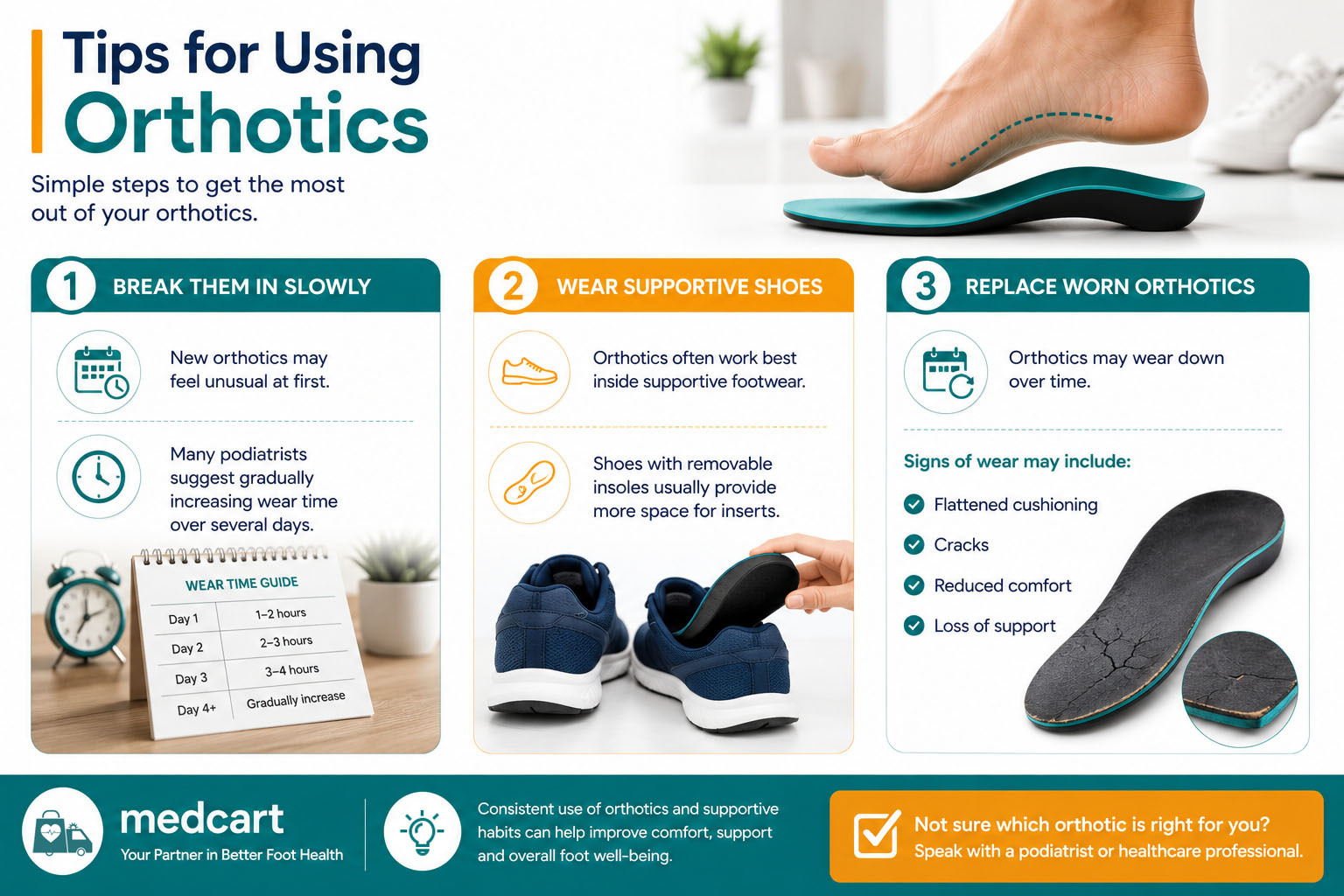
Break Them In Slowly
New orthotics may feel unusual at first.
Many podiatrists suggest gradually increasing wear time over several days.
Wear Supportive Shoes
Orthotics often work best inside supportive footwear.
Shoes with removable insoles usually provide more space for inserts.
Replace Worn Orthotics
Orthotics may wear down over time.
Signs of wear may include:
- Flattened cushioning
- Cracks
- Reduced comfort
- Loss of support
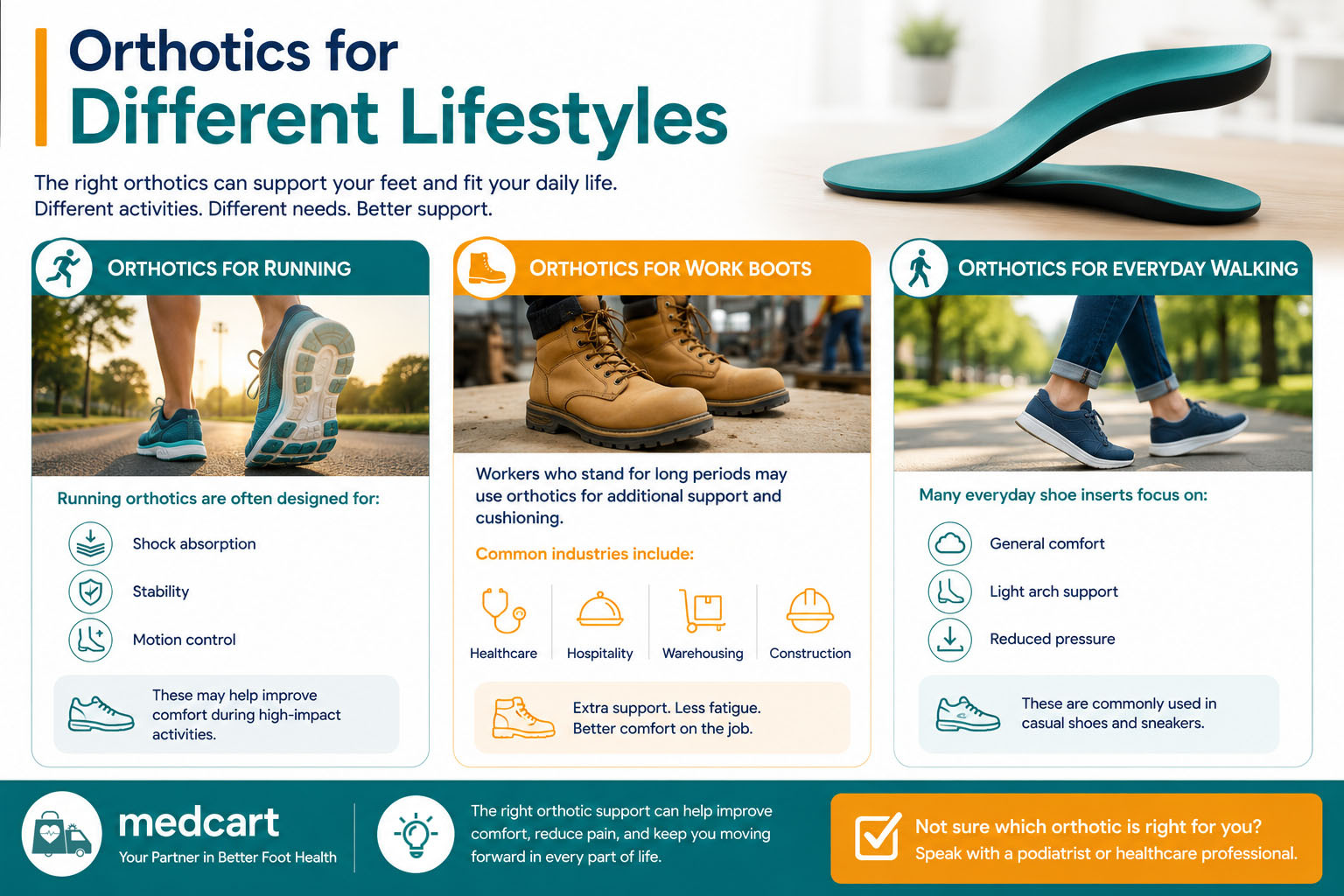
Orthotics for Different Lifestyles
Orthotics for Running
Running orthotics are often designed for:
- Shock absorption
- Stability
- Motion control
These may help improve comfort during high-impact activities.
Orthotics for Work Boots
Workers who stand for long periods may use orthotics for additional support and cushioning.
Common industries include:
- Healthcare
- Hospitality
- Warehousing
- Construction
Orthotics for Everyday Walking
Many everyday shoe inserts focus on:
- General comfort
- Light arch support
- Reduced pressure
These are commonly used in casual shoes and sneakers.
Can Orthotics Fit All Shoes?
Not always.
Some orthotics are bulky and may not fit narrow shoes.
Slim orthotics are often designed for:
- Dress shoes
- School shoes
- Fashion footwear
Always check product sizing and shoe compatibility.
Are Orthotics the Same as Insoles?
The terms are often used interchangeably, but they can differ slightly.
Some products may offer both comfort and structured support.
Where to Buy Orthotics in Australia
If you are looking for orthotics, shoe inserts, arch supports, or foot comfort products, there are many options available online.
At MedCart Australia, shoppers can explore a wide range of:
- Orthotics
- Shoe inserts
- Arch supports
- Heel cushions
- Gel insoles
- Foot care products
- Comfort footwear accessories
MedCart Australia is an online marketplace featuring products across healthcare, pharmacy, beauty, lifestyle, and wellness categories.
You can browse the Orthotics collection here:
Shop Orthotics at MedCart Australia
With access to thousands of products from different sellers, customers can compare different orthotic styles, materials, and support options in one place.
Final Thoughts
Orthotics come in many different shapes, materials, and support styles.
Some focus on cushioning and comfort, while others provide firmer support and stability. Choosing the right orthotics may depend on your footwear, daily activities, and personal comfort preferences.
According to podiatry and healthcare resources, supportive shoe inserts may help improve comfort and reduce pressure during walking and standing for some people.
When choosing orthotics, it is important to consider:
- Foot type
- Shoe compatibility
- Activity level
- Cushioning needs
- Support preferences
For ongoing or severe foot concerns, professional medical advice from a podiatrist or healthcare provider is recommended.
References
- Australian Commission on Safety and Quality in Health Care
- Better Health Channel Victoria
- Healthdirect Australia
- Cleveland Clinic – Orthotics and Shoe Inserts Information
- Mayo Clinic – Foot Support and Orthotics Information
- Australian Podiatry Association
- Royal Australian College of General Practitioners (RACGP)
- Harvard Health Publishing – Foot Health and Shoe Support Information