


Nitrile vs Latex vs Vinyl Gloves: What’s the Difference?
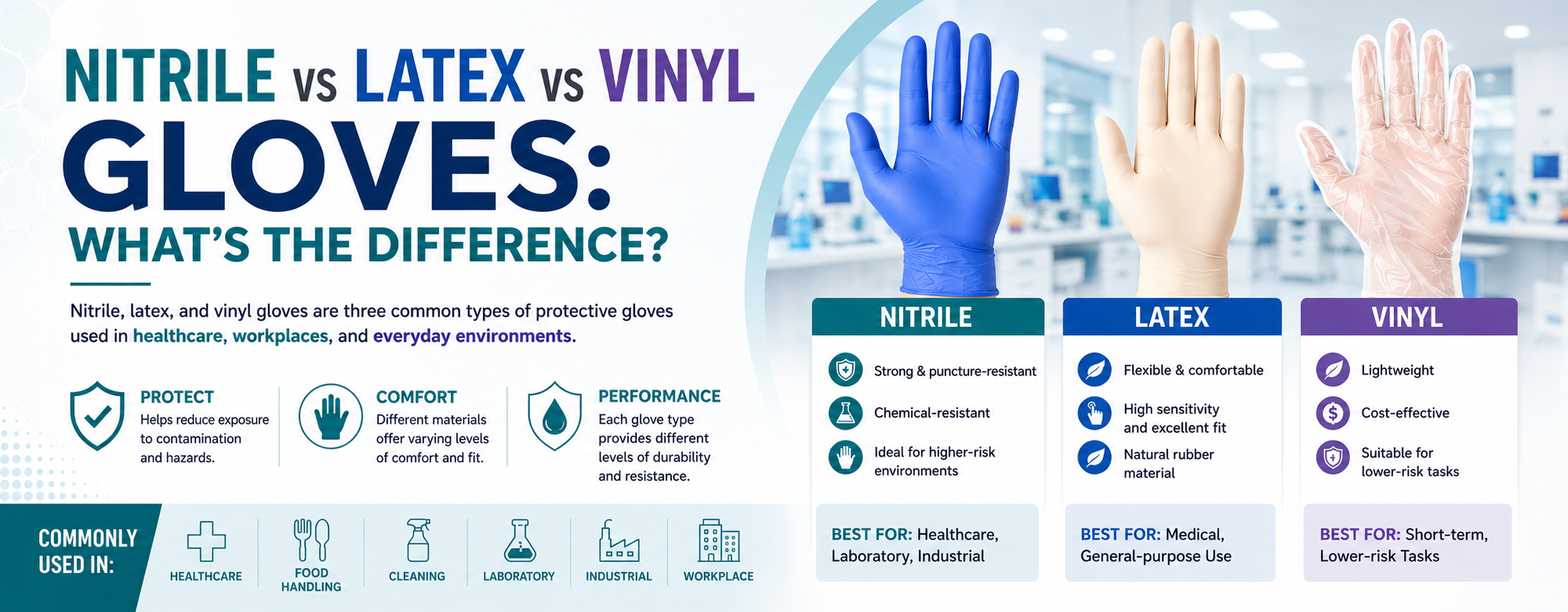
Nitrile, latex, and vinyl gloves are three common types of protective gloves used in healthcare, workplaces, and everyday environments. Each material offers different levels of durability, flexibility, comfort, and resistance depending on the intended use.
This guide explains the key differences between nitrile, latex, and vinyl gloves to help you better understand how different glove materials are commonly used in various environments.
This page is intended to provide general information and does not focus on specific products or purchasing options.
What Are Nitrile, Latex, and Vinyl Gloves?
Protective gloves are designed to help reduce exposure to contamination, chemicals, and other hazards. Different glove materials are used in different environments depending on the level of protection required.
- Nitrile gloves: Made from synthetic rubber and known for durability and chemical resistance
- Latex gloves: Made from natural rubber and known for flexibility and comfort
- Vinyl gloves: Made from PVC and commonly used for lower-risk tasks
Key Differences Between Nitrile, Latex, and Vinyl Gloves
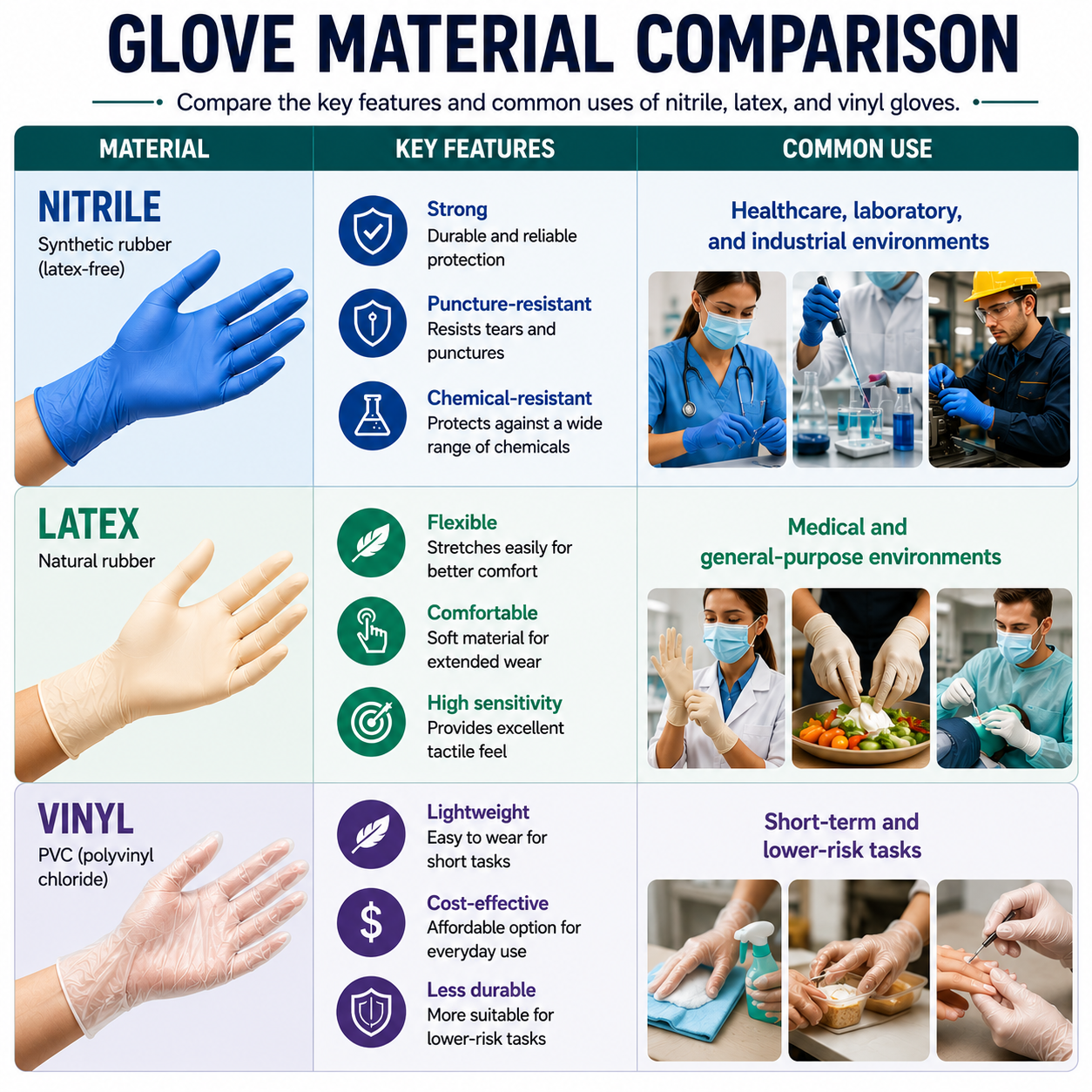
| Material | Key Features | Common Use |
|---|---|---|
| Nitrile | Strong, puncture-resistant, chemical-resistant | Healthcare, laboratory, and industrial environments |
| Latex | Flexible, comfortable, high sensitivity | Medical and general-purpose environments |
| Vinyl | Lightweight, cost-effective, less durable | Short-term and lower-risk tasks |
Nitrile vs Latex Gloves
Nitrile gloves are often preferred for their durability and resistance to chemicals. Latex gloves are known for their comfort and flexibility but may not be suitable for individuals with latex sensitivity.
Nitrile vs Vinyl Gloves
Nitrile gloves generally provide stronger protection and greater durability compared to vinyl gloves. Vinyl gloves are commonly used in lower-risk situations where heavy-duty protection is not required.
Latex vs Vinyl Gloves
Latex gloves offer greater flexibility and fit compared to vinyl gloves. Vinyl gloves are typically used for shorter tasks or environments where lighter protection is sufficient.
How Different Glove Materials Are Commonly Used
The choice of glove material depends on the environment, type of exposure, and level of protection required. For example, healthcare and higher-risk environments may require stronger materials, while lower-risk settings may use lighter alternatives.
If you want to explore related categories, you can explore glove categories.
Where Are Protective Gloves Commonly Used?
Protective gloves are commonly used in healthcare, food handling, cleaning, laboratory, and workplace environments where protection from contamination or hazards is required.
Frequently Asked Questions
What is the difference between nitrile, latex, and vinyl gloves?
Nitrile gloves are durable and chemical-resistant, latex gloves are flexible and comfortable, and vinyl gloves are lightweight and suitable for lower-risk tasks.
How do nitrile, latex, and vinyl gloves differ in durability?
Nitrile gloves are generally more durable and resistant to punctures compared to latex and vinyl gloves.
Are latex gloves better than nitrile?
Latex gloves are known for flexibility and comfort, while nitrile gloves provide stronger chemical resistance and durability.
When are vinyl gloves commonly used?
Vinyl gloves are commonly used for lower-risk tasks and short-term applications where heavy-duty protection is not required.
Where are protective gloves commonly used?
Protective gloves are used in healthcare, food preparation, cleaning, laboratory, and workplace environments.
Learn More About PPE
Learn more about personal protective equipment and how different types are used in various environments.
- What Is PPE? Types of Personal Protective Equipment
- Nitrile vs Latex vs Vinyl Gloves
- Surgical Masks vs N95 Respirators
This information reflects general use of protective gloves and PPE in healthcare, workplace, and safety environments.
Updated May 2026: Based on commonly used glove materials and general usage guidance.