


What Is PPE? Types of Personal Protective Equipment Explained
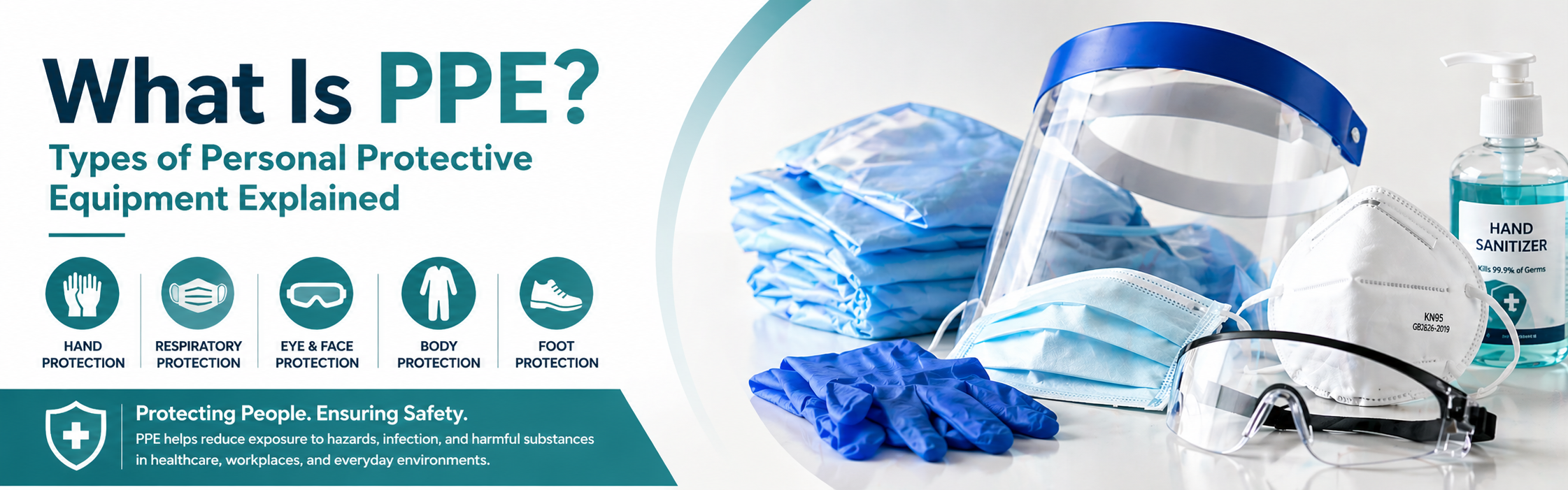
Personal protective equipment (PPE) is protective clothing and equipment used to reduce exposure to hazards such as infection, injury, and harmful substances.
PPE is commonly used in healthcare, workplaces, and industrial environments to help protect individuals and those around them. This guide explains what PPE is, what it includes, and the different types of personal protective equipment used in various settings.
This page is intended to provide general information about personal protective equipment and does not focus on specific products or purchasing options.
What Does PPE Stand For?
PPE stands for personal protective equipment. It refers to items worn to minimise exposure to risks that may cause illness, injury, or contamination.
What Is Included in PPE?
Personal protective equipment includes a range of items designed to protect different parts of the body depending on the type of risk.
- Gloves: Disposable gloves such as nitrile, latex, and vinyl gloves
- Masks and respirators: face protection equipment such as surgical masks and respirators
- Protective clothing: Types of protective clothing such as gowns and coveralls
- Eye and face protection: goggles and face shields
- Foot protection: Shoe covers or protective footwear used in specialised environments
Examples of Personal Protective Equipment
Common examples of PPE include:
- Disposable gloves used in healthcare and hygiene settings
- Surgical masks and respirators used for respiratory protection
- Protective gowns and coveralls used to prevent contamination
- Face shields and safety goggles used for eye protection
- Shoe covers and protective footwear used in controlled environments
Types of Personal Protective Equipment
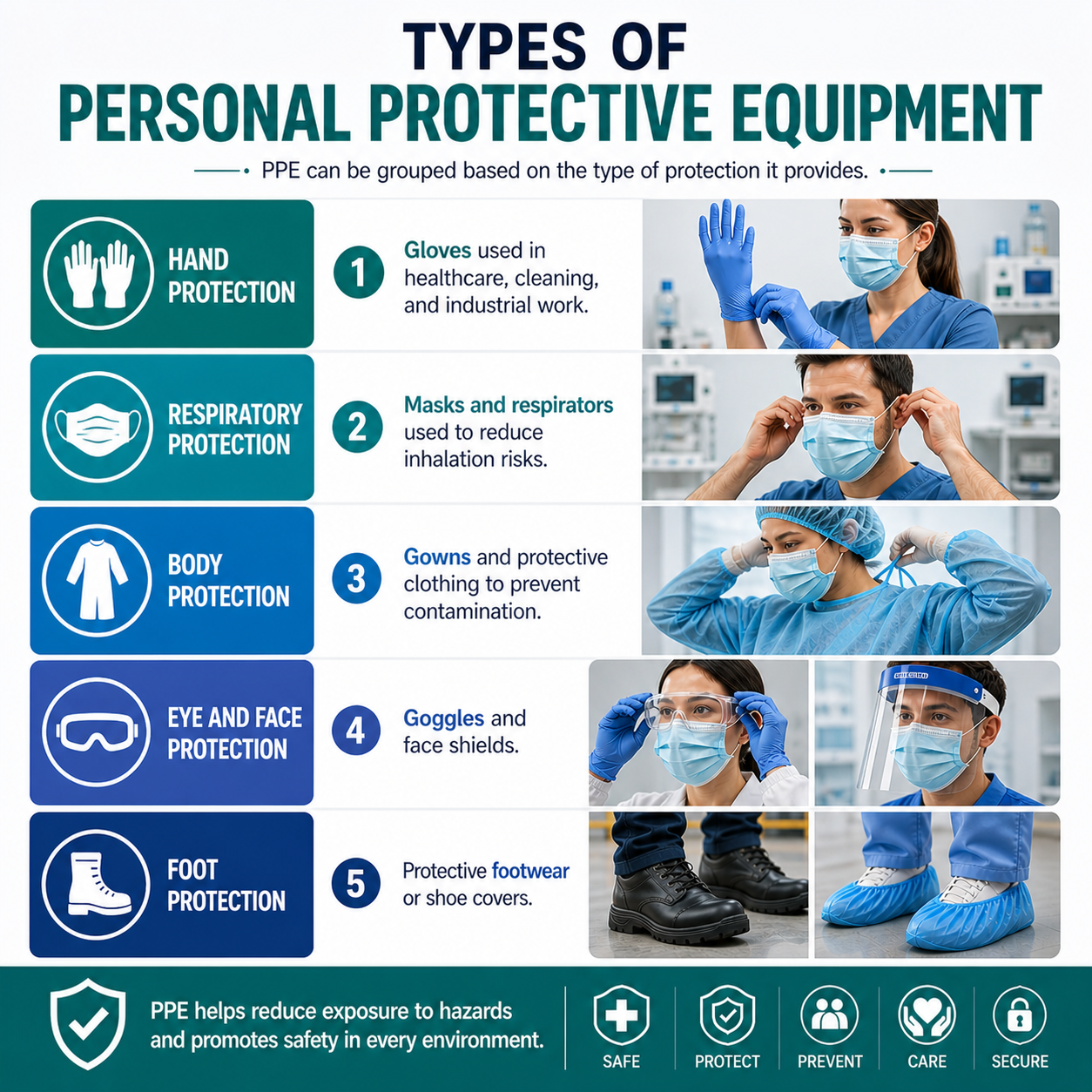
PPE can be grouped based on the type of protection it provides:
- Hand protection: Gloves used in healthcare, cleaning, and industrial work
- Respiratory protection: Masks and respirators used to reduce inhalation risks
- Body protection: Gowns and protective clothing to prevent contamination
- Eye and face protection: Goggles and face shields
- Foot protection: Protective footwear or shoe covers
Where Is PPE Used?
PPE is used in a wide range of environments where protection from hazards is required, including healthcare facilities, aged care settings, workplaces, laboratories, and public environments.
Why Is PPE Important?
PPE helps reduce the risk of exposure to harmful substances, infections, and workplace hazards. It plays an important role in protecting both individuals and those around them, particularly in healthcare and high-risk environments.
Using appropriate PPE can help minimise the spread of infection and improve safety in workplaces and public settings.
Who Uses PPE?
PPE is commonly used by:
- Healthcare professionals and medical staff
- Aged care and disability support workers
- Workplace and industrial employees
- Cleaning and sanitation workers
- Individuals in higher-risk environments
How to Choose the Right PPE
Choosing appropriate PPE depends on the type of hazard, level of exposure, and environment. Different settings may require different types of protection, such as gloves, masks, or protective clothing.
Understanding the purpose of each type of PPE can help ensure it is used correctly in the appropriate situation.
If you want to explore different options, you can learn more about available personal protective equipment for healthcare, workplace, and general use.
Frequently Asked Questions
What is PPE?
PPE stands for personal protective equipment and includes items designed to protect individuals from health and safety risks.
What does PPE include?
PPE includes gloves, masks, respirators, protective clothing, and eye protection used to reduce exposure to hazards.
What are examples of PPE?
Examples include gloves, masks, gowns, face shields, goggles, and protective footwear.
What are the main types of PPE?
The main types include hand protection, respiratory protection, body protection, eye protection, and foot protection.
Where is PPE used?
PPE is commonly used in healthcare, workplaces, and environments where protection from hazards is required.
Why is PPE important?
PPE helps reduce the risk of infection, injury, and exposure to hazardous materials.
Learn More About PPE
Learn more about how to choose and compare different types of protective equipment.
- What Is PPE? Types of Personal Protective Equipment
- Nitrile vs Latex vs Vinyl Gloves
- Surgical Masks vs N95 Respirators
This information reflects general use of personal protective equipment in healthcare, workplace, and safety environments.
Updated May 2026: Based on commonly used PPE categories and general safety practices.