



Introduction
Bone broth has become a popular wellness drink. It is made by slowly cooking animal bones and connective tissue in water. Depending on the recipe, the finished broth can contain protein, gelatin, amino acids and small amounts of minerals.
There is good reason to enjoy bone broth as a nourishing food. However, claims about gut healing, joint repair, better skin or other major health effects need more evidence.
Research also shows that bone broth can vary greatly from one recipe or product to another. This means the best way to maximise its benefits is not to search for a perfect dose or special drinking time. Instead, focus on choosing a suitable broth and making it part of a varied, balanced diet.
Here is what current evidence tells us about bone broth, including when to drink it, how to use it and how often to have it.
What Bone Broth Can—and Cannot—Do for Wellness
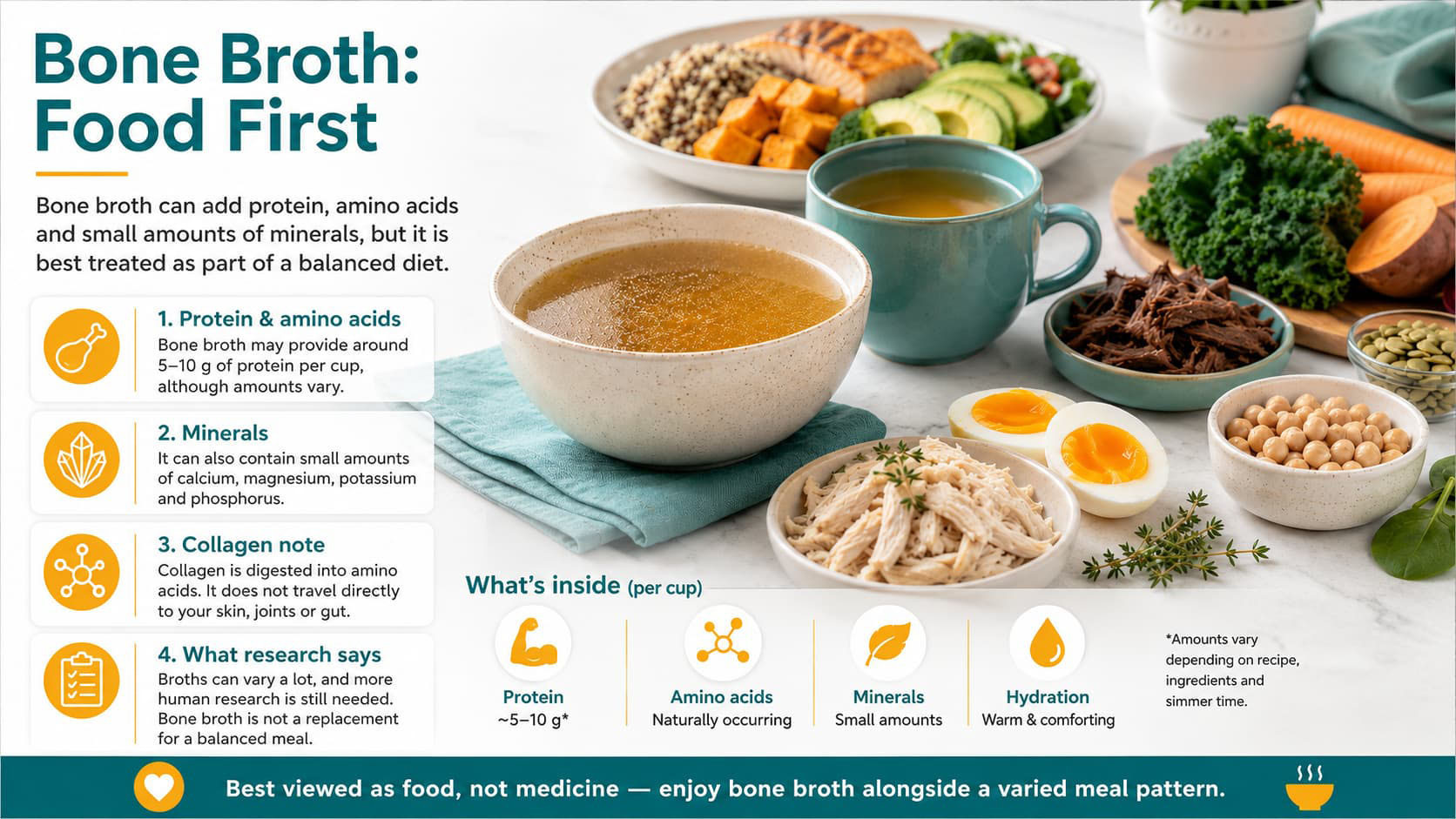
Bone broth can provide protein and amino acids. Harvard T.H. Chan School of Public Health notes that the protein content may be around 5–10 grams per cup, although the amount varies. Bone broth can also contain small amounts of minerals such as calcium, magnesium, potassium and phosphorus.
The collagen in bones and connective tissue is partly broken down during cooking. When collagen is eaten, the body digests it into amino acids. These amino acids can then be used where the body needs them. This does not mean that collagen from bone broth travels directly to your skin, joints or gut.
An Australian-led study involving the Australian Institute of Sport and Australian Catholic University found large differences in the amino acid content of different bone broths. The researchers concluded that bone broth was not a reliable way to obtain the amounts of collagen-related amino acids used in collagen supplement research.
There is growing research interest in bone broth and gut health. A 2025 review led by Mayo Clinic researchers discussed how amino acids and minerals found in bone broth may be relevant to intestinal barrier function. However, more direct human research on drinking bone broth itself is still needed before strong health claims can be made.
The simplest approach is to treat bone broth as food rather than a medicine. Healthdirect recommends eating a variety of foods from the five food groups and drinking plenty of water. Bone broth can complement this pattern, but it should not replace a balanced meal.
Morning or Night: When Should You Drink Bone Broth?
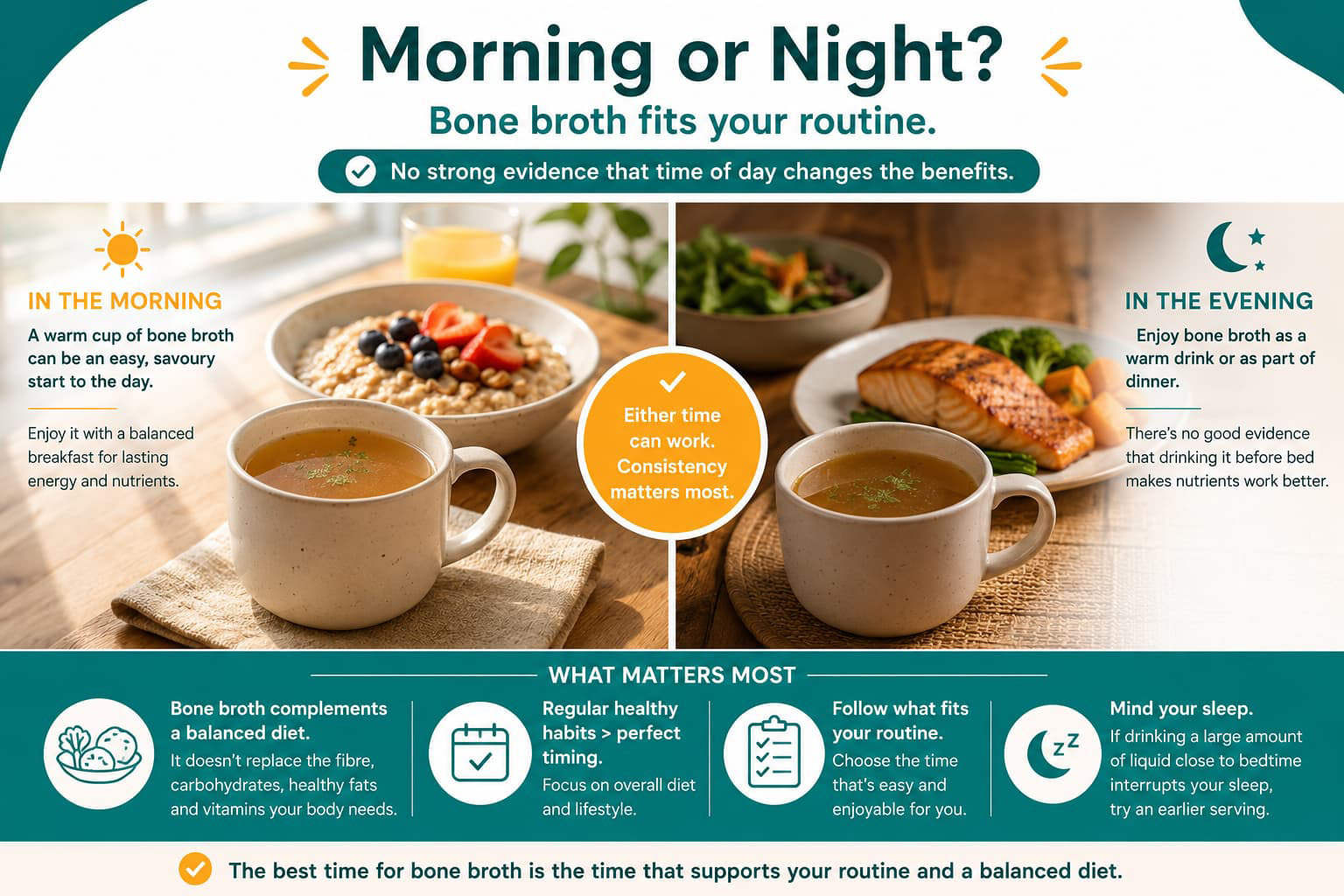
Should I drink bone broth in the morning or at night? Either can work.
Current research does not establish a special time of day when bone broth provides greater health benefits. Studies mainly look at its nutrients and amino acids rather than whether drinking it in the morning or evening changes its effects.
In the morning, a warm cup of bone broth can be an easy savoury drink. It can also be served alongside breakfast. If you use it this way, remember that broth alone may not provide the fibre, carbohydrates, healthy fats and range of vitamins found in a complete meal.
At night, bone broth can simply be enjoyed as a warm drink or as part of dinner. There is no good evidence that drinking it before bed makes its collagen or nutrients work better.
So, the best time to drink bone broth is the time that fits your routine and diet. Regular healthy eating habits matter more than choosing a specific hour.
If drinking a large amount of liquid close to bedtime interrupts your sleep, an earlier serving may be more comfortable.
How to Drink Bone Broth and Choose It Well
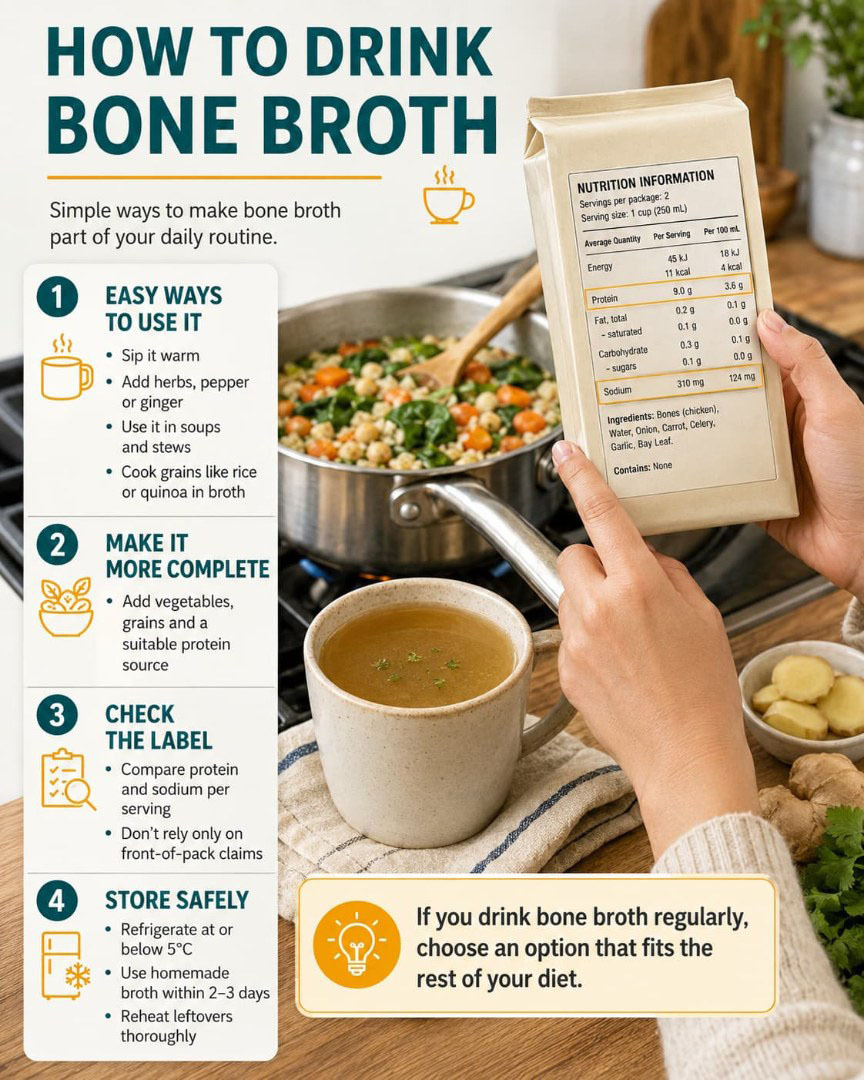
How do you drink bone broth? There is no special method required. You can drink it warm from a mug or use it as part of everyday cooking.
Simple options include:
- Sip warmed bone broth on its own.
- Add herbs, pepper, ginger or other ingredients for flavour.
- Use it as the liquid in soups and stews.
- Cook rice, quinoa or other grains with broth instead of plain water.
- Add vegetables, grains and a suitable protein source to turn broth into a more complete meal.
For packaged bone broth, check the nutrition information panel instead of relying only on front-of-pack claims. Protein and sodium levels can differ greatly between products.
Sodium is especially worth checking. Australia and New Zealand's Nutrient Reference Values currently list a Suggested Dietary Target of 2,000 mg of sodium per day for adults. This applies to sodium from the whole diet, not just bone broth.
If you drink bone broth regularly, comparing sodium per serving can help you choose an option that suits the rest of your diet.
Homemade broth also needs safe handling. Healthdirect recommends cooling cooked food quickly and keeping refrigerated foods at or below 5°C. Homemade soups, stews and similar cooked foods should generally be used within two to three days when refrigerated. Leftovers should be reheated thoroughly.
How Often Should You Drink Bone Broth?
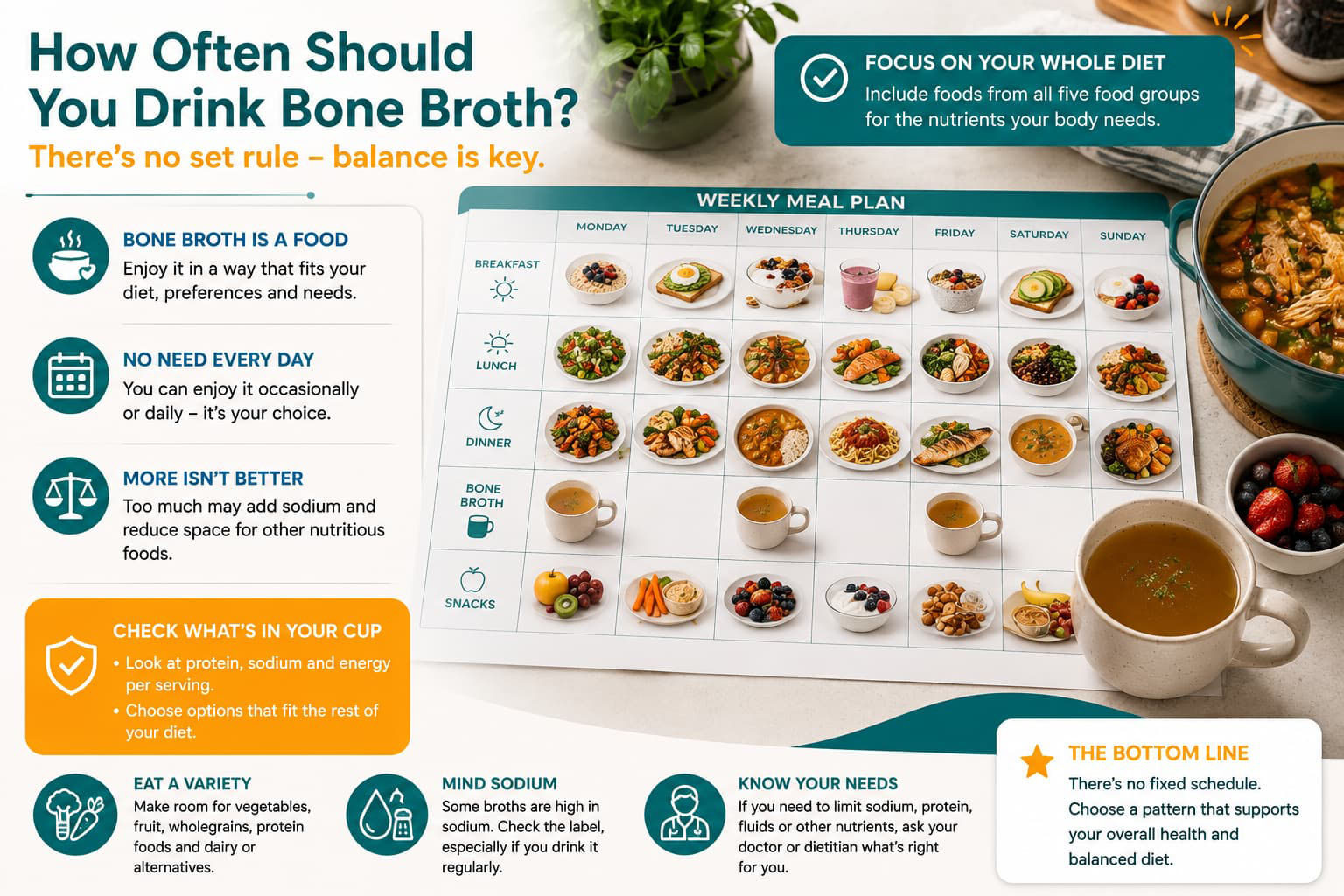
How often should I drink my bone broth? There is no scientifically established daily or weekly dose for general wellness.
Bone broth is a food, so how often you have it should depend on your overall diet, preferences and nutritional needs. You do not need to drink it every day to gain nutrients from it.
If you enjoy bone broth occasionally, it can simply form part of a meal or snack. If you prefer having it daily, look at what the serving contributes to your total protein, sodium and energy intake.
More is not automatically better. Drinking several servings each day may add a significant amount of sodium, depending on the product or recipe. It may also reduce your appetite for other foods that provide fibre, healthy fats, vitamins and other important nutrients.
Healthdirect advises that healthy eating should include foods from all five food groups in suitable amounts. No single food can provide everything the body needs.
Rather than aiming for a fixed bone broth schedule, focus on consistency across your whole diet. Choose a serving pattern that leaves room for vegetables, fruit, wholegrain foods, protein-rich foods and dairy foods or suitable alternatives.
People who have been advised to restrict sodium, protein, fluids or other nutrients should ask their doctor or dietitian whether regular bone broth suits their individual needs.
FAQs
Do I need to drink bone broth on an empty stomach?
No. There is no established evidence showing that bone broth must be consumed on an empty stomach for its nutrients to be absorbed properly. Have it with or between meals according to your preference.
Is bone broth a good source of collagen?
Bone broth can contain collagen-derived gelatin and amino acids, but the amount varies widely. Research from Australian Catholic University and the Australian Institute of Sport found that bone broth did not consistently provide the collagen-related amino acid levels used in collagen supplement studies.
Can bone broth replace a meal?
Usually, no. Bone broth by itself may provide protein and fluid, but it does not normally contain the full range of nutrients found in a balanced meal. Adding vegetables, whole grains and another suitable protein source can make a broth-based dish more complete.
Is homemade bone broth better than packaged bone broth?
Not necessarily. Both can vary in protein, amino acids, minerals and sodium. Homemade broth gives you more control over added salt and ingredients. Packaged broth makes it easier to compare nutrients using the nutrition information panel.
Summary
Bone broth can be an enjoyable addition to a balanced diet. It supplies fluid and may provide protein, gelatin, amino acids and small amounts of minerals. However, its nutritional content varies and research does not support treating it as a cure-all.
There is also no proven best time or fixed frequency for drinking bone broth. Morning or night can both work. The most useful approach is to choose a broth that suits your diet, check sodium when buying packaged products and continue eating a wide variety of nutritious foods.
Where to Buy Bone Broth
If you would like to explore bone broth and other wellness products, visit MedCart Australia. Check each product's ingredients, serving directions and nutrition information so you can choose an option suited to your needs.
References
- Matar A, Abdelnaem N, Camilleri M. Mayo Clinic / Digestive Diseases and Sciences. Bone Broth Benefits: How Its Nutrients Fortify Gut Barrier in Health and Disease. Published online 3 April 2025; journal issue June 2025. URL: PubMed – Bone Broth Benefits: How Its Nutrients Fortify Gut Barrier in Health and Disease
- Alcock RD, Shaw GC, Burke LM. Australian Catholic University and Australian Institute of Sport. Bone Broth Unlikely to Provide Reliable Concentrations of Collagen Precursors Compared With Supplemental Sources of Collagen Used in Collagen Research. International Journal of Sport Nutrition and Exercise Metabolism. Published 1 May 2019. URL: PubMed – Bone Broth Unlikely to Provide Reliable Concentrations of Collagen Precursors
- Harvard T.H. Chan School of Public Health – The Nutrition Source. Collagen. Last reviewed May 2021. URL: Harvard Nutrition Source – Collagen
- Healthdirect Australia. A Balanced Diet. Last reviewed December 2024. URL: Healthdirect – A Balanced Diet
- Australian Government Eat for Health – Nutrient Reference Values for Australia and New Zealand. Sodium. Adult sodium recommendations updated September 2017; current page accessed in 2026 while updated sodium NRVs are under consultation. URL: Eat for Health – Sodium Nutrient Reference Values
- Healthdirect Australia. Food Safety. Last reviewed November 2024. URL: Healthdirect – Food Safety