



Quick Summary
Nicotine gum is a stop smoking support product. It may help reduce cravings when a person is trying to quit smoking.
It is not the same as normal chewing gum. It is a medicated product that contains nicotine. It should be used only as directed on the label.
Nicotine gum is not risk-free. Nicotine can be addictive. Some people may also get side effects. If you are not sure if nicotine gum is right for you, speak with a doctor or pharmacist.
What Is Nicotine Gum?
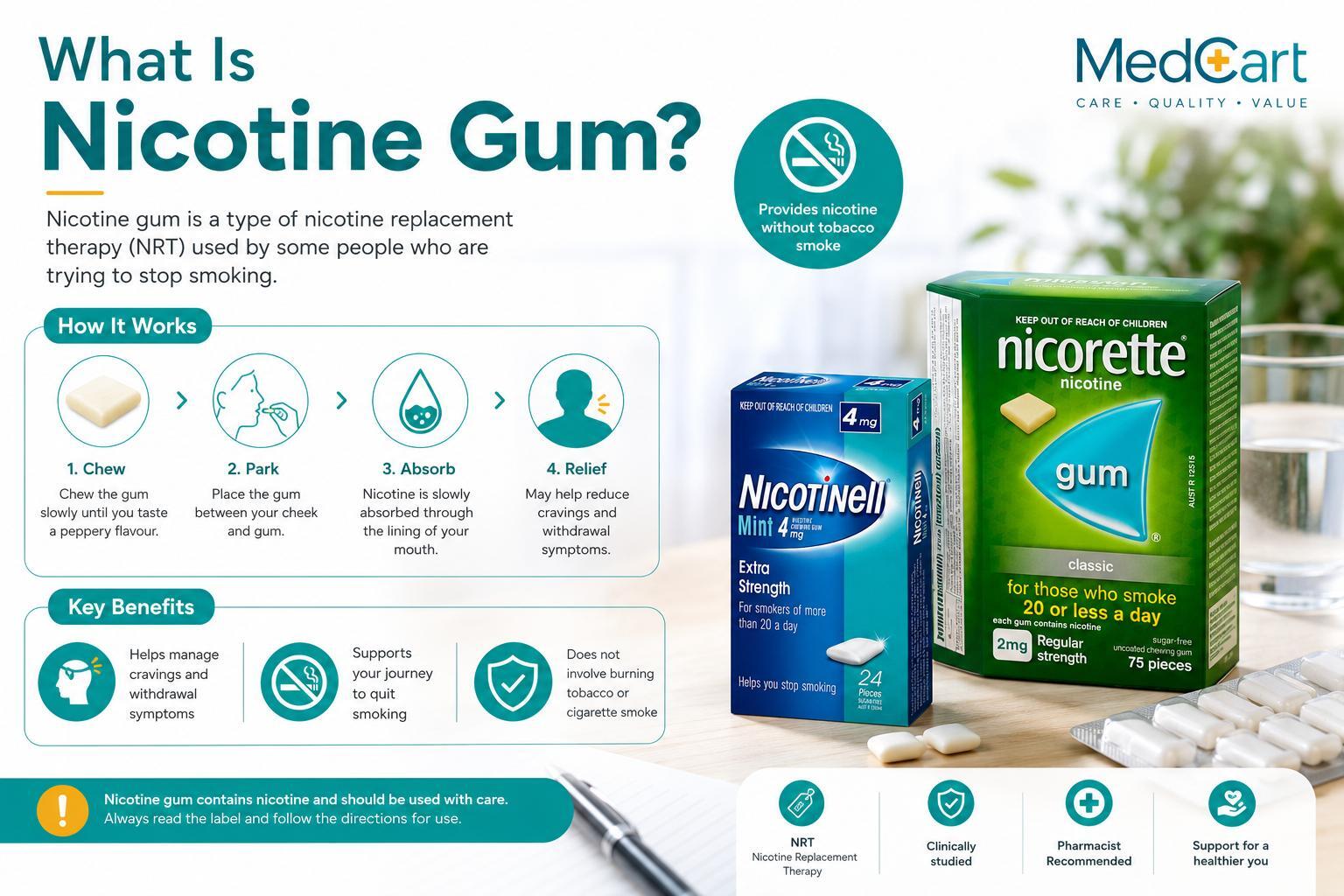
Nicotine gum is a type of nicotine replacement therapy, also called NRT. It gives the body a small amount of nicotine without tobacco smoke.
It is used by some people who are trying to stop smoking. It may help reduce cravings and withdrawal feelings.
Nicotine gum works through the lining of the mouth. When you chew and park the gum, nicotine is slowly absorbed in the mouth.
Nicotine gum does not burn tobacco. This means it does not create cigarette smoke. But it still contains nicotine, so it should be used with care.
What Is Nicotine Gum Good For?
Nicotine gum is mainly used to help manage cigarette cravings. It may support people who are trying to quit smoking.
When a person stops smoking, the body may miss nicotine. This can cause cravings and withdrawal feelings. Nicotine gum may help reduce these feelings by giving the body a small amount of nicotine.
Nicotine gum may be useful for cravings that happen:
- After meals
- During work breaks
- With coffee or alcohol
- When feeling stressed
- While driving
- Around other smokers
- At times when a person usually smokes
Nicotine gum may also be used before a craving starts. For example, some people use it before a common trigger, like a lunch break or a stressful meeting.
Nicotine gum works best when it is part of a quit plan. This may include support from a doctor, pharmacist, Quitline, or other health professional.
Is Nicotine Gum Bad for You?
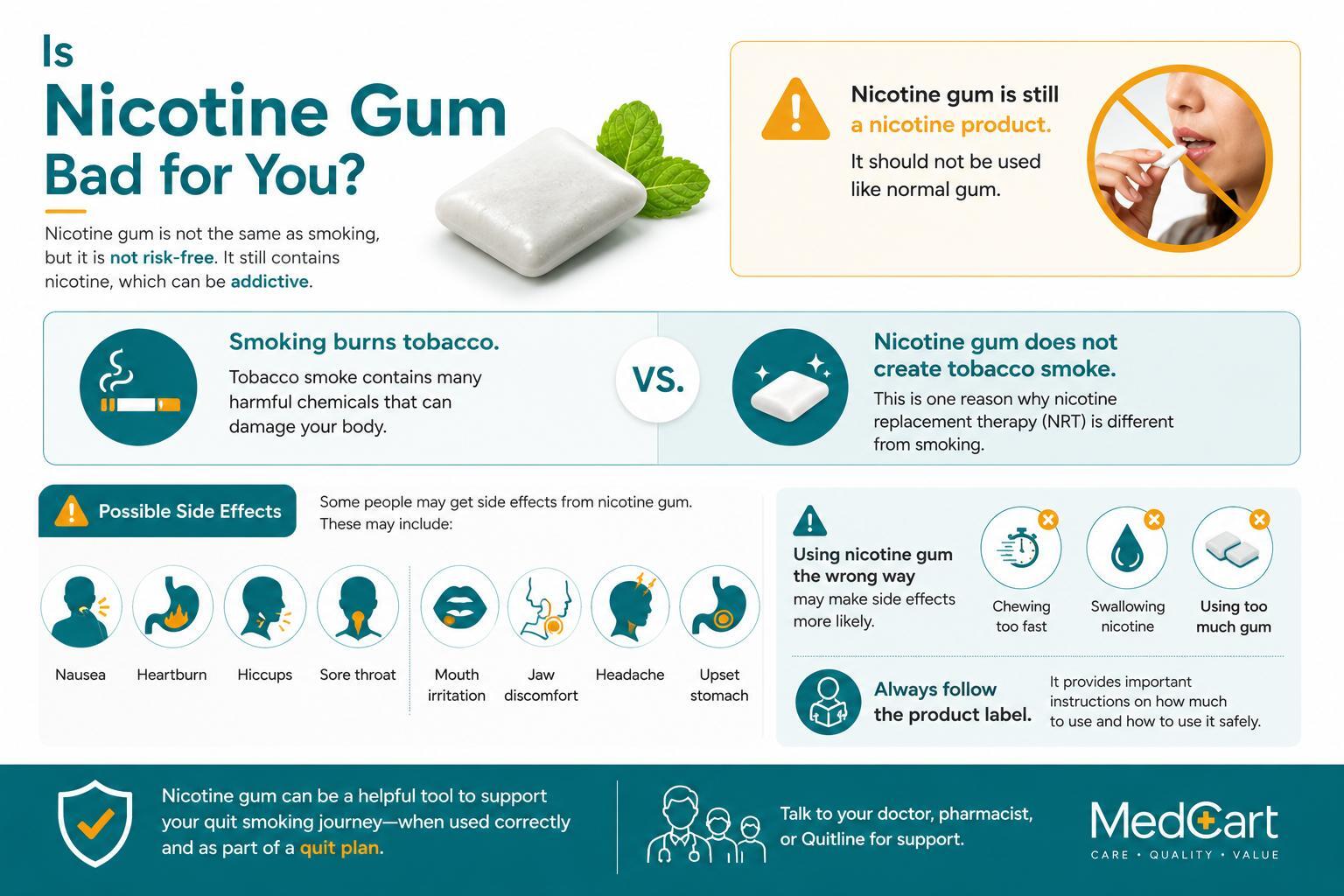
Nicotine gum is not the same as smoking, but it is not risk-free. It still contains nicotine, which can be addictive.
Smoking burns tobacco. Tobacco smoke contains many harmful chemicals. Nicotine gum does not create tobacco smoke.
This is one reason why nicotine replacement therapy is different from smoking. However, nicotine gum is still a nicotine product. It should not be used like normal gum.
Some people may get side effects from nicotine gum. These may include:
- Nausea
- Heartburn
- Hiccups
- Sore throat
- Mouth irritation
- Jaw discomfort
- Headache
- Upset stomach
Using nicotine gum the wrong way may make side effects more likely. Chewing too fast, swallowing nicotine, or using too much gum can make some people feel unwell.
Always follow the product label.
Is Nicotine Gum Harmful for You?
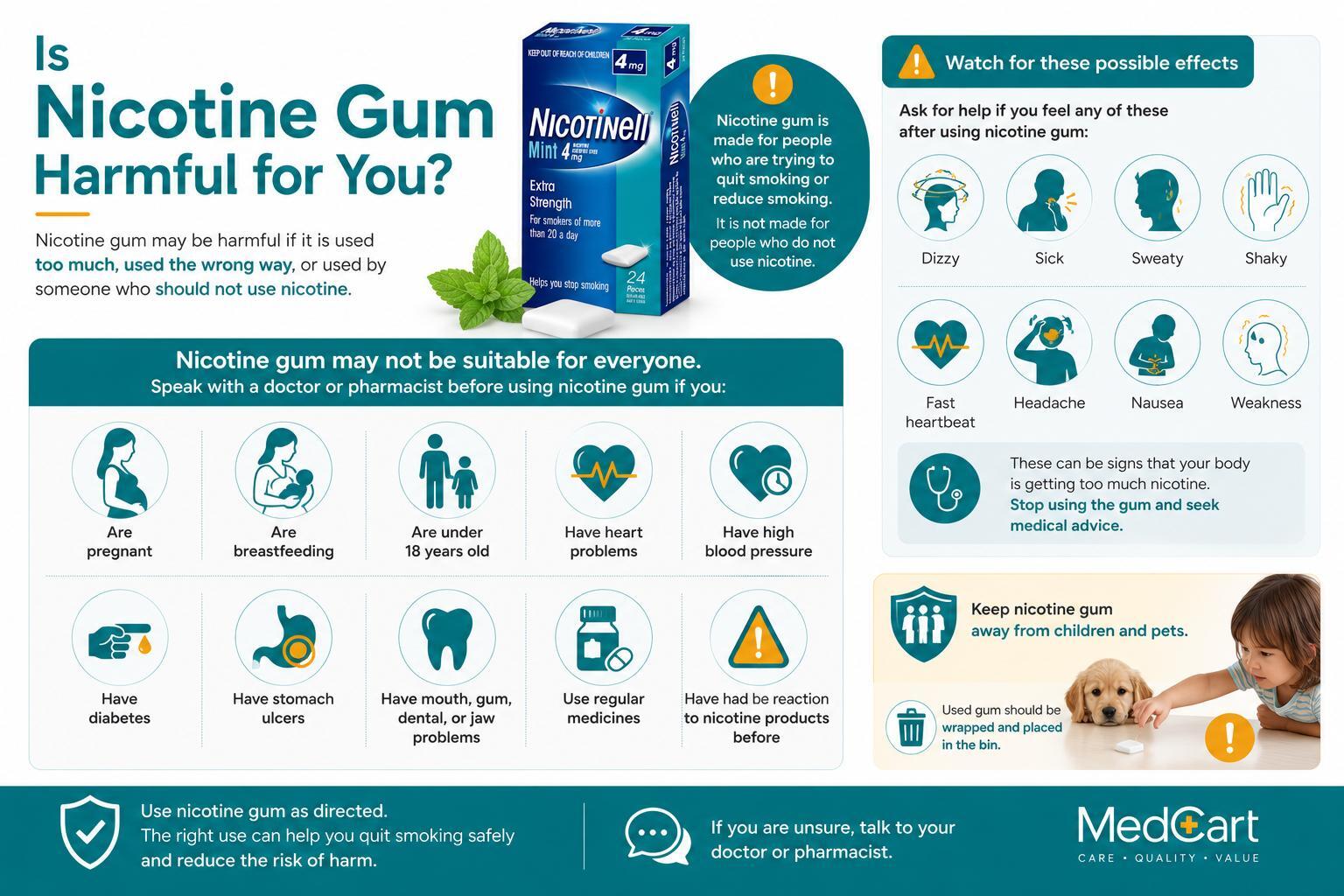
Nicotine gum may be harmful if it is used too much, used the wrong way, or used by someone who should not use nicotine.
Nicotine gum is made for people who are trying to quit smoking or reduce smoking. It is not made for people who do not use nicotine.
Nicotine gum may not be suitable for everyone. Speak with a doctor or pharmacist before using nicotine gum if you:
- Are pregnant
- Are breastfeeding
- Are under 18 years old
- Have heart problems
- Have high blood pressure
- Have diabetes
- Have stomach ulcers
- Have mouth, gum, dental, or jaw problems
- Use regular medicines
- Have had a reaction to nicotine products before
You should also ask for help if you feel dizzy, sick, sweaty, shaky, or notice a fast heartbeat after using nicotine gum.
Keep nicotine gum away from children and pets. Used gum should be wrapped and placed in the bin.
How Does Nicotine Gum Work?
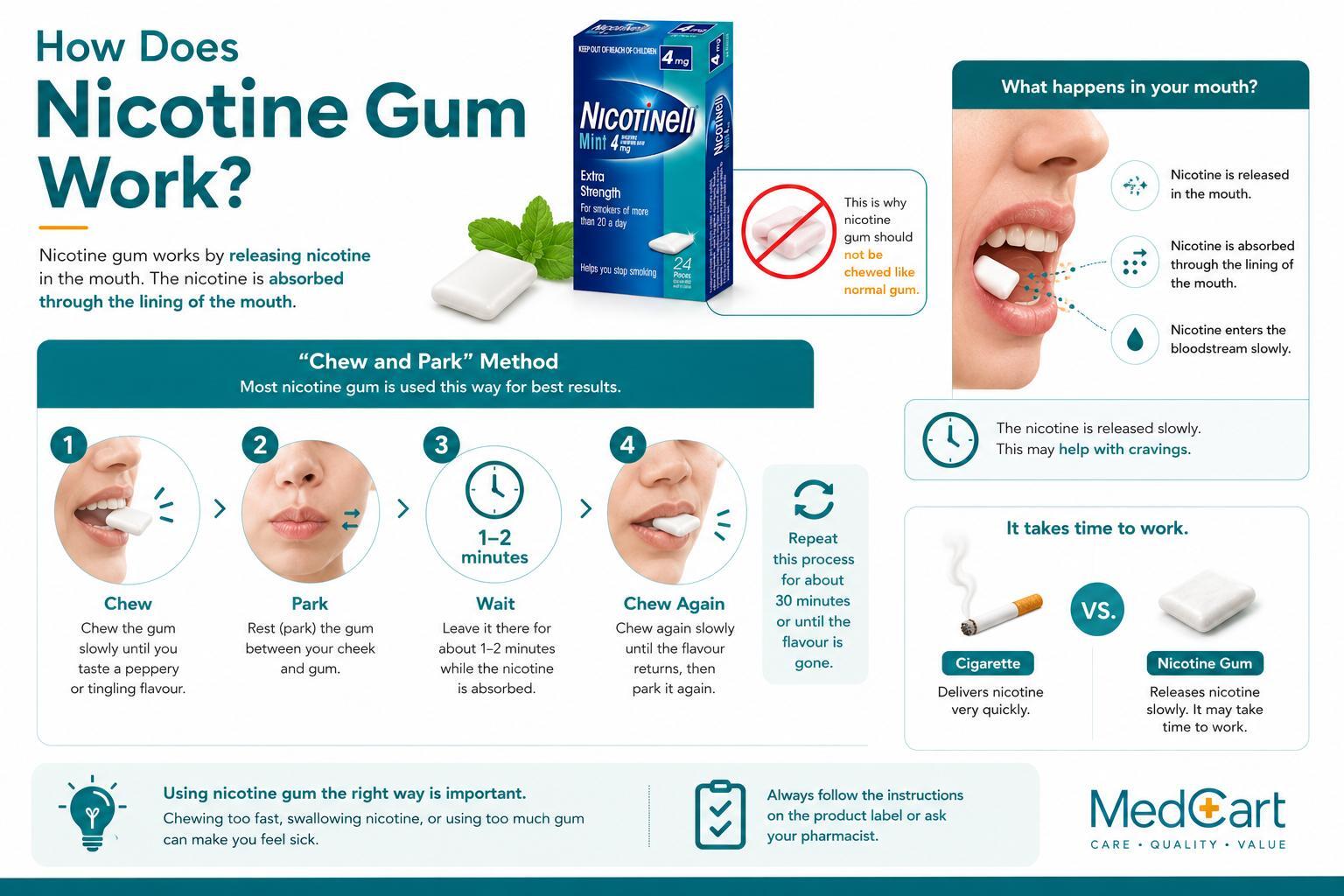
Nicotine gum works by releasing nicotine in the mouth. The nicotine is absorbed through the lining of the mouth.
This is why nicotine gum should not be chewed like normal gum.
Most nicotine gum is used with the “chew and park” method. This means you chew it slowly, then rest it between your cheek and gum.
The nicotine is released slowly. This may help with cravings.
Nicotine gum does not give nicotine as fast as a cigarette. It may take time to work. This is why it is important to use it correctly.
How to Use Nicotine Gum
Use nicotine gum with the chew and park method. Do not chew it like normal chewing gum.
Always read the product label first. Different products may have different directions.
A common method is:
1. Put one piece in your mouth
Use one piece when you feel a craving. You may also use it before a known trigger.
2. Chew slowly
Chew the gum slowly until you notice a tingling, warm, or peppery taste.
3. Park the gum
Place the gum between your cheek and gum. Leave it there until the taste or tingling fades.
4. Chew again
When the taste fades, chew the gum again a few times.
5. Park it again
Move it back between your cheek and gum.
6. Repeat
Keep using the chew and park method for the time stated on the product label.
7. Throw it away safely
When finished, wrap the gum and place it in the bin.
Do not swallow nicotine gum. Do not use more than the label says.
What Should You Avoid When Using Nicotine Gum?
Avoid eating or drinking while using nicotine gum. Some food and drinks may affect how well it works.
Always check the product label. Many nicotine gum products advise users to avoid food and drinks shortly before and during use.
This may include:
- Coffee
- Tea
- Soft drinks
- Juice
- Alcohol
- Acidic drinks
These drinks may affect how nicotine is absorbed in the mouth.
For best use:
- Do not chew too fast
- Do not chew it like normal gum
- Do not swallow the gum
- Do not eat while using it
- Do not drink while using it
- Do not use more than directed
- Do not share it with another person
Nicotine Gum Strengths: 2 mg vs 4 mg
Nicotine gum often comes in different strengths, such as 2 mg and 4 mg. The right strength depends on your smoking habits and needs.
Some people may need a lower strength. Others may need a higher strength. This can depend on how much a person smokes and how soon they smoke after waking.
A pharmacist can help you choose the right strength.
As a simple guide:
- 2 mg may suit some people with lower nicotine cravings
- 4 mg may suit some people with stronger nicotine cravings
Do not guess if you are unsure. Ask a pharmacist for help.
Can You Use Nicotine Gum With Nicotine Patches?
Some people use nicotine gum with a nicotine patch. This is often called combination nicotine replacement therapy.
A nicotine patch gives slow and steady nicotine support. Nicotine gum can help with sudden cravings.
This mix may suit some people who have strong cravings. But it is not right for everyone.
Speak with a doctor or pharmacist before using more than one nicotine product at the same time.
Can Non-Smokers Use Nicotine Gum?
Non-smokers should not use nicotine gum unless a doctor or pharmacist tells them to. Nicotine is addictive.
Nicotine gum is made for people who are trying to quit or reduce smoking. It is not a normal wellness product. It is not made for general use.
A person who does not smoke does not need nicotine replacement therapy for cigarette cravings.
If a non-smoker uses nicotine gum, they may feel side effects such as:
- Nausea
- Dizziness
- Headache
- Hiccups
- Fast heartbeat
- Feeling unwell
If you do not smoke, do not use nicotine gum unless a health professional advises it.
Is Nicotine Gum Safe for Your Gums?
Nicotine gum may irritate the mouth or gums in some people. It may not suit people with some dental or jaw problems.
Some people may notice mouth discomfort when using nicotine gum.
Possible mouth-related side effects may include:
- Sore gums
- Mouth irritation
- Sore throat
- Jaw discomfort
- Hiccups
- Dental discomfort
If you have dentures, gum disease, mouth ulcers, jaw pain, or recent dental work, speak with a dentist, doctor, or pharmacist before using nicotine gum.
If gum does not feel comfortable, another option may suit you better. A pharmacist may suggest nicotine lozenges, patches, mouth spray, or another product.
Nicotine Gum vs Nicotine Lozenges
Nicotine gum and nicotine lozenges are both oral nicotine replacement products. The main difference is how you use them.
Nicotine gum is chewed and parked in the mouth. Nicotine lozenges dissolve slowly in the mouth.
Nicotine gum may suit people who like to chew. Nicotine lozenges may suit people who do not want to chew.
Both products may help with short cravings. Both should be used as directed.
Nicotine Gum vs Cigarettes
Nicotine gum is different from cigarettes because it does not burn tobacco or create smoke. But it still contains nicotine.
Cigarettes expose the body to tobacco smoke. Tobacco smoke contains many harmful chemicals.
Nicotine gum does not create smoke. It gives nicotine through the mouth lining.
This does not mean nicotine gum is safe for everyone. It still needs to be used properly.
The goal of nicotine gum is to help manage cravings while a person is trying to stop smoking. It should not be used as a long-term habit unless a health professional advises it.
Common Nicotine Gum Side Effects
Nicotine gum can cause side effects, especially if it is used too fast or too much.
Common side effects may include:
- Nausea
- Heartburn
- Hiccups
- Sore throat
- Mouth irritation
- Jaw discomfort
- Headache
- Upset stomach
To reduce side effects:
- Use the chew and park method
- Chew slowly
- Do not swallow the gum
- Avoid food and drinks while using it
- Follow the daily limit on the label
- Ask a pharmacist if the strength is right
Stop using nicotine gum and seek advice if side effects feel strong or do not go away.
When Should You Speak With a Doctor or Pharmacist?
Speak with a doctor or pharmacist if you are unsure if nicotine gum is right for you. This is important if you have health conditions or take regular medicine.
Ask for advice before using nicotine gum if you:
- Are pregnant or breastfeeding
- Are under 18 years old
- Have heart disease
- Have high blood pressure
- Have diabetes
- Have stomach ulcers
- Have dental, gum, or jaw problems
- Take regular medicine
- Have had side effects from nicotine products before
You should also ask for help if you keep smoking while using nicotine gum and feel unwell.
Tips to Help Nicotine Gum Work Better
Nicotine gum may work better when you use it correctly and have a quit plan.
Here are simple tips that may help:
Know your smoking triggers
Write down when cravings happen. Common triggers include stress, coffee, driving, alcohol, work breaks, and after meals.
Keep nicotine gum nearby
Keep it in a safe place where you can reach it when cravings happen. Keep it away from children and pets.
Use it before strong cravings
If you know a craving is likely, you may use the gum before the trigger. Always follow the label.
Use the right method
Do not chew nicotine gum like normal gum. Use the chew and park method.
Ask for support
Support can make quitting feel less overwhelming. You may speak with a doctor, pharmacist, Quitline, or another health professional.
Track your progress
Write down how many cravings you had and what helped. This can help you plan for the next day.
Frequently Asked Questions About Nicotine Gum
Is nicotine gum harmful for you?
Nicotine gum may be harmful if it is used the wrong way or by someone who should not use nicotine.
It still contains nicotine. Nicotine can be addictive. Always follow the product label and ask a pharmacist if you are unsure.
What is nicotine gum good for?
Nicotine gum is used to help manage cravings when a person is trying to quit smoking.
It may help with short and sudden cravings. It may also help with withdrawal feelings.
Can non-smokers use nicotine gum?
Non-smokers should not use nicotine gum unless a doctor or pharmacist advises it.
Nicotine gum is made for people trying to quit or reduce smoking. It is not made for people who do not use nicotine.
Is nicotine gum safe for your gums?
Nicotine gum may be suitable for some people, but it can irritate the mouth or gums.
If you have gum disease, dentures, jaw pain, dental work, or mouth ulcers, ask a dentist, doctor, or pharmacist before use.
Can nicotine gum help you quit smoking?
Nicotine gum may help reduce cravings during a quit attempt. It may work best with a quit plan and support.
A doctor, pharmacist, or Quitline can help you choose the right support.
Can you chew nicotine gum like normal gum?
No. Nicotine gum should not be chewed like normal gum.
Use the chew and park method. Chew slowly, then park it between your cheek and gum.
Can you drink coffee while using nicotine gum?
It is best to check the product label. Many nicotine gum products advise avoiding food and drinks before and during use.
Coffee, juice, soft drinks, and other acidic drinks may affect how nicotine is absorbed.
Simple Buying Guide: How to Choose Nicotine Gum or Lozenges
The best option depends on your cravings, habits, and how you prefer to use the product.
Before buying, check:
- Product strength
- Directions for use
- Daily limit
- Age advice
- Side effects
- Warnings
- Whether you prefer gum or lozenges
Nicotine gum may suit people who like to chew. Nicotine lozenges may suit people who prefer a product that dissolves in the mouth.
Ask a pharmacist if you are not sure which product is right for you.
Where to Buy Nicotine Gum and Lozenges in Australia
You can shop nicotine gum and lozenges online at MedCart Australia.
MedCart Australia is an online marketplace for healthcare, wellness, and everyday medical products. You can browse smoking cessation support products and compare available options.
Shop here: Nicotine Gum and Lozenges
Visit: MedCart Australia
Final Thoughts
Nicotine gum may help some people manage cravings while trying to quit smoking. It should be used carefully and only as directed.
Nicotine gum is different from smoking because it does not burn tobacco or create cigarette smoke. But it still contains nicotine, so it is not risk-free.
Read the product label before use. Speak with a doctor or pharmacist if you are pregnant, breastfeeding, under 18, have health conditions, take regular medicines, or are not sure if nicotine gum is right for you.
References
- Quit.org.au. “Nicotine Gum.”
- Quit.org.au. “Nicotine Replacement Therapy Frequently Asked Questions.”
- Quit.org.au. “Combination Nicotine Replacement Therapy.”
- healthdirect Australia. “Medicines to Treat Nicotine Dependence.”
- Royal Australian College of General Practitioners. “Pharmacotherapy for Smoking Cessation.”
- Therapeutic Goods Administration. “Nicotine Pouches Are Illegal in Australia Unless Prescribed.” This source notes that TGA-approved nicotine replacement therapies include patches, mist, and lozenges.
- Australian Government Department of Health and Aged Care. “Get Ready to Quit.”
- Cancer Council Australia. “Quit Smoking.”
- NHS. “Quit Smoking with Nicotine Replacement Therapies.”