


What Is Retinol?
Retinol is one of the most popular skincare ingredients today. It is commonly used to help improve the look and feel of the skin.
Retinol belongs to a group of ingredients called retinoids, which are forms of vitamin A. According to the American Academy of Dermatology (AAD), retinoids have been widely studied for many years and are commonly used in skincare and dermatology.
When applied to the skin, retinol slowly changes into its active form. This process may help support normal skin cell turnover. Cell turnover is the natural process where old skin cells are replaced with newer ones.
Many people use retinol as part of their evening skincare routine because sunlight can reduce its stability. Retinol products are available in different strengths, formulas, and textures to suit different skin types.
Because retinol may cause dryness or irritation, many experts recommend starting slowly and gradually increasing use over time.
How Does Retinol Work?
Your skin naturally sheds old skin cells and replaces them with new ones. This process slows down as we get older.
Retinol works by supporting this natural skin renewal process.
According to the American Academy of Dermatology, retinol may help improve the appearance of skin by encouraging new skin cells to replace older ones more efficiently.
Retinol also interacts with vitamin A receptors in the skin. This may help improve the appearance of:
- Fine lines
- Uneven skin texture
- Dull-looking skin
- Uneven skin tone
- Some blemishes
Results usually take time. Many people may notice gradual improvements after several weeks or months of regular use, depending on the product and their skin.
What Does Retinol Do to Your Skin?
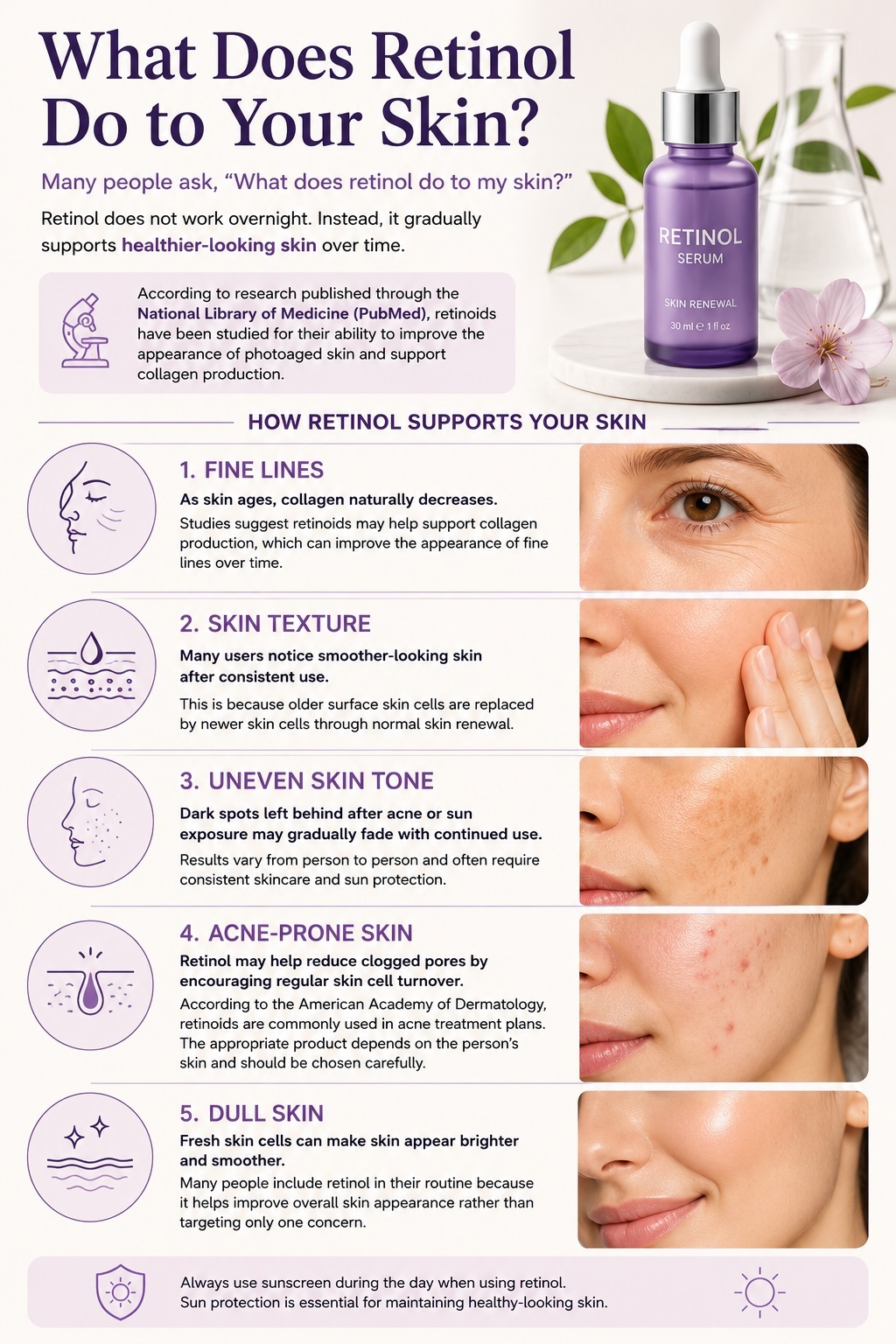
Many people ask, "What does retinol do to my skin?"
Retinol does not work overnight. Instead, it gradually supports healthier-looking skin over time.
According to research published through the National Library of Medicine (PubMed), retinoids have been studied for their ability to improve the appearance of photoaged skin and support collagen production.
Fine Lines
As skin ages, collagen naturally decreases.
Studies suggest retinoids may help support collagen production, which can improve the appearance of fine lines over time.
Skin Texture
Many users notice smoother-looking skin after consistent use.
This is because older surface skin cells are replaced by newer skin cells through normal skin renewal.
Uneven Skin Tone
Dark spots left behind after acne or sun exposure may gradually fade with continued use.
Results vary from person to person and often require consistent skincare and sun protection.
Acne-Prone Skin
Retinol may help reduce clogged pores by encouraging regular skin cell turnover.
According to the American Academy of Dermatology, retinoids are commonly used in acne treatment plans. The appropriate product depends on the person's skin and should be chosen carefully.
Dull Skin
Fresh skin cells can make skin appear brighter and smoother.
Many people include retinol in their routine because it helps improve overall skin appearance rather than targeting only one concern.
Types of Retinol
Not all retinol products are the same.
There are several forms of vitamin A used in skincare. Some are gentler, while others are stronger.
Understanding these differences can help you choose the right product.
1. Retinyl Esters
Examples include:
- Retinyl Palmitate
- Retinyl Acetate
- Retinyl Propionate
These are considered the gentlest forms.
Because they need several conversion steps before becoming active, they are generally less potent than retinol.
They are often found in beginner-friendly skincare products.
Best for:
- First-time users
- Sensitive skin
- Mild skincare routines
2. Retinol
Retinol is the most common over-the-counter vitamin A ingredient.
It requires fewer conversion steps than retinyl esters, making it more active while still suitable for many users when introduced gradually.
Best for:
- Beginners
- Regular skincare users
- Most skin types
3. Retinal (Retinaldehyde)
Retinal is one step closer to the active form of vitamin A than retinol.
Because of this, it generally works faster than retinol but may also increase the chance of irritation for some users.
Best for:
- Experienced retinol users
- Those looking for a stronger over-the-counter option
4. Prescription Retinoids
Prescription products include ingredients such as tretinoin and tazarotene.
These are available through healthcare professionals and are generally stronger than over-the-counter retinol.
They may be recommended for certain skin conditions after professional assessment.
Forms of Retinol Products
Retinol comes in different product types.
Choosing the right one depends on your skin type and personal preference.
Retinol Serum
Serums are lightweight and absorb quickly.
They often contain concentrated ingredients and are suitable for people who want to layer skincare products.
Good for:
- Combination skin
- Oily skin
- Layering routines
Retinol Cream
Creams are richer and usually contain moisturising ingredients.
These may help reduce dryness that some people experience when starting retinol.
Good for:
- Dry skin
- Mature skin
- Beginner routines
Retinol Lotion
Lotions provide a balance between creams and serums.
They feel lighter than creams but still offer hydration.
Good for:
- Normal skin
- Combination skin
Retinol Gel
Gel formulas are lightweight and often preferred by people with oily skin.
Some gel products may contain alcohol, so users with sensitive skin should read the ingredient list carefully.
Retinol Oils
Some skincare brands combine retinol with nourishing oils.
These products may help improve skin comfort while delivering retinol.
Which Form of Retinol Is Best?
There is no single "best" retinol product.
The right choice depends on your skin type, skincare routine, and personal preference.
Starting with a lower-strength product and using it only a few nights each week may help your skin adjust more comfortably.
Key Takeaways
- Retinol is a form of vitamin A used in many skincare products.
- It supports natural skin cell turnover.
- Different forms of retinol vary in strength.
- Creams, serums, gels, lotions, and oils all have different benefits.
- Consistency is important, and results often take several weeks to become noticeable.
- Beginners are usually advised to start with a lower-strength product and increase use gradually if their skin tolerates it.