


Introduction
Winter often brings more coughs, sore throats, runny noses and sick days. In Australia, several respiratory viruses circulate during the cooler months. These include influenza, respiratory syncytial virus (RSV), COVID-19 and viruses that cause the common cold.
The Australian Centre for Disease Control (Australian CDC) tracks COVID-19, influenza and RSV throughout the year. Its report covering 13 to 26 July 2026 showed that all three viruses were still circulating. Influenza and RSV were also contributing to hospital admissions for severe respiratory infections. The Australian CDC notes that respiratory virus trends can change through the season and that recent data are preliminary.
Knowing which viruses are common, how they spread and what you can do when symptoms appear can make winter illness easier to manage.
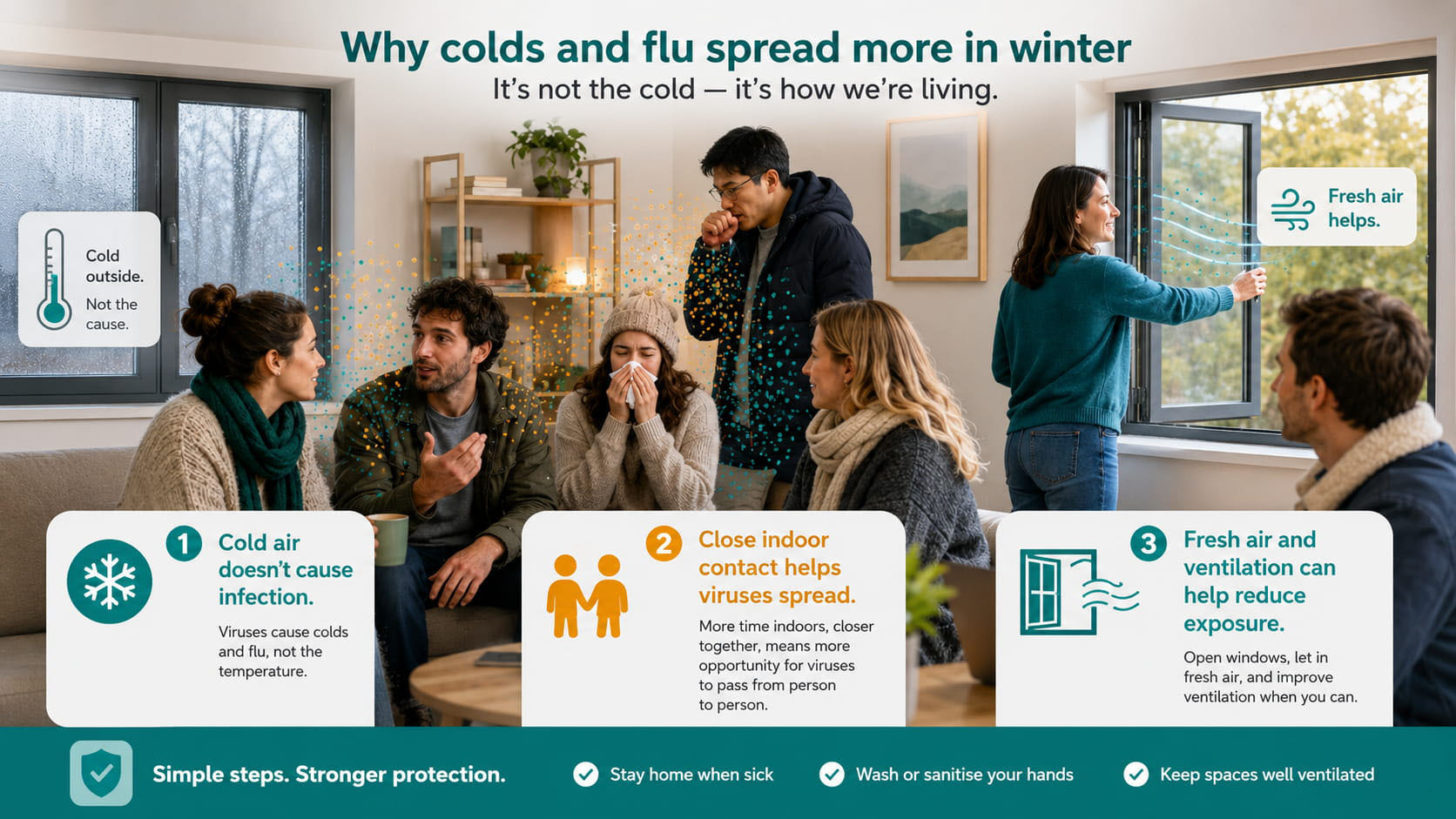
Why Do We Get Sick More in Winter?
Cold weather itself does not give you a cold or the flu. These illnesses are caused by viruses. Healthdirect explains that getting cold or wet does not directly cause a cold or influenza.
Winter can, however, create conditions that make respiratory viruses easier to spread.
People tend to spend more time indoors when the weather is cold. Windows and doors may stay closed, and people can spend longer periods close to family, classmates, co-workers and other members of the community.
Many respiratory viruses spread when an infected person breathes, talks, coughs or sneezes. Some can also spread when contaminated hands or surfaces are touched and a person then touches their eyes, nose or mouth. Improving ventilation by bringing fresh outdoor air into indoor spaces is one way to reduce exposure to respiratory particles.
Research also suggests that temperature and humidity can influence respiratory virus seasonality. A 2022 review published in EMBO Molecular Medicine found that winter virus patterns are likely influenced by several factors working together, including indoor crowding, temperature, humidity and changes in how well some viruses survive in the environment. The contribution of each factor varies between viruses.
So, the simple answer to “Why do we get sick more in winter?” is not that cold air causes an infection. Winter changes our environment, our behaviour and the opportunities viruses have to move between people.
What Are the Common Diseases in Winter?
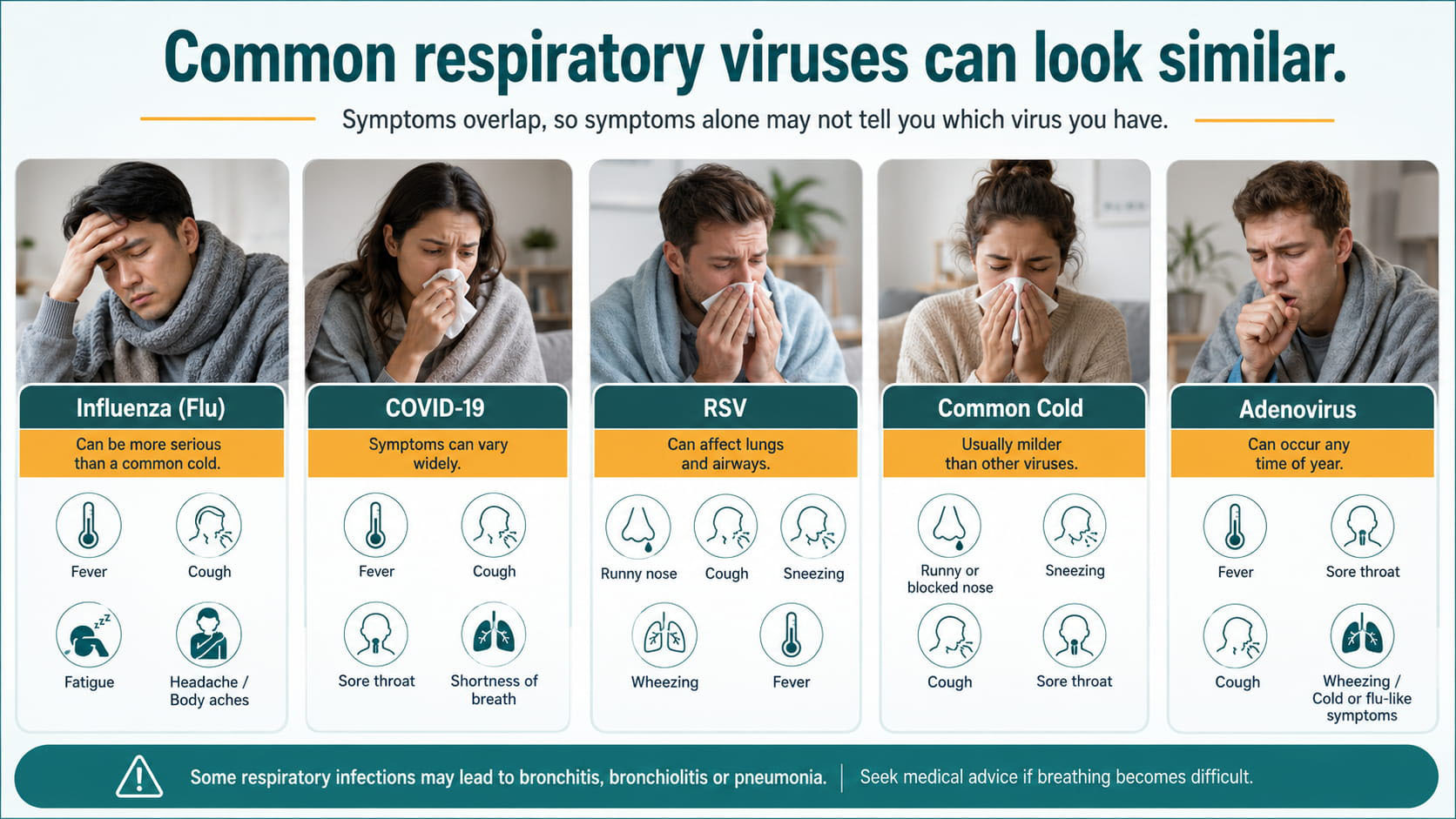
Many respiratory illnesses have similar symptoms. A cough, fever, headache, sore throat, runny nose, sneezing, tiredness and body aches can occur with more than one virus, so symptoms alone may not always tell you what you have.
Influenza
Influenza, or flu, is a contagious respiratory infection caused by influenza viruses. Healthdirect says influenza is generally most common in Australia from June to September. It can cause fever, cough, fatigue, headaches and muscle or joint aches. Flu can be more serious than a common cold.
COVID-19
COVID-19 continues to circulate in Australia. Common symptoms include fever, cough, sore throat and shortness of breath, although symptoms can range from very mild to severe. Unlike influenza, COVID-19 does not always follow a simple winter-only pattern. Australian national surveillance had not shown a clear COVID-19 winter peak by 26 July 2026.
Respiratory syncytial virus (RSV)
RSV infects the lungs and airways. It often causes mild cold-like symptoms such as a runny nose, cough, sneezing, wheezing and fever. It can be more serious for babies, young children, older adults and some people with underlying health conditions.
Common cold and adenovirus
The common cold can be caused by many different viruses, including rhinoviruses. Colds usually cause milder symptoms such as a runny or blocked nose, sneezing, cough and sore throat.
Adenoviruses can also cause cold or flu-like symptoms, including fever, sore throat, cough and wheezing. They can circulate at any time of year, so they are not strictly winter viruses. Adenovirus infections are particularly common in young children and can spread in close-contact environments.
Respiratory infections can sometimes lead to illnesses such as bronchitis, bronchiolitis or pneumonia. These conditions can have different causes and may need medical assessment, especially when breathing becomes difficult.
How Can You Manage Winter Colds and Viral Illnesses?
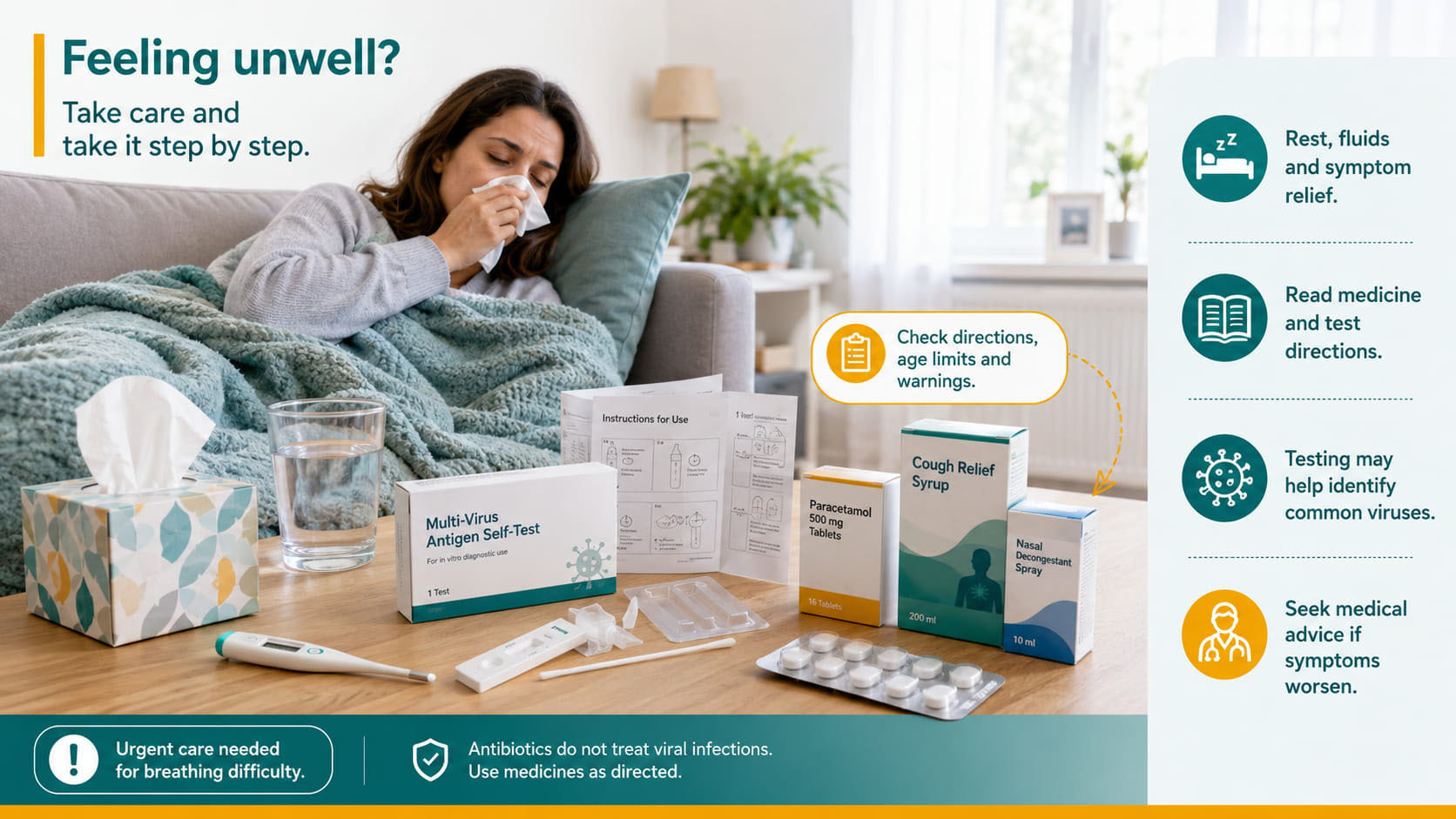
Many mild respiratory infections can be managed at home with rest and fluids. Healthdirect advises that medicines such as paracetamol or ibuprofen may help relieve fever, headaches or body aches when they are suitable for the person taking them. Decongestants and some cough medicines may also relieve certain symptoms, but they can have side effects and are not suitable for everyone. Always follow the label and ask a pharmacist or doctor if you are unsure.
Antibiotics do not treat colds, influenza, COVID-19 or other infections caused only by viruses. Some people with influenza or COVID-19 may instead be eligible for antiviral treatment. These medicines are time-sensitive, so people at higher risk of severe illness should contact a healthcare professional early if they develop symptoms or test positive.
Testing can help identify the virus
Because symptoms overlap, testing may sometimes help distinguish between respiratory viruses. The Therapeutic Goods Administration (TGA) lists approved combination rapid antigen self-tests that can test for several viruses from one sample. Depending on the individual test, this may include COVID-19, influenza A and B, RSV and adenovirus.
Rapid antigen tests are not as accurate as laboratory testing. Follow the instructions supplied with your test, check its expiry date and use only tests approved for supply in Australia. If symptoms are getting worse or you remain concerned despite a negative result, seek medical advice.
You can compare MedCart's Covid, Flu, RSV & ADV Antigen Test Kits and Cold & Flu medications based on your needs. Always check the product directions, intended use, age restrictions and warnings before use.
Seek medical care if symptoms are severe, getting worse or are not improving. Breathing difficulty needs urgent medical assessment. Babies, older adults and people with chronic conditions may also need earlier medical advice.
How Can You Minimise Your Risk of Winter Illness?
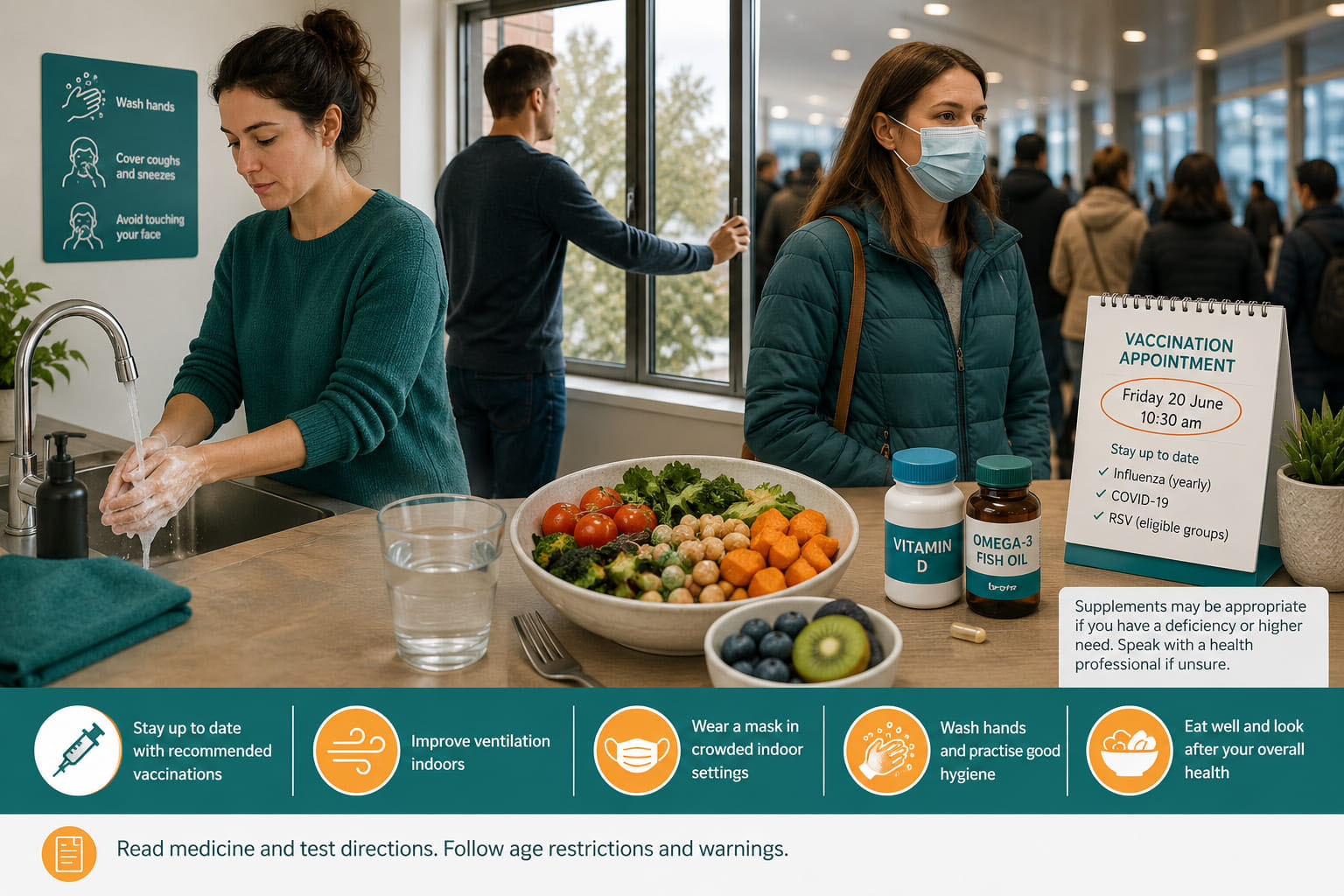
There is no single step that can stop every winter infection. Using several simple measures together can reduce your risk and help protect people around you.
Keep vaccinations up to date. Australian Government guidance recommends annual influenza vaccination and staying up to date with COVID-19 vaccination. RSV immunisation is also recommended or funded for certain groups, including eligible older adults, pregnant women and infants under current Australian programs. Ask your healthcare professional which vaccinations apply to you.
Improve indoor air and avoid spreading illness. Open windows or improve ventilation where practical. Stay home when you are sick, keep some distance from others and consider wearing a well-fitting mask in crowded indoor settings or when you need to be around other people while unwell.
Wash your hands and cover coughs and sneezes. Good hand and respiratory hygiene can reduce the chance of passing respiratory infections between people. Avoid touching your eyes, nose or mouth with unwashed hands.
Look after your general nutrition. A balanced diet provides nutrients needed for normal body and immune function. However, vitamins should not be treated as a guaranteed way to prevent winter viruses. Healthdirect says there is no good evidence that vitamins or other supplements prevent common colds. Supplements may be appropriate when a person has a deficiency, restrictive diet or another nutritional need.
If supplementation has been recommended for you, you can explore MedCart's Vitamins & Supplements range. Follow label directions and speak with a doctor, pharmacist or Accredited Practising Dietitian if you are unsure what is suitable.
FAQs
Can cold weather itself make me sick?
Cold weather does not cause a cold or influenza. Viruses cause these infections. Winter conditions can make transmission easier because people spend more time together indoors and several respiratory viruses follow seasonal patterns.
Can I tell whether I have flu, COVID-19 or RSV from symptoms?
Not always. These illnesses can all cause cough, fever, tiredness, sore throat and other similar symptoms. Testing and medical assessment may sometimes be needed to identify the cause.
Can one rapid antigen test check for several winter viruses?
Some TGA-approved combination self-tests can detect multiple viruses from the same sample. Depending on the test, these may include COVID-19, influenza A and B, RSV and adenovirus. Always check exactly which infections your test is designed to detect and follow its instructions.
Do vitamin supplements prevent winter colds?
There is no good evidence that vitamin supplements reliably prevent common colds. A varied diet is generally the preferred way to obtain vitamins, while supplements may be useful for people with specific nutritional needs or deficiencies.
Summary
Common winter illnesses in Australia include influenza, COVID-19, RSV and the many viral infections that cause the common cold. Adenovirus can produce similar symptoms but can occur throughout the year.
Winter does not make people sick by itself. Instead, closer indoor contact, reduced ventilation, environmental conditions and the seasonal behaviour of some viruses can make infection more likely.
Vaccination, staying home when sick, good ventilation, hand hygiene, masks in suitable situations and careful symptom management can all play a role. When symptoms overlap, an appropriate approved test may also help identify what is causing the illness.
Where to Buy
MedCart Australia offers health products that can help you prepare for the winter season and manage common needs at home.
Browse:
Visit MedCart Australia to explore the wider range. Always read product labels and directions and seek professional health advice when needed.
References
- Australian Centre for Disease Control. Australian Respiratory Surveillance Report – 13 July to 26 July 2026. Published 31 July 2026. URL: https://www.cdc.gov.au/sites/default/files/2026-07/australian_respiratory_surveillance_report_-_13_july_to_26_july_2026.pdf
- Healthdirect Australia. Flu (influenza) – influenza A and B, symptoms, vaccine. Last reviewed February 2026. URL: https://www.healthdirect.gov.au/flu
- Healthdirect Australia. Respiratory syncytial virus (RSV). Last reviewed February 2025. URL: https://www.healthdirect.gov.au/respiratory-syncytial-virus-rsv
- Healthdirect Australia. Colds. Last reviewed February 2026. URL: https://www.healthdirect.gov.au/colds
- Healthdirect Australia. Adenoviruses. Last reviewed November 2024. URL: https://www.healthdirect.gov.au/adenoviruses
- Australian Government Department of Health, Disability and Ageing. COVID-19 symptoms, spread and prevention. Last updated 22 June 2026. URL: https://www.health.gov.au/topics/covid-19/about
- Australian Government Department of Health, Disability and Ageing. Winter vaccinations. 2026 winter vaccination program information. URL: https://www.health.gov.au/winter-vaccinations
- Therapeutic Goods Administration. COVID-19 rapid antigen self-tests that are approved in Australia. Last updated 10 August 2026. URL: https://www.tga.gov.au/resources/explore-topic/covid-19/covid-19-tests/covid-19-rapid-antigen-self-tests-are-approved-australia
- Therapeutic Goods Administration. Q&As on combination rapid antigen self-tests. Last updated 7 September 2022. URL: https://www.tga.gov.au/resources/explore-topic/covid-19/covid-19-tests/qas-combination-rapid-antigen-self-tests
- Healthdirect Australia. Medicines for colds, flu (influenza) and COVID-19. Last reviewed August 2025. URL: https://www.healthdirect.gov.au/medicines-for-colds-flu-and-covid-19
- Healthdirect Australia. Vitamin C and your health. Last reviewed February 2026. URL: https://www.healthdirect.gov.au/vitamin-c-and-your-health
- Neumann G, Kawaoka Y. Seasonality of influenza and other respiratory viruses. EMBO Molecular Medicine. Published 14 February 2022. URL: https://pubmed.ncbi.nlm.nih.gov/35157360/