

Sexually transmitted infections can affect anyone who is sexually active. They can also be easy to miss.
According to Healthdirect Australia, many STIs cause no noticeable symptoms. This means a person can have an infection without knowing it. The Australian Government recommends regular STI testing for sexually active people, with testing needs depending on sexual activity and other risk factors.
Testing may be worth considering after unprotected sex, when you have a new sexual partner, if a condom breaks, if a partner has an STI, or if you notice symptoms.
For people looking for more privacy and convenience, at-home STI test kits and self-collected samples can provide another way to take an active role in sexual health.
However, different tests look for different infections. A test kit is also a screening tool. It does not treat or prevent an STI.
STI vs STD: What Is the Difference?
You may see both STI and STD when searching for sexual health tests.
STI means sexually transmitted infection. STD means sexually transmitted disease.
Healthdirect Australia describes STIs as infections that were previously known as STDs. Today, STI is the more commonly used health term. One reason it is useful is that a person can have an infection without developing obvious symptoms or illness.
For customers, the important point is simple:
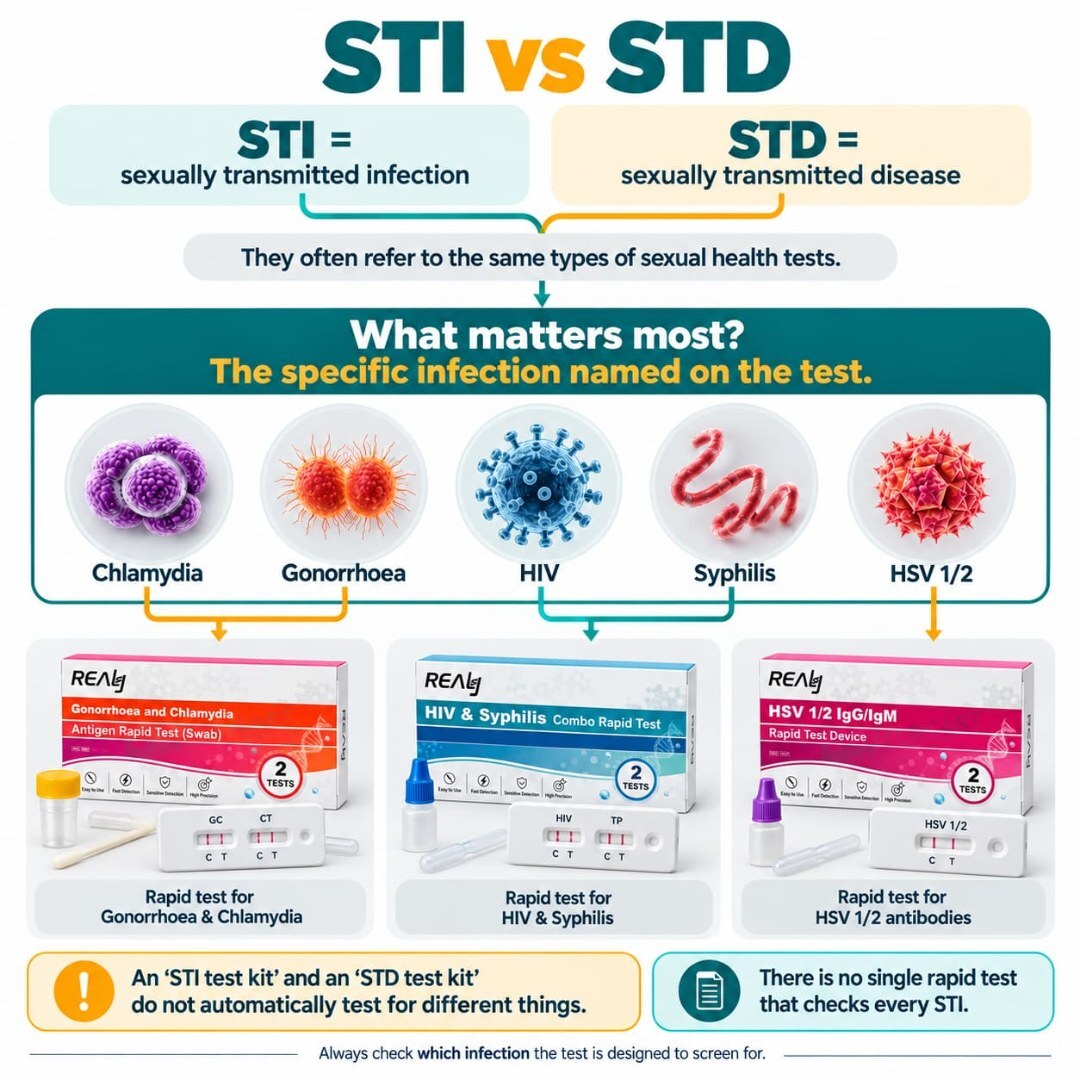
An “STD test kit” and an “STI test kit” do not necessarily test for different things. What matters is the specific infection named on the test.
For example:
The three featured tests do not screen for every possible STI. For example, they should not be assumed to test for HPV, hepatitis B, hepatitis C, trichomoniasis or other infections unless the product instructions specifically state this.
There is no single rapid test that automatically checks for every STI.
What Are STI Test Kits For?
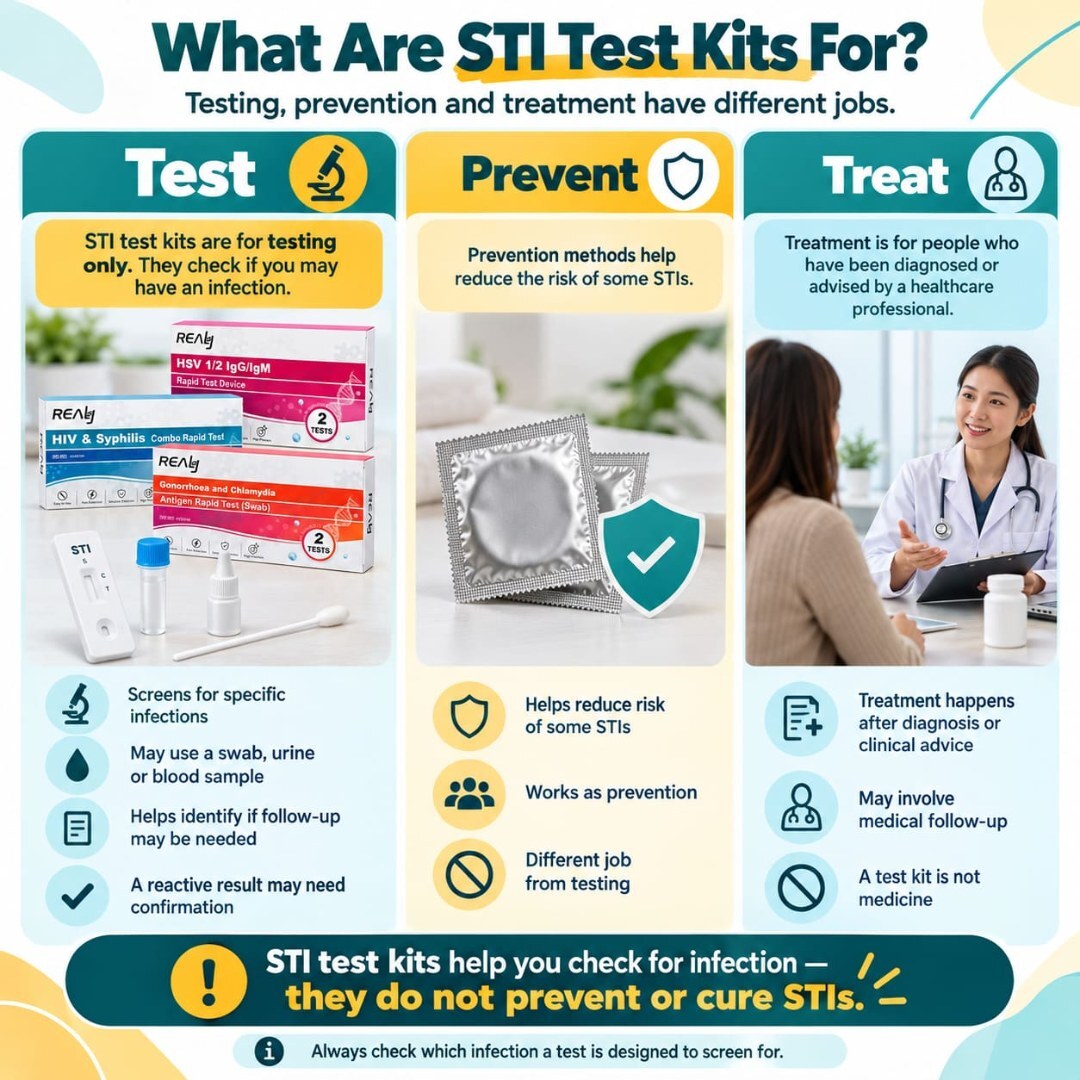
STI test kits are designed to screen or test for markers linked to specific infections.
Depending on the test, this may mean looking for an antigen, an antibody or another marker in a sample such as blood, urine or a swab.
Their purpose is to help identify whether further investigation may be needed.
What an STI test kit can do
Depending on its intended use, a test may:
- screen for one or more named STIs
- give you a preliminary result
- provide a more private testing option
- help you decide whether to seek medical follow-up
- help identify infections that may not be causing symptoms
What an STI test kit cannot do
An STI test kit is not a medicine or remedy. It cannot cure an STI.
It is also not a form of prevention. Taking a test does not stop an infection from being acquired or passed to another person.
A test kit is not:
- an STI treatment
- an antibiotic or antiviral medicine
- a vaccine
- a condom or barrier method
- contraception
- protection against future exposure
- a test for every STI unless specifically stated
Healthdirect advises using condoms during penetrative sex as one way to reduce the risk of STIs, along with regular testing. Other prevention options may be available for particular infections and circumstances.
Testing and prevention therefore work together, but they have different jobs.
Testing helps you check for infection. Prevention helps reduce the chance of acquiring or passing one on. Treatment is used after an infection is diagnosed or clinically managed.
A reactive or positive screening result may also need confirmation by a healthcare professional or laboratory before a diagnosis is made.
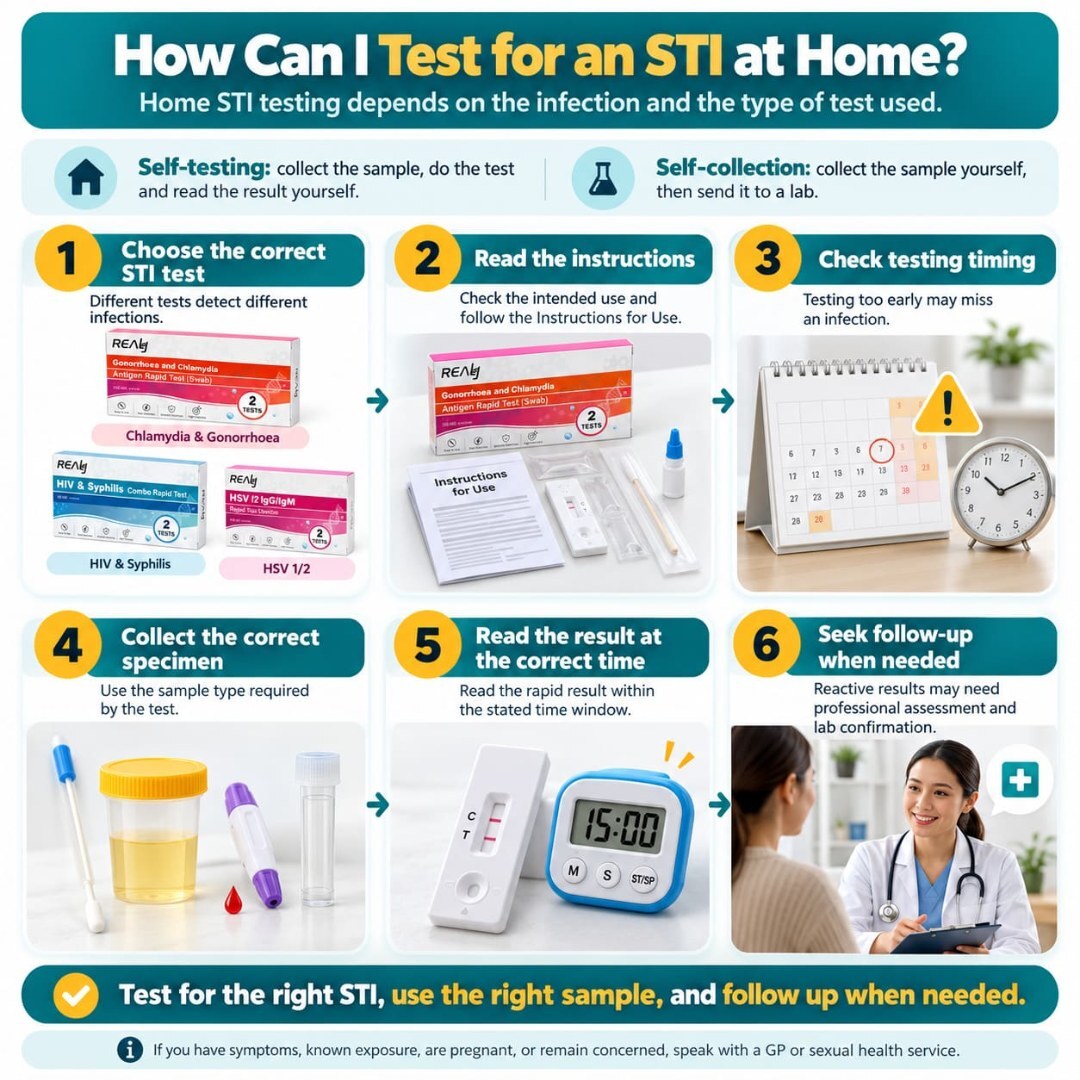
How Can I Test for an STI at Home?
At-home STI testing depends on the infection and the type of test being used.
There are two useful terms to understand.
Self-testing means you collect the sample, perform the test and read the result yourself.
Self-collection means you collect a sample yourself, such as a vaginal swab, but the sample is sent to a laboratory for testing.
The Australian Government notes that STI testing may involve urine, blood or swab samples, and some swabs can be collected yourself.
If you are considering an at-home STI test kit, follow these steps:
- Know which STI you want to screen for. Choose a test designed for that specific infection.
- Check the intended use. Follow the supplied Instructions for Use and check that the exact device is suitable for how you intend to use it in Australia.
- Check when to test. Testing too early after exposure may give a negative result even when an infection is present.
- Collect the right sample. Tests may require blood, urine, vaginal swabs or other specimen types.
- Follow the timing exactly. Rapid tests usually have a specific window for reading the result.
- Follow up when needed. A reactive result may require professional assessment and laboratory confirmation.
If you have symptoms, have had a known exposure, are pregnant, or remain concerned despite a negative result, speak with a GP or sexual health service.
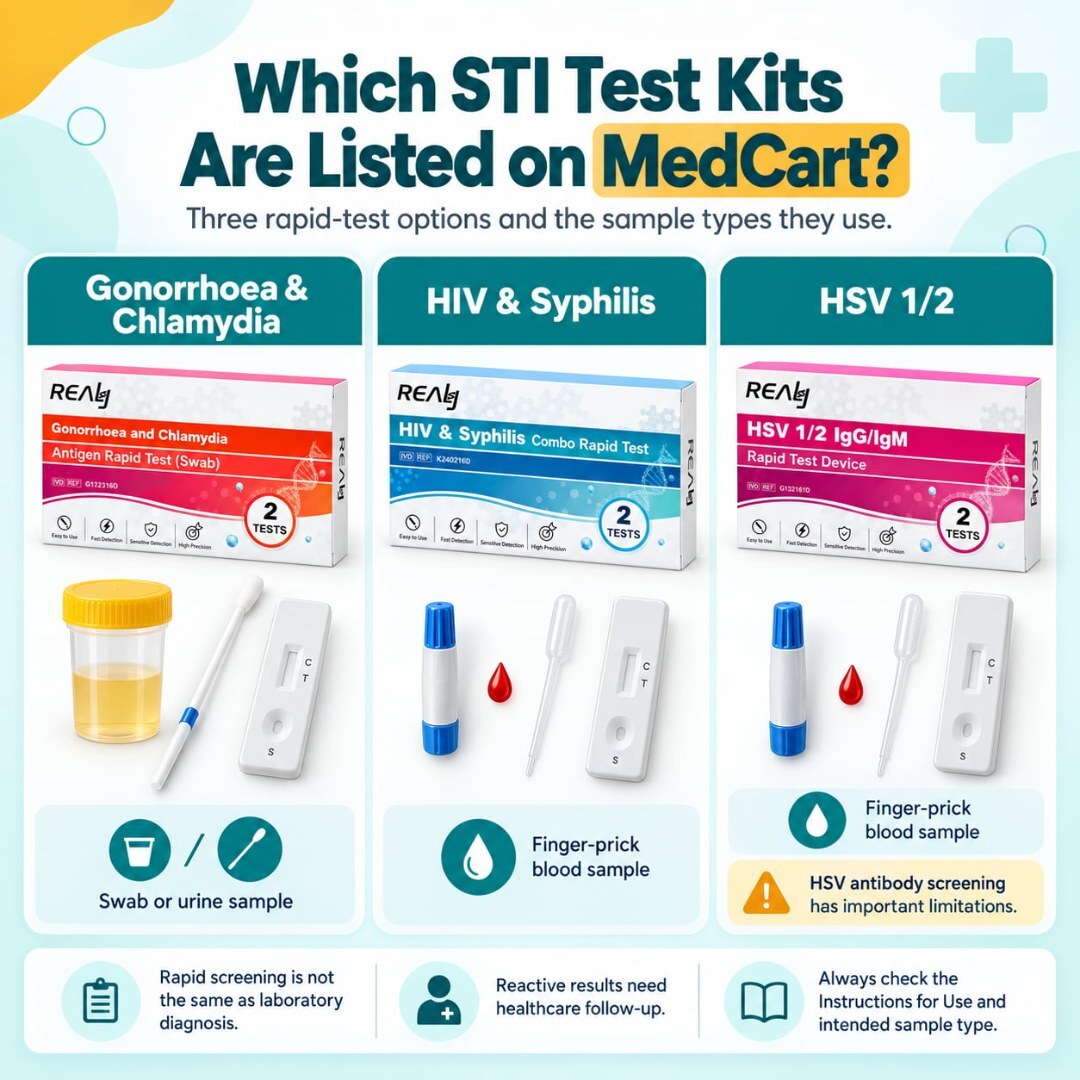
Which STI Test Kits Are Listed on MedCart?
MedCart Australia has an STI Test Kits category for sexual health screening products.
Three REALY® rapid-test products are currently listed in the range.
Gonorrhoea and Chlamydia
The REALY® Gonorrhoea & Chlamydia Antigen Rapid Test – 2 Pack screens for antigens associated with Neisseria gonorrhoeae and Chlamydia trachomatis.
According to the MedCart listing, compatible samples include female vaginal swabs, male urethral swabs and male urine, as described in the supplied instructions.
Australian STI Management Guidelines recommend NAAT as the diagnostic method for chlamydia, while NAAT is also commonly used to diagnose gonorrhoea. Rapid screening therefore should not be confused with laboratory diagnosis.
HIV and Syphilis
The REALY® HIV & Syphilis Combo Rapid Test – 2 Pack is designed to screen for HIV-1/HIV-2 antibodies and antibodies to Treponema pallidum, the bacterium associated with syphilis.
The MedCart listing specifies serum, plasma or whole blood samples.
A reactive result is preliminary. It does not by itself confirm HIV or syphilis and needs appropriate follow-up.
HSV-1 and HSV-2
The REALY® HSV 1/2 IgG/IgM Rapid Test Device – 2 Pack screens for IgG and IgM antibodies associated with HSV-1 and HSV-2.
It uses whole blood, serum or plasma.
There is an important limitation. Australian STI Management Guidelines do not recommend routine HSV blood-antibody screening for people without symptoms. If genital herpes lesions are present, laboratory testing of a swab from the lesion is generally preferred.
Always follow the exact product instructions and check its intended use before testing.
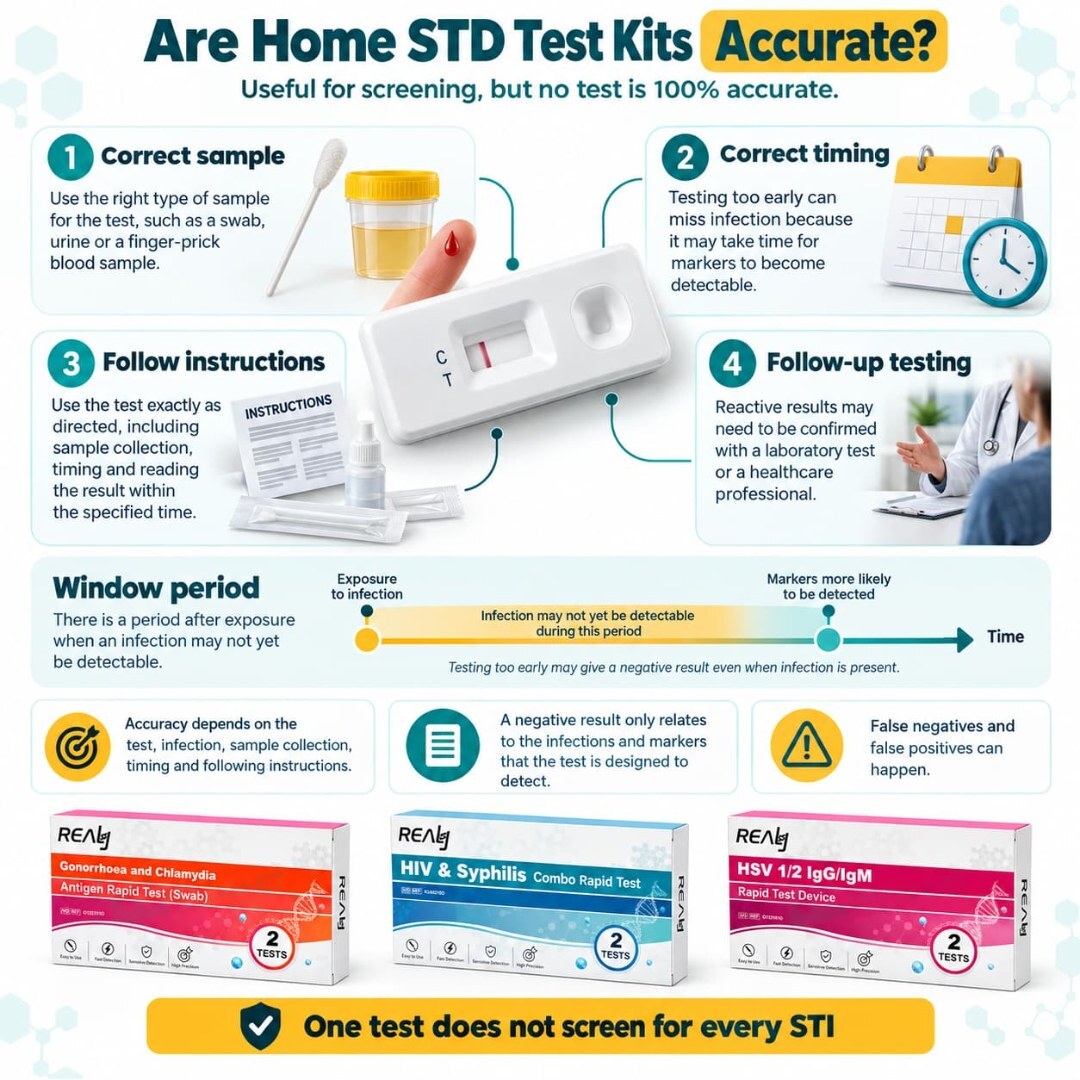
Are Home STD Test Kits Accurate?
Home STI or STD test kits can provide useful screening information, but no test is 100% accurate.
Accuracy depends on the exact product, the infection, sample collection, when the test is performed and whether the instructions are followed correctly.
The Therapeutic Goods Administration sets performance requirements for approved self-tests. Its current guidance sets minimum sensitivity and specificity expectations for chlamydia, gonorrhoea and syphilis self-tests. These requirements should not be assumed to apply to every rapid test unless the exact product has been assessed for that intended use.
Timing also matters.
After an infection is acquired, there may be a period when the marker used by the test cannot yet be detected. This is often called a window period. Testing during this time can result in a negative test even though infection is present.
A test can also produce:
- a false negative, where infection is present but the test does not detect it
- a false positive, where the screening result is reactive even though confirmatory testing does not confirm infection
This is why a reactive rapid test may need laboratory confirmation.
It is also why a negative result does not mean you have tested negative for every STI. It only relates to the infections and markers that the particular test is designed to detect.
Frequently Asked Questions
How can I test for an STI at home?
Depending on the test, you may collect a swab, urine or finger-prick blood sample. Some tests can be completed and read at home, while other services use home collection followed by laboratory testing.
Always use the correct test for the STI you want to screen for and follow its instructions.
Are home STD test kits accurate?
They can provide useful screening results, but accuracy varies between tests. Timing, specimen collection and following the instructions all matter. A positive or reactive screening result may require confirmatory testing.
Can I buy an STI test kit in a pharmacy?
Some regulated STI self-tests can be supplied through pharmacies and other approved retail channels in Australia.
Availability depends on the infection and product. Check the exact product's intended use and Australian regulatory information rather than assuming every rapid STI test is approved for self-testing.
Can I get an STI test at home?
Yes. Depending on the service and infection, you may be able to use an approved self-test or collect your own sample for laboratory testing.
Healthdirect also notes that people can often collect their own vaginal or anal swab during STI screening.
Does one STI test check for everything?
No.
A chlamydia and gonorrhoea test, for example, does not automatically screen for HIV, syphilis or herpes. Check the infections listed on the test before using it.
Is an STI test kit a treatment?
No. Testing does not cure or treat an STI.
If testing or a healthcare assessment finds an infection, appropriate treatment or management depends on the specific infection and should be discussed with a healthcare professional.
Summary
STI is the modern term for what was commonly called an STD. The name does not determine which kit you need. The specific infection does.
At-home STI test kits can offer a convenient and private way to screen for certain infections. The featured MedCart range includes options that screen for gonorrhoea and chlamydia, HIV and syphilis, and HSV-1 and HSV-2 antibodies.
Remember the three different roles:
Test = check for infection. Prevent = reduce the risk of infection. Treat = manage or cure an infection after appropriate assessment.
An STI test kit performs the first role. It does not replace prevention, treatment or professional medical care when needed.
Where to Buy STI Test Kits
Explore STI Test Kits at MedCart Australia to compare sexual health screening products listed on the marketplace.
Featured products include:
- REALY® Gonorrhoea & Chlamydia Antigen Rapid Test – 2 Pack
- REALY® HIV & Syphilis Combo Rapid Test – 2 Pack
- REALY® HSV 1/2 IgG/IgM Rapid Test Device – 2 Pack
Check current availability, supplied Instructions for Use and the exact test's intended use before purchasing.
Visit MedCart Australia to browse healthcare, testing and monitoring products.
References
- Healthdirect Australia. Screening tests for STIs. Publication date not stated; accessed 23 September 2026. https://www.healthdirect.gov.au/stis-screening-tests
- Healthdirect Australia. Safe sex. Publication date not stated; accessed 23 September 2026. https://www.healthdirect.gov.au/safe-sex
- Australian Government Department of Health, Disability and Ageing. Testing for sexually transmissible infections. Last updated 30 October 2025. https://www.health.gov.au/sti/testing
- Therapeutic Goods Administration. Understanding performance requirements for in-vitro diagnostic (IVD) self-tests for chlamydia, gonorrhoea and syphilis. Last updated 25 August 2026. https://www.tga.gov.au/resources/guidance/understanding-performance-requirements-vitro-diagnostic-ivd-self-tests-chlamydia-gonorrhoea-and-syphilis
- Therapeutic Goods Administration. Human Immunodeficiency Virus (HIV) self-tests that are approved in Australia. Last updated 27 May 2025. https://www.tga.gov.au/products/medical-devices/vitro-diagnostic-devices/overview/vitro-diagnostic-ivd-medical-devices/hiv-testing-australia/human-immunodeficiency-virus-hiv-self-tests-are-approved-australia
- Australian STI Management Guidelines for Use in Primary Care. Chlamydia. Accessed 23 September 2026. https://sti.guidelines.org.au/sexually-transmissible-infections/chlamydia/
- Australian STI Management Guidelines for Use in Primary Care. Gonorrhoea. Accessed 23 September 2026. https://sti.guidelines.org.au/sexually-transmissible-infections/gonorrhoea/
- Australian STI Management Guidelines for Use in Primary Care. Genital herpes simplex virus (HSV). Accessed 23 September 2026. https://sti.guidelines.org.au/sexually-transmissible-infections/genital-herpes-simplex-virus-hsv/
- Australian STI Management Guidelines for Use in Primary Care. Syphilis. Accessed 23 September 2026. https://sti.guidelines.org.au/sexually-transmissible-infections/syphilis/
- MedCart Australia. REALY® Gonorrhoea & Chlamydia Antigen Rapid Test (Swab) – 2 Pack. Accessed 23 September 2026. https://medcart.com.au/Realy-Tech/REALY-Gonorrhoea-Chlamydia-Antigen-Rapid-Test-Swab-2-Pack
- MedCart Australia. REALY® HIV & Syphilis Combo Rapid Test – Serum, Plasma & Whole Blood – 2 Pack. Accessed 23 September 2026. https://medcart.com.au/Realy-Tech/REALY-HIV-Syphilis-Combo-Rapid-Test-Serum-Plasma-Whole-Blood-2-Pack
- MedCart Australia. REALY® HSV 1/2 IgG/IgM Rapid Test Device – 2 Pack. Accessed 23 September 2026. https://medcart.com.au/Realy-Tech/REALY-HSV-12-IgGIgM-Rapid-Test-Device-2-Pack