


Introduction
Spring brings warmer days, more daylight and changing weather. Yet instead of feeling more energetic, some people say they feel tired, sleepy or simply “off”.
This is sometimes called spring sickness, spring fatigue, spring tiredness or spring lethargy.
The idea is often explained as the body adjusting from winter to spring. Longer daylight, changing sleep patterns, warmer temperatures and changes to daily routines may all affect how a person feels.
However, there is an important catch. Spring sickness is not a recognised medical diagnosis, and recent research does not show that spring causes a distinct fatigue syndrome.
So, why might you feel tired when spring arrives? And how can you tell temporary tiredness from hay fever, a cold, influenza or another cause?
What Is Spring Sickness?
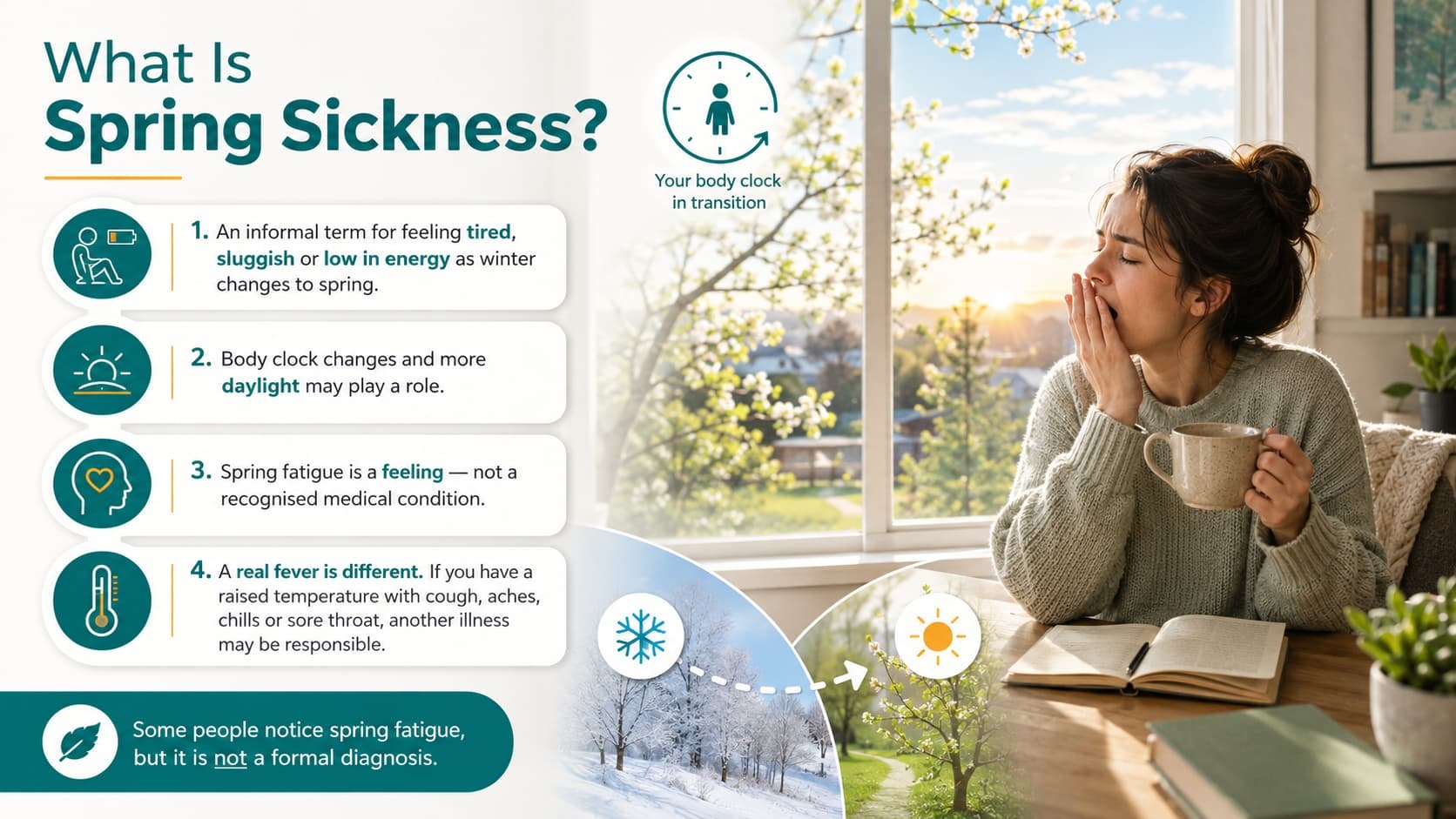
What is spring sickness? It is an informal term for tiredness, low energy or sluggishness that some people notice around the change from winter to spring.
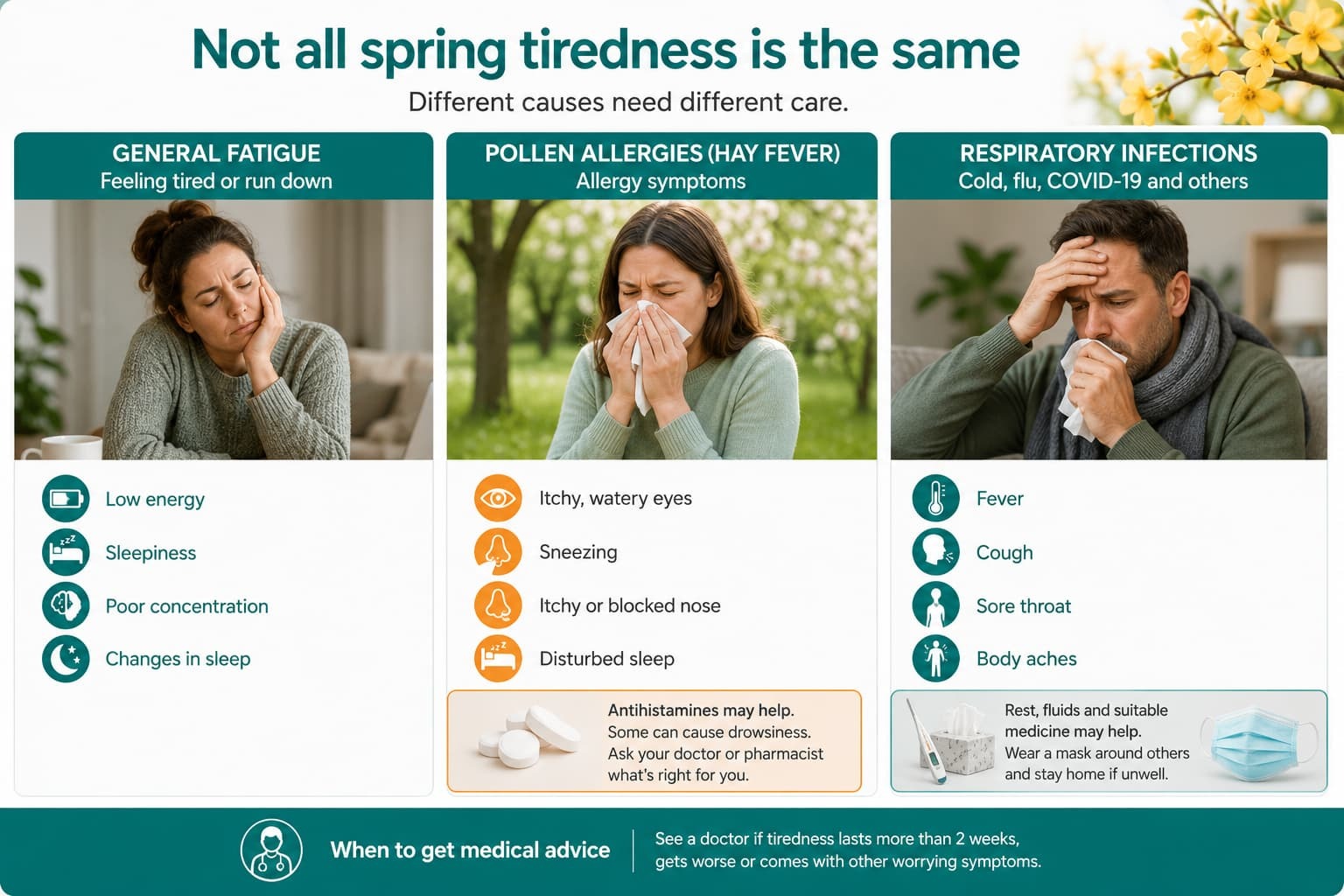
People may describe feeling physically tired, mentally slow, sleepy during the day or less able to concentrate.
The idea makes some biological sense because our bodies respond to light and dark. The Sleep Health Foundation explains that the body's internal clock, or circadian rhythm, helps regulate sleep, hormones and body temperature. Light is the strongest outside signal used to keep this clock aligned with day and night.
But this does not mean spring sickness has been proven to be a medical condition.
A 2026 study published in the Journal of Sleep Research followed 418 adults through repeated assessments across one year. Almost half said they experienced spring fatigue. However, the researchers did not find a consistent spring increase in fatigue, daytime sleepiness, insomnia symptoms or poor sleep quality.
This means spring fatigue is best treated as a description of how someone feels rather than a diagnosis.
Is spring fever a real sickness?
Spring fever is not an actual fever or recognised illness. It is another informal expression linked with changes in mood, energy or behaviour when spring begins.
A real fever is different. If your temperature is raised, especially with coughing, aches, chills or a sore throat, an infection or another condition may be responsible.
Why Can Spring Make You Feel Tired?
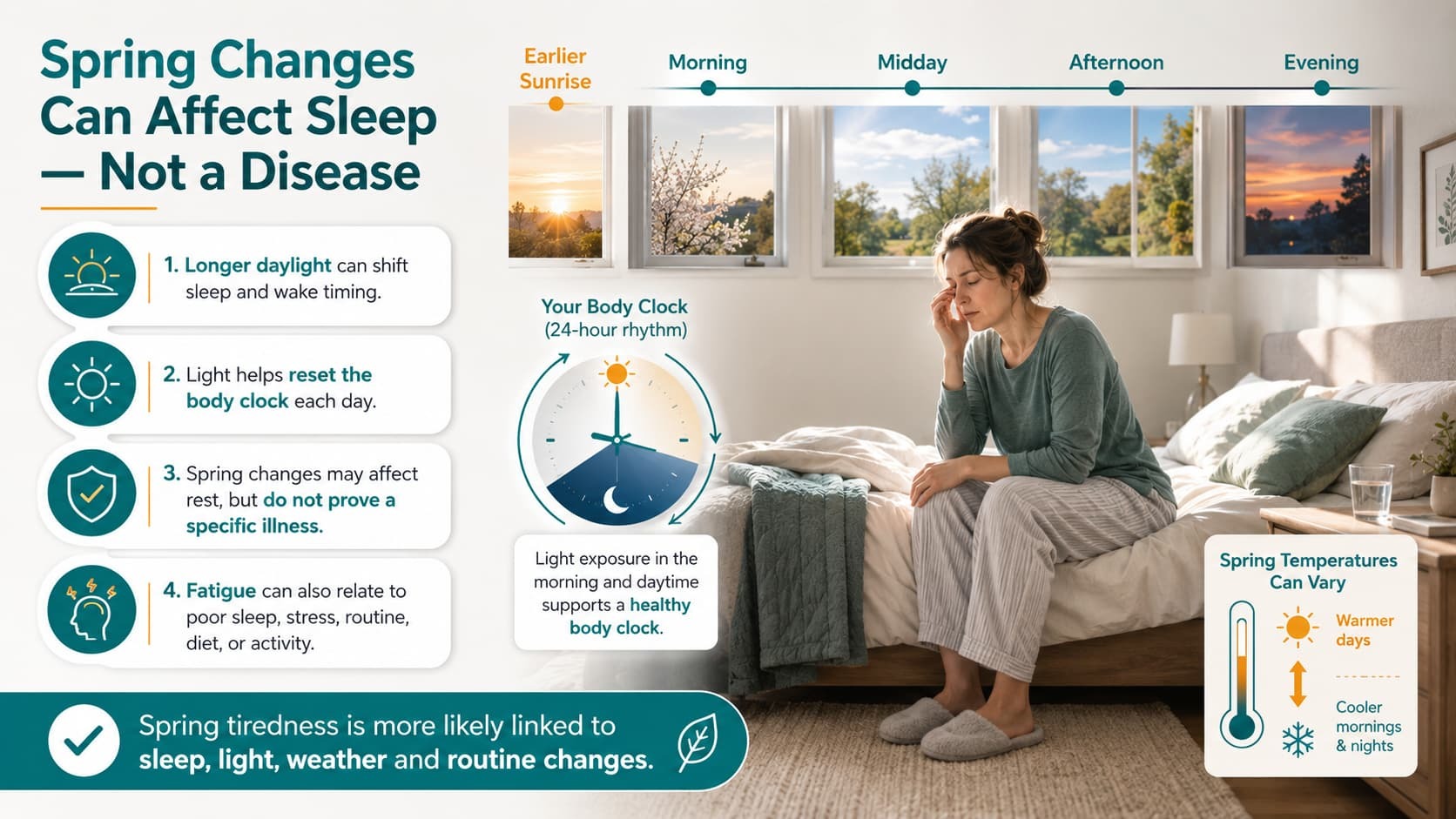
Longer days are one possible reason people notice changes in their sleep or energy.
The Sleep Health Foundation says daylight helps reset your internal body clock each day. This clock influences when you feel alert and when you feel sleepy. Melatonin, a hormone involved in preparing the body for sleep, is also closely linked with light and darkness.
As mornings become brighter earlier and evenings stay lighter for longer, the amount and timing of light you receive changes. This does not automatically make you tired, but it can influence sleep and wake patterns.
Research supports the idea that human sleep and circadian rhythms can vary with the seasons. However, the 2026 Journal of Sleep Research study found that longer daylight was actually associated with less fatigue during day-to-day activities. The speed at which daylight changed was not linked with greater fatigue.
What about changing temperatures?
Temperature may influence sleep and wakefulness too. A 2025 review in Sleep Medicine Reviews found that environmental factors including temperature and light can affect sleep-wake processes.
However, this does not prove that normal spring temperature swings cause spring sickness.
A more realistic explanation is that changing weather, longer daylight, altered bedtimes, increased activity and different daily routines may all affect how rested a person feels.
Poor sleep itself is a well-established cause of fatigue. Healthdirect also lists lifestyle factors such as poor sleep, a busy schedule, diet, stress and lack of exercise among the many possible reasons people feel tired.
What Are the Symptoms of Spring Sickness?
What are the symptoms of spring sickness? Because spring sickness is not a recognised medical condition, there is no official symptom list.
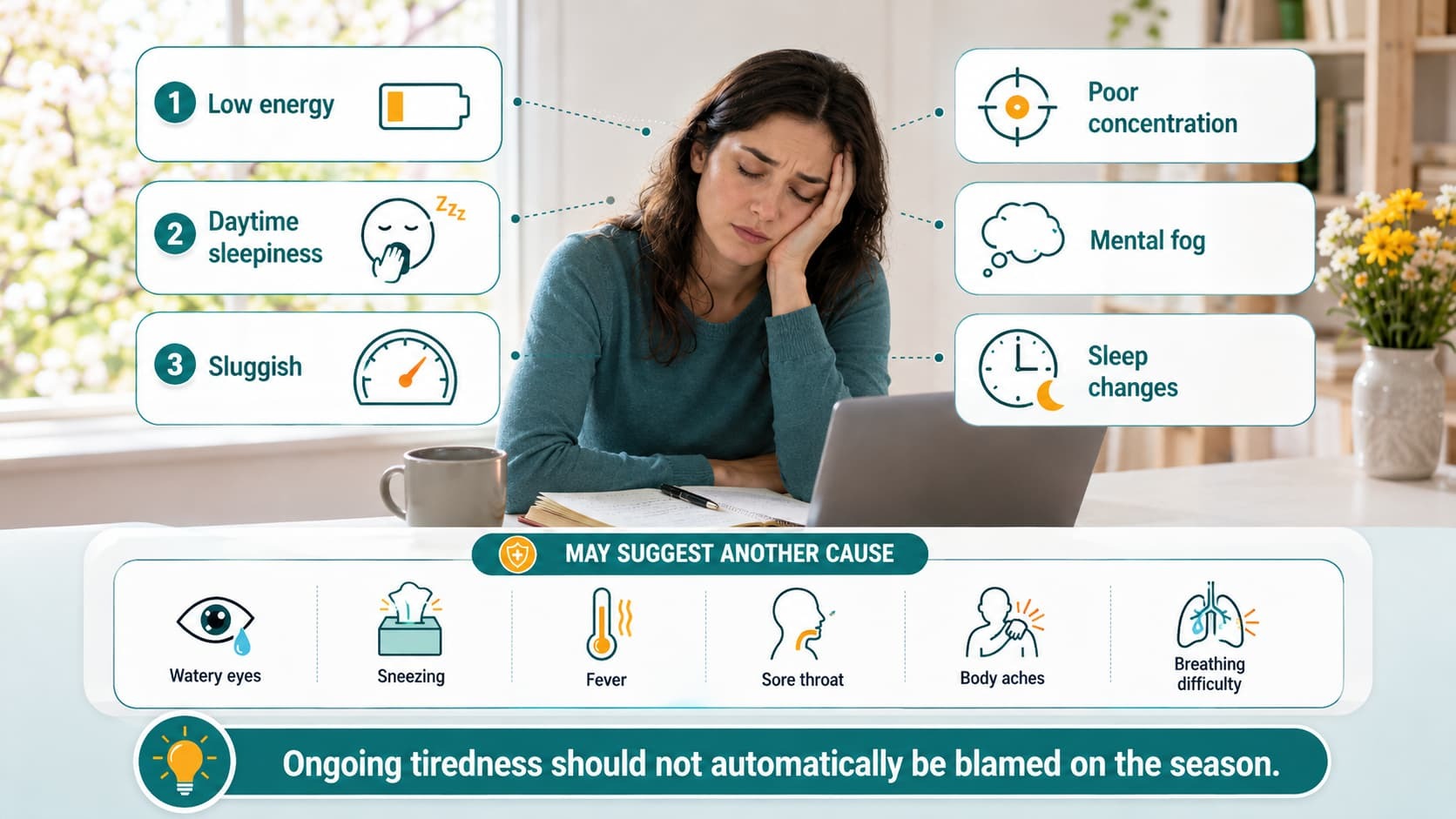
The term is generally used to describe symptoms such as:
- feeling unusually tired
- low energy
- daytime sleepiness
- feeling sluggish
- difficulty concentrating
- feeling mentally slow or “foggy”
- changes in usual sleep patterns
Healthdirect describes fatigue as feeling exhausted or lacking enough energy for normal activities. It can appear suddenly or gradually.
The important question is whether spring is really the cause.
Fatigue has many possible causes. Healthdirect lists poor sleep, stress and lifestyle factors as possible causes, but also conditions such as iron deficiency, sleep disorders, infections and some hormonal or other medical conditions.
For that reason, ongoing tiredness should not automatically be blamed on the season.
Is It Spring Sickness or Something Else?
Spring is also a time when several genuine health problems can make you feel tired.
Hay fever and pollen allergies
Seasonal hay fever is common during spring and summer. Healthdirect says pollen can trigger sneezing, an itchy or blocked nose and itchy or watery eyes. Severe hay fever can disturb sleep, which may then cause daytime tiredness, headaches and poor concentration.
This can easily be mistaken for general spring fatigue.
Antihistamines may help manage hay fever symptoms when suitable. However, some antihistamines can cause drowsiness. Healthdirect recommends asking a doctor or pharmacist which type is suitable for you.
What sickness happens in the spring?
There is no single sickness that happens only in spring. Along with hay fever, people can still catch colds, influenza, COVID-19 and other respiratory infections.
The Australian Centre for Disease Control notes that influenza usually peaks during Australia's cooler months, but infections can occur at other times.
A fever, significant cough, sore throat or body aches is therefore a reason to think beyond “spring sickness”.
Suitable Cold & Flu Medications or Pain & Fever Relief may provide temporary symptom relief for some respiratory illnesses. Always check medicine labels carefully. Healthdirect warns that combination cold and flu products may contain the same active ingredients as other medicines, including paracetamol.
If you are sick with respiratory symptoms and need to leave home, the Australian Government advises wearing a mask around others. Face Masks can therefore be useful to keep on hand during respiratory illness.
When should tiredness be checked?
Healthdirect recommends seeing a doctor if fatigue lasts for more than two weeks and is not improving. Seek advice sooner if it worries you, stops you doing normal activities or occurs with other concerning symptoms.
FAQs
How can I manage feeling tired when spring arrives?
Start with basic sleep and health habits. Try to keep regular sleep and wake times, spend some time in natural daylight during the day, stay physically active and eat a balanced diet.
Healthdirect recommends healthy sleep habits, regular physical activity and a balanced diet when managing general fatigue.
Vitamins & Supplements may be appropriate for particular dietary needs, but they should not be treated as a cure for spring sickness. Speak with a doctor, dietitian or pharmacist if you think you may have a nutritional deficiency.
Does spring sickness mean my immune system is weak?
Not necessarily. Feeling tired does not by itself show that your immune system is weak. Fatigue has many possible causes, ranging from sleep and lifestyle changes to infections and medical conditions.
How long does spring sickness last?
There is no official duration because spring sickness is not a diagnosed condition. If mild tiredness improves after restoring your normal sleep and routine, it may be temporary. If fatigue continues for more than two weeks or gets worse, Healthdirect recommends speaking with a doctor.
Summary
Spring sickness usually refers to spring fatigue — a temporary feeling of tiredness, low energy or sluggishness associated with the change of season.
Longer daylight, changes in sleep timing, temperature and daily routines can affect how people sleep and feel. However, current research does not support spring fatigue as a distinct medical syndrome.
It is also important not to blame every spring symptom on seasonal adjustment. Hay fever can interrupt sleep and cause tiredness, while respiratory infections can cause fatigue along with fever, coughing, sore throat and body aches.
If your tiredness lasts, becomes severe or comes with other concerning symptoms, speak with a healthcare professional.
Where to Buy
You can prepare for common spring health needs through MedCart Australia.
Depending on your symptoms or needs, browse:
- Antihistamines for suitable allergy symptom management.
- Face Masks for respiratory protection and infection-control needs.
- Cold & Flu Medications for suitable symptom-relief options.
- Pain & Fever Relief for suitable pain and fever management.
- Vitamins & Supplements for general nutrition and wellness needs.
Spring allergies can affect pets too. Pet owners can also view the Skin Allergy Kit for Dogs and Cats. Speak with a veterinarian about persistent or severe allergy symptoms in your pet.
This article provides general information only and does not replace medical advice. Always read medicine labels and follow directions for use. Speak with a doctor or pharmacist if you are unsure which treatment is suitable for you.
References
- Blume C, Vorster A; Journal of Sleep Research / European Sleep Research Society. No Evidence for Seasonal Variations in Fatigue, Sleepiness and Insomnia Symptoms: Spring Fatigue Is a Cultural Phenomenon Rather Than a Seasonal Syndrome. First published 9 March 2026; Volume 35, Issue 4, August 2026. URL: https://onlinelibrary.wiley.com/doi/10.1111/jsr.70319
- Sleep Health Foundation. Body Clock. Published 12 January 2024. URL: https://www.sleephealthfoundation.org.au/sleep-topics/body-clock
- Healthdirect Australia. Fatigue. Last reviewed August 2024. URL: https://www.healthdirect.gov.au/fatigue
- Wang Y-Q et al.; Sleep Medicine Reviews. Ambient chemical and physical approaches for the modulation of sleep and wakefulness. E-published 12 October 2024; February 2025 issue. URL: https://pubmed.ncbi.nlm.nih.gov/39447526/
- Healthdirect Australia. Hay fever (allergic rhinitis) – symptoms, treatments and causes. Last reviewed October 2024. URL: https://www.healthdirect.gov.au/hay-fever
- Healthdirect Australia. Antihistamines. Last reviewed July 2025. URL: https://www.healthdirect.gov.au/antihistamines
- Healthdirect Australia. Medicines for colds, flu (influenza) and COVID-19. Last reviewed August 2025. URL: https://www.healthdirect.gov.au/medicines-for-colds-flu-and-covid-19
- Australian Centre for Disease Control. Influenza (flu). Current 2026 guidance, accessed 26 August 2026. URL: https://www1.health.gov.au/internet/main/publishing.nsf/Content/the-flu-and-you-brochure
- Australian Government Department of Health, Disability and Ageing. Antibiotics won’t do for colds and flu. Published 17 June 2025. URL: https://www.health.gov.au/news/antibiotics-wont-do-for-colds-and-flu